What Does P0402 Mean? Causes, Symptoms, Diagnosis, and Fixes

Quick Answer
P0402 means the engine computer has detected more exhaust gas recirculation, or EGR, flow than expected. A stuck-open EGR valve is a common cause, but sensor, vacuum-control, wiring, or airflow-measurement problems can produce the same code, so confirm the fault before replacing parts. You can also use the AAA OBD diagnostic code translator for additional code information.
What P0402 Usually Points To
- Excessive EGR flow: Too much exhaust gas is entering the intake for the current operating condition.
- Stuck EGR valve: Carbon or mechanical wear may prevent the valve from closing fully.
- False flow reading: A position, pressure, MAF, or MAP-related fault may make normal flow appear excessive.
- Common symptoms: The check engine light, rough idle, hesitation, reduced power, or stalling may occur.
- Best first step: Scan all stored codes and preserve freeze-frame information before clearing anything.
Before Replacing Parts
- Inspect the EGR system and compare commanded operation with live scan-tool data whenever your vehicle supports it.
If your OBD2 scanner displays P0402, the code is pointing you toward the exhaust gas recirculation system. The code tells you what the computer detected, not which component has failed.
That distinction matters. My diagnostic approach is to confirm the excessive-flow condition first, then test the valve, sensors, controls, and related airflow data instead of immediately buying an EGR valve.
In This Guide
What Does P0402 Mean on an OBD2 Scanner?
P0402 means “Exhaust Gas Recirculation Flow Excessive Detected.” It is a generic OBD-II powertrain diagnostic trouble code related to the vehicle’s EGR emissions system.
The exhaust gas recirculation system sends a controlled amount of exhaust gas back into the engine’s intake. Doing this helps lower peak combustion temperatures and reduce nitrogen oxide emissions.
Definition: The EGR system is an emissions-control system that meters some exhaust gas back into the intake. P0402 appears when the engine control module detects more EGR effect or flow than it expects.
The important word is excessive. P0402 doesn’t simply mean that exhaust gas is moving through the EGR system.
EGR flow is supposed to change with engine temperature, load, speed, and other operating conditions. The computer sets the code when the measured response does not agree with the expected response.
- P: The code belongs to the powertrain category.
- 0: It uses a generic OBD-II definition rather than a manufacturer-only definition.
- 402: The remaining digits identify the specific monitored fault condition.
A basic code reader can usually retrieve P0402. A more capable scanner can be more useful because live EGR, airflow, pressure, and freeze-frame information may help separate a real flow problem from a misleading sensor signal.
Vehicle-specific diagnostic logic still varies. Always use the repair information for your exact year, make, model, engine, and emissions configuration.
What Causes the P0402 Code?
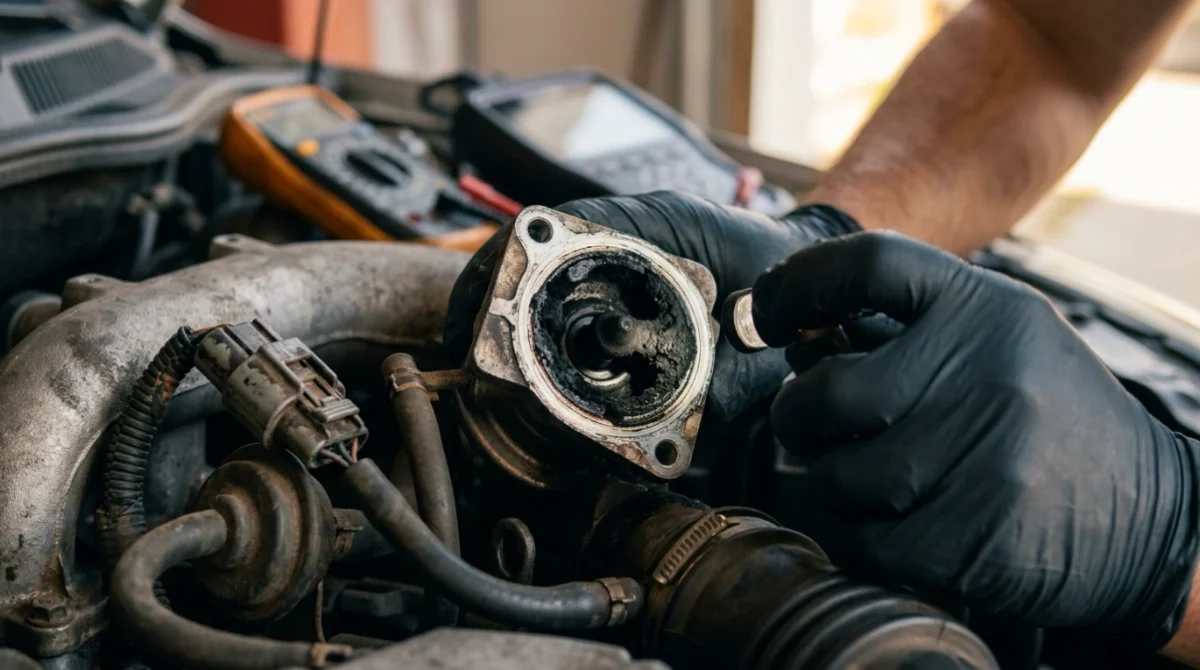
The most direct cause of P0402 is an EGR valve that allows exhaust gas through when it should be closed or allows more flow than commanded. Carbon contamination is one common reason a valve may fail to seat correctly.
Don’t assume the valve is automatically bad. The computer often determines EGR flow indirectly, so a faulty measurement can sometimes look like excessive flow.
- EGR valve stuck open: Deposits around the pintle or valve seat may prevent complete closing.
- Damaged EGR valve: Internal mechanical wear or actuator problems can affect valve movement.
- Faulty EGR position sensor: The feedback signal may indicate more opening than is actually present.
- Pressure-sensor problem: Some vehicles monitor EGR using a differential-pressure or similar sensor.
- Vacuum-control fault: On vacuum-operated systems, a control solenoid or hose problem can open the valve at the wrong time.
- Electrical problem: Damaged wiring, poor terminals, corrosion, or connector faults can disrupt EGR control or feedback.
- MAF or MAP data problem: Incorrect airflow or manifold-pressure information can interfere with the computer’s calculated EGR-flow check.
- Calibration or vehicle-specific issue: Some diagnoses require checking manufacturer service information or technical bulletins before condemning hardware.
As one manufacturer example, Ford identifies the EGR valve as an emissions-related component. That doesn’t mean the listed part fits your vehicle, so verify components using your VIN and manufacturer information.
Technician’s note: Don’t order an EGR valve from the code alone. Confirm the actual system design and component fitment for your vehicle first.
One pattern I watch for is a rough idle combined with a valve that appears unable to return fully closed. That combination gives the excessive-flow theory more weight, but testing still comes before replacement.
What Symptoms Can P0402 Cause?
P0402 can produce anything from only a check engine light to obvious drivability problems. The symptoms depend on how much unwanted EGR flow exists and when it occurs.
- Check engine light: The malfunction indicator lamp may be the only symptom.
- Rough idle: Excess exhaust gas at idle can dilute the fresh intake charge and make combustion unstable.
- Stalling: A severely stuck-open EGR valve can contribute to stalling as the engine returns to idle.
- Hesitation: The engine may stumble or respond poorly when accelerating.
- Reduced power: Excessive recirculation can affect normal combustion and engine response.
- Uneven running: You may notice surging, shaking, or an inconsistent idle.
- Emissions-test problems: A stored emissions-related fault can prevent the vehicle from passing an OBD-based inspection.
Some vehicles may drive almost normally. That can happen when the fault is intermittent or when the computer is detecting an implausible sensor response rather than severe physical EGR flow.
Freeze-frame data can be useful here. It records operating conditions around the time the code set, helping you see whether the problem appeared at idle, cruising speed, or another condition.
Is P0402 Serious, and Can You Keep Driving?
P0402 is usually a code you should diagnose promptly rather than ignore. A car that runs normally may still be movable for a short period, but rough running or stalling changes the situation.
If the engine is stalling in traffic, losing substantial power, or running badly, driving can become unsafe. Move to a safe location and arrange proper diagnosis.
- Only a steady check engine light: Schedule diagnosis soon and watch for new symptoms.
- Rough idle or repeated stalling: Limit driving because the vehicle may become difficult to control in traffic.
- Major power loss: Avoid continuing normal driving until the cause is identified.
- Flashing check engine light: Treat it as an urgent warning and stop driving when it is safe to do so.
It’s also worth checking your vehicle for unrelated open safety recalls using NHTSA’s vehicle safety resources. A recall search isn’t a P0402 diagnosis, but VIN-based manufacturer information should always be considered when troubleshooting a vehicle.
Technician’s note: Whether a vehicle is safe to continue driving depends on its actual symptoms, not the trouble-code number by itself.
How Do You Diagnose and Fix P0402?
The right way to diagnose P0402 is to determine whether excessive EGR flow is physically occurring or whether the computer is being misled. Start with scan data before disconnecting parts.
1. Scan Every Stored and Pending Code
Record P0402 and any companion codes. Related EGR, airflow, pressure, electrical, or misfire codes can change the direction of the diagnosis.
Save the freeze-frame data too. Clearing codes immediately can erase useful clues about engine speed, load, temperature, and other conditions when the fault appeared.
2. Inspect the EGR System Visually
Identify the type of EGR system installed on the vehicle. Designs can use vacuum controls, electronic actuators, position feedback, pressure sensors, coolers, and other vehicle-specific components.
- Look for disconnected or deteriorated vacuum hoses where applicable.
- Inspect wiring near hot exhaust components.
- Check connectors for corrosion, damaged locks, or loose terminals.
- Look for obvious soot leakage or damaged EGR tubing.
- Check for signs that previous repairs disturbed hoses or electrical connectors.
3. Compare Commanded EGR With Live Data
A capable OBD2 scanner may display commanded EGR, EGR position, MAF airflow, MAP pressure, or related sensor data. Available parameters depend on the vehicle.
You’re looking for disagreement. For example, the computer may command little or no EGR while sensor or airflow behavior suggests that exhaust gas is still entering the intake.
Technician’s note: Don’t rely on a universal “normal” sensor number. Compare readings with the manufacturer specifications for your exact engine.
4. Check Whether the Valve Can Close
If service access permits, inspect the EGR valve for sticking, contamination, or damaged movement. A valve held slightly off its seat can create unwanted flow when the engine needs a stable fresh-air charge.
Cleaning may help when removable deposits are the confirmed problem. Replace the valve when testing shows a mechanical or electrical failure that cleaning cannot correct.
5. Test the Controls and Feedback Sensors
Don’t stop at the valve if it passes inspection. Test whichever vacuum solenoid, position sensor, differential-pressure sensor, wiring circuit, or airflow input your vehicle uses.
A scan tool with active-test capability may let a technician command EGR operation and observe the engine response. Not every generic scanner supports these manufacturer-specific functions.
6. Repair the Confirmed Cause and Recheck
After repairing the verified fault, clear codes according to the appropriate service procedure. Then operate the vehicle long enough for the relevant OBD monitors to run again.
Rescan for pending or confirmed codes. A repair isn’t complete just because the check engine light disappears immediately after codes are cleared.
Section Takeaway: Diagnose the system, not the code number. P0402 can result from real excessive flow or misleading feedback, so live data and vehicle-specific testing help prevent unnecessary parts replacement.
How Is P0402 Different From Other EGR Codes?
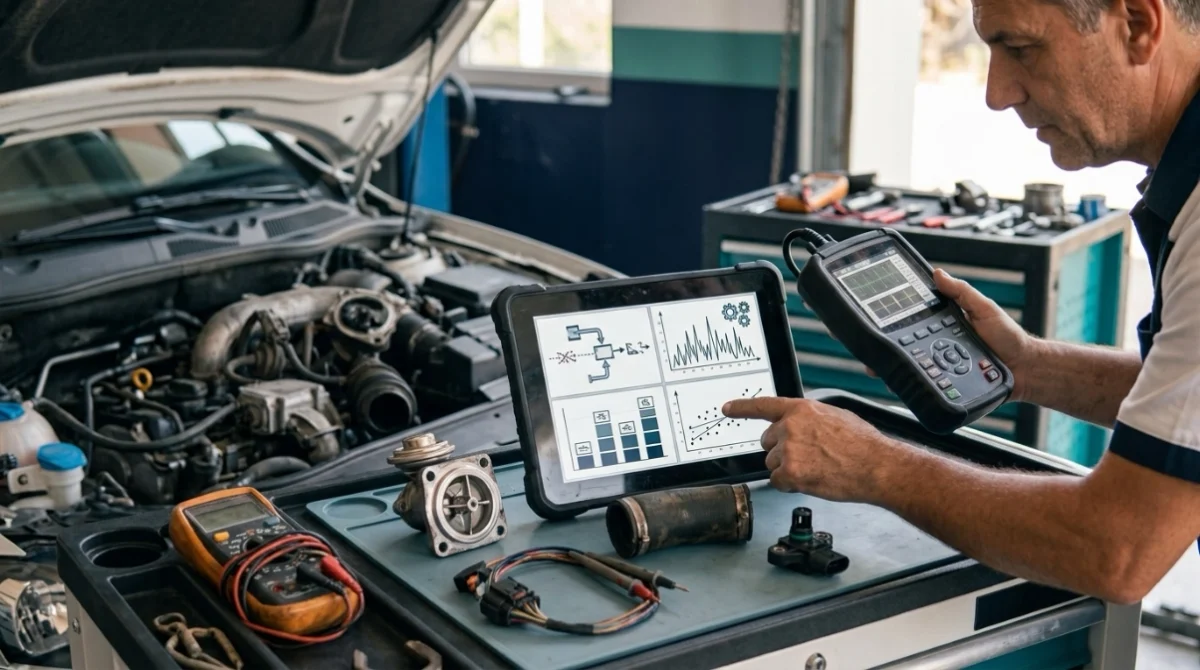
P0402 specifically points to too much detected EGR flow. Other codes in the same family can indicate insufficient flow, circuit faults, or performance problems instead.
| Code | General Meaning | Main Diagnostic Direction |
|---|---|---|
| P0400 | EGR flow malfunction | Check overall EGR operation and vehicle-specific monitoring logic. |
| P0401 | EGR flow insufficient detected | Look for inadequate flow, restrictions, control faults, or incorrect feedback. |
| P0402 | EGR flow excessive detected | Check for unwanted flow, a valve not closing, control problems, or false flow feedback. |
| P0403 | EGR control circuit malfunction | Focus more heavily on the electrical control circuit and actuator. |
| P0404 | EGR control range/performance problem | Compare commanded valve behavior with position or performance feedback. |
These generic descriptions narrow the search, but they don’t replace manufacturer diagnostic information. Your vehicle may use different sensors and testing strategies to determine whether EGR flow is correct.
P0402 FAQ
Can a dirty EGR valve cause P0402?
Yes. Carbon or other deposits can sometimes prevent an EGR valve from fully seating, allowing exhaust gas into the intake when the valve should be closed. Inspect and test the valve before deciding whether cleaning or replacement is appropriate.
Can a bad sensor cause P0402?
Yes. Depending on the vehicle, EGR flow may be evaluated using valve-position feedback, differential pressure, MAF, MAP, or other information. Incorrect sensor data can make the engine computer calculate more EGR flow than is actually occurring.
Will P0402 make the engine idle rough?
It can. Excessive exhaust gas entering the intake at idle can dilute the fresh charge and make combustion unstable. A stuck-open EGR valve can therefore cause shaking, stumbling, or stalling, although some P0402 faults produce few noticeable symptoms.
Can I clear P0402 with an OBD2 scanner?
Most generic scanners can clear emissions-related powertrain codes, but clearing P0402 doesn’t repair its cause. Save freeze-frame information first, diagnose the system, complete the repair, and rescan after the vehicle runs the appropriate monitors.
Does P0402 always mean I need a new EGR valve?
No. The valve is only one possible cause. Vacuum controls, sensors, wiring, connectors, airflow measurements, or vehicle-specific control issues can also trigger excessive-flow detection. Replacing the valve without testing can waste money and leave the code unchanged.
Is P0402 the same as P0401?
No. They point in opposite directions. P0401 indicates that the computer detected insufficient EGR flow, while P0402 indicates excessive flow. Some components can contribute to either code, but the diagnostic evidence you look for differs.
Can P0402 come back after cleaning the EGR valve?
Yes. The code can return if the valve is mechanically damaged, contamination quickly returns, or another component caused the original fault. If P0402 comes back, inspect live data and test the complete EGR-control and feedback system.
Final takeaway: P0402 means your vehicle has detected excessive exhaust gas recirculation flow. Start with a complete scan, preserve freeze-frame data, inspect the EGR system, and confirm the fault with live data before replacing parts.
If symptoms include repeated stalling, major power loss, or a flashing check engine light, stop treating the problem as a simple code-clearing job. Have the vehicle properly diagnosed before continuing normal driving.
