What Does P0340 Mean? Causes, Symptoms, Diagnosis & Fix

Quick Answer
P0340 means the engine computer has detected a problem with the camshaft position sensor circuit, usually for Sensor A on Bank 1 or the single camshaft sensor. It does not automatically mean the sensor itself is bad, so use an OBD diagnostic code reader and inspect the entire circuit before replacing parts.
Common Reasons P0340 Appears
- Failed sensor: The camshaft position sensor may stop producing a usable signal.
- Damaged wiring: An open, short, broken wire, or poor terminal connection can interrupt the signal.
- Connector trouble: Corrosion, oil contamination, loose pins, or heat damage may affect the circuit.
- Timing problem: Incorrect camshaft timing can make the expected cam and crank signals disagree.
- Control-module issue: An ECM or PCM fault is possible, although it should be considered only after basic circuit checks.
Best First Step
- Record P0340 and any related codes, inspect the sensor connector and harness, then test the circuit using specifications for your exact make, model, engine, and year.
If your scanner displays P0340, the important thing is not to turn the code into an automatic parts order. I treat it as a clue that the engine computer has lost confidence in a camshaft-position signal.
That distinction matters because a new sensor will not fix damaged wiring, incorrect mechanical timing, or a bad connector. This guide explains what P0340 means, what symptoms to watch for, how it is diagnosed, and what the repair may involve.
In This Guide
What Does the P0340 Code Mean?
P0340 is a diagnostic trouble code for a fault involving the camshaft position sensor circuit. On many vehicles, the generic description identifies Camshaft Position Sensor A, Bank 1, or the single sensor.
Definition: A camshaft position sensor monitors camshaft position and sends that information to the engine control module, commonly called the ECM or PCM.
The computer compares camshaft information with the crankshaft position signal. That relationship helps it determine cylinder position and manage functions such as fuel injection, ignition strategy, and variable valve timing.
- P identifies a powertrain-related trouble code.
- 0 generally identifies a generic OBD-II code.
- 340 identifies the specific camshaft position sensor circuit fault.
Does P0340 Mean the Camshaft Sensor Is Bad?
No. P0340 identifies a circuit or signal problem, but it does not prove that the sensor itself has failed.
Manufacturer diagnostic information also lists damaged wiring, connector faults, mechanical camshaft problems, and ECM faults as possible causes. That is why replacing the sensor without testing can waste money.
One mistake I regularly see during electrical troubleshooting is treating the component named in a code as the confirmed failed part. A diagnostic code tells you where the computer noticed something abnormal, not necessarily which part caused it.
Pro tip: Never order a camshaft sensor using the code alone. Verify the exact sensor location and correct replacement part using the vehicle identification information and manufacturer catalog.
Is P0340 Related to a Key Fob or Immobilizer?
P0340 by itself points to an engine-position sensing problem, not a key fob battery or remote-control failure. A no-start condition can make the two problems feel similar from the driver’s seat.
If the engine cranks but the computer cannot obtain a reliable camshaft signal, P0340 may be relevant. Security and immobilizer faults normally require their own diagnostic path.
Section takeaway: P0340 means the computer cannot rely on the expected camshaft position sensor circuit signal. It does not automatically condemn the sensor.
What Symptoms Does P0340 Cause?

P0340 can cause anything from a check engine light with few noticeable changes to a hard-start or no-start condition. The exact symptoms depend on the vehicle and how its engine computer responds when the signal disappears.
- Check engine light: The malfunction indicator light may remain illuminated after the code stores.
- Hard starting: The engine may crank longer because the computer has trouble identifying camshaft position.
- No-start condition: Some vehicles may refuse to start when the signal is unavailable.
- Rough running: You may notice an unstable idle, hesitation, or inconsistent engine operation.
- Stalling: An intermittent sensor or wiring fault can cause the signal to disappear unexpectedly.
- Reduced power: The computer may use a backup strategy and limit normal engine operation.
- Poor acceleration: Incorrect or missing timing information may affect throttle response.
Can P0340 Appear Even If the Car Runs Fine?
Yes. An intermittent wiring connection or signal problem may store P0340 before the engine develops obvious symptoms.
This is why freeze-frame information matters. Freeze frame records selected operating conditions from around the time the computer detected the fault.
If the problem occurs only when the engine is hot, during cranking, or after hitting bumps, those details can help narrow the search. Intermittent electrical problems often disappear while the vehicle is sitting in a workshop.
A related code can also change the direction of the diagnosis. Camshaft range, high-input, low-input, crankshaft sensor, or cam/crank correlation codes can provide useful context.
Section takeaway: P0340 symptoms can range from almost nothing to a no-start condition, so diagnosis should consider both the stored code and how the vehicle behaves.
What Causes a P0340 Code?
The most common P0340 causes involve the camshaft sensor, its electrical circuit, or the mechanical relationship between the camshaft and crankshaft. A control-module problem is possible but should not be your first assumption.
1. Failed Camshaft Position Sensor
A failing sensor can produce a missing, weak, or irregular signal. Heat-related sensor failures may appear only after the engine warms up.
2. Open or Shorted Wiring
A broken wire can interrupt power, ground, or signal flow. A wire rubbed through against the engine can also short to ground or another circuit.
3. Loose, Corroded, or Contaminated Connector
Connector terminals matter as much as the sensor. Look for loose pins, corrosion, oil intrusion, broken locks, and wiring that has been pulled tight.
- Oil leaking into the connector area
- Heat-damaged insulation
- Harness contact with moving parts
- Pins pushed backward inside the plug
- Poor previous wiring repairs
4. Mechanical Timing or Camshaft Problem
A timing belt or timing chain that has moved from its intended position can affect camshaft-to-crankshaft synchronization. A damaged tone wheel or trigger surface can also alter the sensor signal.
This matters because P0340 is not always a simple electrical repair. Ross-Tech diagnostic guidance, for example, lists incorrect timing alongside sensor and wiring faults.
5. Sensor Power or Ground Problem
The sensor requires the correct electrical supply and ground for its design. A problem elsewhere in that circuit can make a good sensor look defective.
Do not assume every vehicle uses identical reference voltages or pin assignments. Manufacturer wiring diagrams and test specifications should control your measurements.
6. ECM or PCM Fault
An engine control module failure can cause P0340, but it is less sensible to suspect the computer before checking the easier circuit faults. Module replacement may also require programming or setup procedures.
A manufacturer-specific issue can change the repair path as well. For example, an official NHTSA-hosted Ford service communication documents P0340/P0344 cases on certain vehicles where the camshaft position sensor build date mattered.
Locksmith’s note: electrical codes often punish assumptions. Test the connector and harness before spending money on an electronic component.
Section takeaway: The sensor is only one possible P0340 cause. Wiring, connectors, sensor supply, mechanical timing, and control-module issues must also be considered.
How Do You Diagnose P0340 Correctly?
Correct P0340 diagnosis starts by confirming the code and checking the complete circuit before replacing anything. The exact connector pins, test values, and waveform specifications vary by vehicle.
- Scan all modules and record codes. Save P0340, related codes, pending codes, and available freeze-frame data before clearing anything.
- Confirm the complaint. Note whether the engine starts normally, cranks slowly, stalls, misfires, or behaves differently when hot.
- Inspect the sensor and harness. Look for damaged insulation, oil contamination, loose connectors, corrosion, and previous repairs.
- Check power and ground. Compare your measurements with the manufacturer service information for that exact engine.
- Check the sensor signal. Depending on the system, a scan tool, digital meter, or oscilloscope may be needed to confirm signal activity.
- Compare cam and crank information. If both signals exist but their relationship is wrong, mechanical timing becomes more important.
- Inspect mechanical timing when indicated. Check the timing system, trigger wheel, and related mechanical components if electrical tests pass.
- Repair and retest. Clear the code only after recording the original data, then perform the required verification procedure.
P0340 Diagnostic Clues Compared
| Possible Cause | Common Clue | Best Confirmation | Typical Repair Direction |
|---|---|---|---|
| Camshaft sensor | Missing or erratic sensor signal | Signal test using vehicle specifications | Replace confirmed faulty sensor |
| Harness or connector | Intermittent fault, visible damage, corrosion | Continuity, terminal, and wiggle testing | Repair wiring or terminal connection |
| Power or ground | Sensor lacks expected electrical supply | Circuit measurements against service data | Repair supply or ground circuit |
| Mechanical timing | Cam and crank signals disagree | Timing inspection or waveform comparison | Correct timing-system fault |
| ECM or PCM | Circuit checks pass but fault remains | Manufacturer diagnostic procedure | Software, terminal, or module repair as confirmed |
Why You Should Check Manufacturer Information
Generic P0340 gives you the fault family, but manufacturers define the exact test conditions and circuit design. A 2023 Mitsubishi technical procedure for P0340, for example, checks the sensor circuit, harness condition, sensor operation, and ECM rather than assuming one failed component.
That is the diagnostic mindset I recommend. Confirm what failed before changing it.
Pro tip: Save freeze-frame and related-code information before clearing P0340. Erasing that evidence too early can make an intermittent problem harder to reproduce.
Section takeaway: Diagnose P0340 as a circuit and synchronization problem. A scan, visual inspection, electrical tests, and mechanical checks should narrow the cause before parts are replaced.
Can You Drive With a P0340 Code?
You should not ignore P0340. Whether you can make a short trip depends on how the engine is running and whether other warning signs are present.
If the check engine light is steady and the engine starts, idles, and accelerates normally, a short drive to a safe diagnostic location may be reasonable. Avoid unnecessary driving until you know what caused the code.
Stop Driving If You Notice These Signs
- A flashing check engine light
- Severe shaking or repeated misfiring
- Engine stalling
- Major power loss
- Abnormal mechanical noise from the timing area
- Smoke, overheating, or a burning smell
AAA’s check engine light guidance also distinguishes a steady warning from a flashing light and recommends immediate caution when the vehicle is running abnormally.
A mechanical timing problem deserves particular attention. Continuing to drive a vehicle with an unresolved timing-system fault can be much more serious than driving with a simple connector problem.
Safety note: if the engine stalls repeatedly or is difficult to keep running, arrange professional diagnosis instead of trying to nurse the vehicle through traffic.
Section takeaway: A steady light on a normally running vehicle may allow a short trip for diagnosis, but stalling, severe misfires, flashing warnings, or mechanical noise are reasons to stop driving.
How Much Does It Cost to Fix P0340?
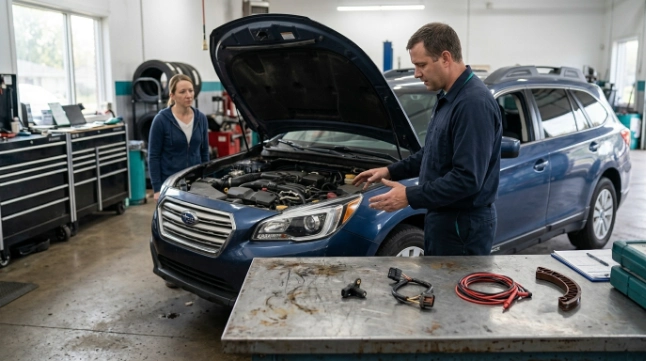
The repair cost depends entirely on what caused P0340. A loose terminal or damaged wire can cost far less than a mechanical timing repair.
As a current 2026 reference, straightforward camshaft position sensor replacement commonly falls in the low hundreds of dollars. Your make, model, engine design, labor rate, location, and sensor access can move the total significantly.
| Repair Situation | Relative Cost | Why It Varies |
|---|---|---|
| Connector cleaning or minor wiring repair | Usually lower | Depends on damage location and diagnostic time |
| Camshaft position sensor replacement | Often a few hundred dollars | Sensor price and physical access vary widely |
| Extensive harness repair | Moderate to high | Tracing intermittent wiring faults can require significant labor |
| Timing belt, chain, or related mechanical repair | Potentially high | Parts, engine layout, and labor requirements differ substantially |
| ECM or PCM repair | Potentially high | Programming and vehicle-specific setup may be required |
Should You Replace the Camshaft Sensor Yourself?
Replacing an accessible sensor can be mechanically simple on some vehicles. The harder part is proving that the sensor is the reason P0340 appeared.
A DIY repair makes more sense after the wiring, connector, sensor location, and service information have been checked. Never copy a programming sequence, pinout, or test value from an unrelated engine.
Pro tip: Before buying a sensor, verify the correct part against your vehicle identification information. Similar-looking sensors can have different electrical characteristics or applications.
Professional diagnosis becomes more valuable when the fault is intermittent or cam/crank synchronization looks wrong. Those cases may require an oscilloscope and detailed manufacturer service data.
Section takeaway: Budget for diagnosis first. P0340 repair could be a small wiring job, a sensor replacement, or a much larger timing-system repair.
P0340 Frequently Asked Questions
What does P0340 mean on an OBD2 scanner?
P0340 means the engine computer detected a problem with the camshaft position sensor circuit, commonly Sensor A on Bank 1 or a single-sensor engine. The code can result from the sensor, wiring, connector, mechanical timing, or a less common control-module fault.
Will replacing the camshaft position sensor fix P0340?
It will fix P0340 only when testing confirms the sensor itself has failed. If damaged wiring, a loose connector, poor power or ground, incorrect timing, or another circuit problem caused the code, replacing the sensor may not change anything.
Can a bad timing chain cause P0340?
Yes, a timing-chain or related mechanical timing problem can contribute to P0340 when the camshaft signal no longer matches the expected crankshaft relationship. If the engine also has timing noise or correlation codes, mechanical inspection becomes especially important.
Can a weak battery cause P0340?
Low system voltage during cranking can complicate electronic diagnosis, but P0340 should not automatically be blamed on the battery. Check battery condition and cranking voltage when appropriate, then diagnose the camshaft sensor circuit using the manufacturer’s specifications.
Can P0340 cause a no-start condition?
Yes. Some engines may crank for a long time or fail to start when the computer cannot determine camshaft position reliably. Other vehicles can continue running with a backup strategy, so symptoms differ by engine-management design.
Does clearing P0340 fix the problem?
No. Clearing the code only removes stored diagnostic information and turns off the warning temporarily if the fault is not immediately detected again. Repair the root cause first, then clear the code and perform the appropriate verification drive or test procedure.
If your scanner shows P0340, start with evidence rather than a replacement part. Record every code, inspect the connector and wiring, and follow the service information for your exact engine before spending money.
A proper diagnosis is usually cheaper than guessing. If the electrical tests or cam/crank timing checks are outside your tools or experience, have a qualified automotive technician complete the diagnosis.
