P0411 Symptoms: What Your Car Is Trying to Tell You

Quick Answer
The most common P0411 symptom is a Check Engine Light, and many vehicles show no obvious drivability problems at all. Some drivers also notice rough running during a cold start, hesitation, unusual secondary-air-pump noise, or an emissions inspection failure. An OBD-II code reader can confirm that P0411 is stored, but the code alone does not identify the failed part.
Common P0411 Symptoms
- Check Engine Light: This is usually the first and sometimes only warning.
- Cold-start roughness: The engine may briefly idle unevenly when first started.
- Pump noise: You may hear excessive whining, grinding, or no pump operation during a cold start.
- Brief hesitation: Some vehicles may hesitate or feel slightly weak while cold.
- Emissions problems: An active emissions fault can cause inspection problems where OBD readiness and warning lights are checked.
Best First Check
- Scan for related codes and inspect the secondary air pump, hoses, valves, fuse, relay, wiring, and air passages before replacing anything.
If your scanner shows P0411, don’t assume the engine itself is failing. This code usually points toward the emissions system that supplies extra air to the exhaust during certain operating conditions.
I’ve seen this code send people straight toward an expensive air pump when the real problem was a split hose or stuck valve. This guide explains the symptoms that matter and how to narrow them down without parts swapping.
In This Guide
What Are the Most Common P0411 Symptoms?

The most common P0411 symptom is an illuminated Check Engine Light. In many vehicles, you may not notice anything else while driving.
That can make P0411 confusing. A secondary air injection problem usually affects emissions more directly than normal engine power.
- Check Engine Light: The powertrain control module detects airflow that does not match what it expected.
- No noticeable symptoms: The vehicle may start, idle, accelerate, and cruise normally.
- Rough cold start: Some engines briefly idle poorly when the air injection system should be operating.
- Cold hesitation: A related vacuum, valve, or airflow problem may cause temporary hesitation.
- Abnormal pump sound: A damaged electric air pump may whine, grind, squeal, or sound unusually loud.
- No pump sound: On vehicles where pump operation is normally noticeable, silence during the commanded period can be a clue.
- Emissions inspection trouble: A stored emissions fault or illuminated malfunction indicator can prevent a vehicle from passing some inspection programs.
Can P0411 appear with no drivability symptoms?
Yes. In fact, a car that feels completely normal is common with this code.
The system mainly operates to control cold-start emissions. Once the engine warms up, a failed secondary air system may have little effect on how the car feels from the driver’s seat.
This is why I don’t judge P0411 severity by drivability alone. A normal-feeling engine does not mean the emissions system is working correctly.
Does P0411 cause a rough idle?
P0411 can appear alongside a rough cold idle, but the code itself doesn’t guarantee one. A leaking vacuum hose, stuck valve, or another related fault may create the roughness.
If the engine runs rough even when fully warm, scan for additional trouble codes. That symptom may point beyond the secondary air system.
What Does P0411 Mean?
P0411 means “Secondary Air Injection System Incorrect Flow Detected.” It is a generic OBD-II powertrain diagnostic trouble code related to emissions control.
Definition: A secondary air injection system sends fresh air into the exhaust stream during specific conditions, commonly after a cold start. This helps the emissions system reach effective operating conditions sooner.
Depending on the vehicle, the system may use an electric pump, air hoses, control solenoids, vacuum-operated components, or combination valves. The exact design varies by make, model, year, and engine.
P0411 doesn’t mean the computer knows which component failed. It means the expected change in secondary airflow was not detected correctly.
How does the computer know the airflow is wrong?
The engine computer commands the secondary air system under specific conditions. It then looks for a response consistent with fresh air entering the exhaust.
Manufacturers use different monitoring strategies. Oxygen-sensor activity and other calculated engine data may help the computer decide whether airflow occurred as expected.
As of 2026, P0411 remains a generic OBD-II code, but the test conditions and diagnostic procedures are manufacturer-specific. Always use service information for the exact vehicle before performing component-level tests.
Which P0411 Symptoms Point to a Specific Fault?
Symptoms can provide clues, but they cannot confirm the failed component by themselves. Use them to decide what should be tested first.
| What You Notice | Possible Area to Check | Useful Next Check |
|---|---|---|
| Check Engine Light only | Any part of the secondary air system | Read freeze-frame data and related codes |
| No pump operation when commanded | Pump, fuse, relay, power, ground, or control circuit | Check pump command and electrical supply |
| Loud whining or grinding | Air pump | Inspect pump operation and air path |
| Pump runs but P0411 returns | Blocked hose, valve, exhaust passage, or weak airflow | Verify actual airflow instead of pump sound alone |
| Rough cold start plus P0411 | Vacuum leak, valve problem, or additional engine fault | Check for companion lean, misfire, or airflow codes |
| Code returns after wet weather | Pump or air plumbing exposed to moisture | Inspect for water intrusion and damaged check valves |
A working pump doesn’t prove the complete system works. I’ve encountered cases where you could hear the pump clearly, yet almost no usable airflow reached the exhaust because of a restriction.
That is why airflow verification matters. Sound alone can lead you toward the wrong repair.
What Causes P0411 and Its Symptoms?
P0411 appears when commanded secondary airflow is missing, restricted, delayed, or otherwise outside the computer’s expected response. Several faults can create that condition.
- Failed secondary air pump: The pump may stop completely or produce inadequate airflow.
- Blown fuse: Excess electrical load or a failing pump can interrupt the circuit.
- Faulty relay: The pump may not receive power when the computer commands it.
- Damaged wiring: Corrosion, broken wires, loose terminals, or poor grounds can prevent normal operation.
- Cracked or disconnected hose: Pumped air escapes before reaching the exhaust.
- Stuck check valve: A valve may block fresh airflow or allow unwanted exhaust backflow.
- Faulty control solenoid: Vacuum-controlled systems may not open the air valve correctly.
- Vacuum leak: A damaged vacuum line can prevent a valve from operating.
- Blocked air passages: Carbon deposits can restrict passages even when the pump works normally.
- Moisture damage: A failed check valve can sometimes allow condensation or exhaust moisture toward an electric pump.
Is the secondary air pump always the cause?
No. Replacing the pump simply because P0411 is stored is one of the easiest ways to waste money.
A good pump cannot overcome a blocked passage or closed valve. Likewise, a new pump won’t fix missing power from a fuse, relay, connector, or wiring fault.
Technician’s note: before authorizing a secondary air pump replacement, ask whether the shop confirmed power, ground, commanded operation, and actual airflow through the system.
How Do You Diagnose P0411 Correctly?
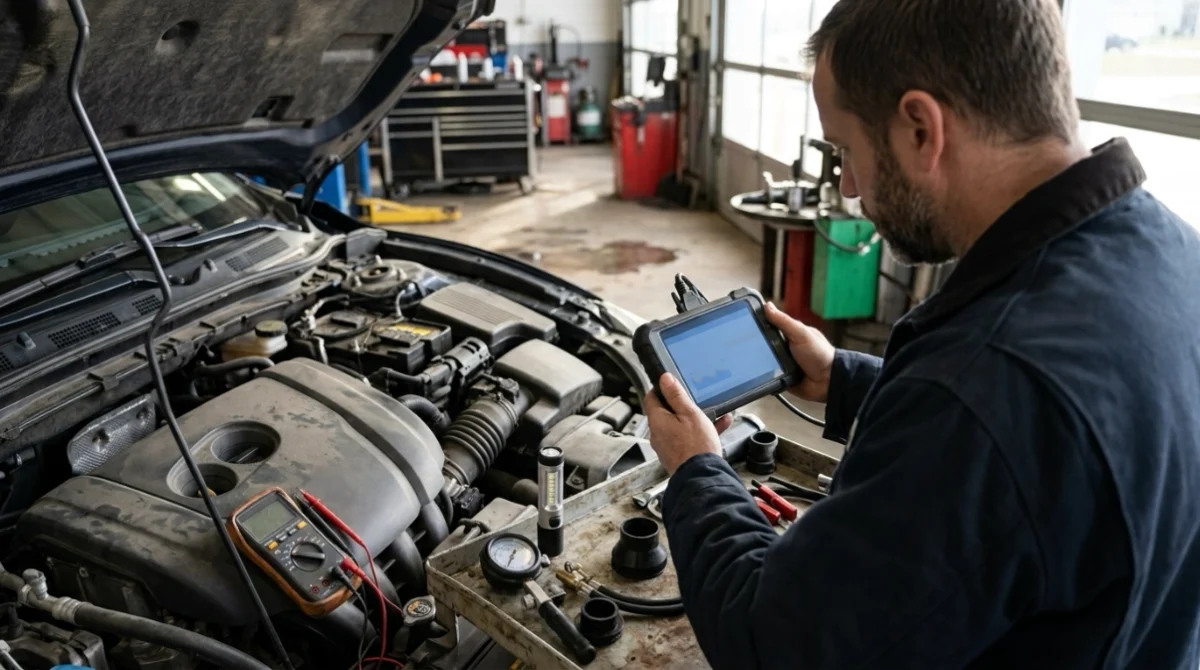
Start with the scan data, then verify the system physically. Don’t clear the code before recording useful diagnostic information.
AAA also explains that an OBD-II code provides a diagnostic clue rather than automatically identifying the failed part in its Check Engine Light guidance.
- Confirm P0411. Record stored, pending, and permanent codes where supported.
- Check companion codes. Misfire, oxygen-sensor, lean-condition, or electrical codes can change the diagnostic direction.
- Review freeze-frame data. Note coolant temperature, engine speed, vehicle speed, and other conditions present when the fault set.
- Inspect hoses and connectors. Look for splits, loose fittings, corrosion, burned wiring, and disconnected vacuum lines.
- Inspect the fuse and relay. A blown fuse should lead to further testing rather than automatic fuse replacement.
- Verify pump operation. Determine whether the pump runs when the vehicle commands secondary air operation.
- Check actual airflow. A spinning pump doesn’t prove that air reaches the exhaust.
- Test control valves. Confirm valves and solenoids open and close as the manufacturer specifies.
- Check for restrictions. Carbon-blocked passages may require deeper inspection if the rest of the system tests normally.
Can a basic OBD2 scanner diagnose P0411?
A basic reader can usually retrieve and clear generic powertrain codes. That is enough to confirm P0411, but often not enough to identify its cause.
A more capable scanner may provide live data, freeze-frame information, pending codes, and manufacturer-specific information. Some professional tools can also command system components for testing when the vehicle supports that function.
Pro tip: never use a make-specific actuator test unless the scan tool and service procedure explicitly support your exact vehicle configuration.
Can You Drive With P0411?
A vehicle with P0411 and a steady Check Engine Light is often still drivable if it runs normally. However, you should diagnose the emissions fault instead of ignoring it.
The National Highway Traffic Safety Administration provides general vehicle safety information, but your owner’s manual remains the best source for warning-light instructions specific to your vehicle.
When should you stop driving?
P0411 by itself does not normally create an immediate breakdown warning. Other symptoms can change the situation quickly.
- Flashing Check Engine Light: Stop treating the situation as a simple P0411 diagnosis because a severe misfire or another urgent fault may be present.
- Major power loss: Have the vehicle inspected before continuing normal driving.
- Strong burning smell: Stop safely and investigate the cause.
- Smoke: Shut the vehicle down when safe and seek professional help.
- Multiple warning lights: Scan all relevant modules and don’t assume P0411 explains everything.
Will P0411 cause an emissions test failure?
It can. Inspection rules vary by state or region, but an illuminated Check Engine Light, active emissions DTC, or incomplete readiness monitor can cause problems in OBD-based inspection programs.
Simply clearing P0411 shortly before inspection isn’t a proper repair. Clearing codes can also reset readiness monitors, which then need to complete their required self-tests.
P0411 Symptoms FAQ
What is the first symptom of P0411?
The Check Engine Light is usually the first P0411 symptom. Many drivers notice no change in engine performance because the secondary air injection system mainly serves an emissions-control function during specific operating conditions.
Can P0411 cause a rough idle?
Yes, some vehicles may run roughly during a cold start when P0411 is present. However, persistent rough idle can indicate another problem, so check for vacuum leaks, misfire codes, fuel-trim codes, and other stored faults.
Can P0411 cause poor acceleration?
P0411 alone usually doesn’t cause major acceleration problems. Brief hesitation may occur with certain related faults, but significant power loss should prompt diagnosis for additional engine, ignition, air, fuel, or exhaust problems.
Does P0411 mean the air pump is bad?
No. P0411 means the computer detected incorrect secondary airflow, not necessarily a failed pump. Hoses, valves, relays, fuses, wiring, vacuum controls, restricted passages, and the pump itself can all contribute.
Why does P0411 keep coming back after I clear it?
The code returns because clearing it removes diagnostic information without correcting the underlying airflow problem. Once the computer reruns the secondary air monitor and detects incorrect flow again, P0411 can reset.
Can cold weather make P0411 more noticeable?
Yes. Secondary air systems commonly operate around cold starts, so a weak pump, sticking valve, moisture problem, or restricted passage may become easier to notice under colder conditions.
Is P0411 expensive to fix?
The cost depends entirely on the cause, vehicle design, labor rate, and parts required. A hose or electrical fault can involve a different repair than a failed pump or carbon-blocked cylinder-head passage, so diagnosis should come before an estimate.
Final takeaway: If P0411 is stored, start with the Check Engine Light, cold-start behavior, pump operation, and related codes. Confirm actual secondary airflow before replacing the pump, because valves, hoses, wiring, and blocked passages can create the same code.
Scan it, inspect it, and test it in that order. If electrical testing or exhaust-side diagnosis is outside your comfort level, have a qualified technician confirm the fault before buying parts.
