P0401 Repair Cost: What You’ll Pay to Fix Insufficient EGR Flow

Quick Answer
A P0401 repair can range from a relatively inexpensive cleaning or hose repair to several hundred dollars for an EGR valve replacement. As of 2026, a national EGR valve replacement benchmark is roughly $486–$627, but the real cost depends on what caused the insufficient flow. Before buying parts, confirm the code and related data with an OBD-II diagnostic code check.
What can change the P0401 repair cost?
- Carbon buildup: Cleaning clogged EGR passages may cost far less than replacing major components.
- Failed EGR valve: A defective valve can push the bill into several hundred dollars.
- Sensor problems: A bad EGR position or differential-pressure sensor may be cheaper to replace.
- Vacuum faults: Older systems may only need a hose or control-solenoid repair.
- Engine design: Difficult access or diesel EGR hardware can increase parts and labor sharply.
Best way to avoid overspending
- Diagnose the actual flow problem before replacing the EGR valve just because P0401 appears on your scanner.
If your OBD2 scanner shows P0401, the code points toward insufficient exhaust gas recirculation flow. It doesn’t automatically mean the EGR valve itself has failed.
I’ve seen plenty of vehicle owners jump from a scan result straight to ordering a replacement part. With P0401, that shortcut can turn a relatively simple carbon-cleaning job into wasted money.
In This Guide
How Much Does It Cost to Fix P0401?
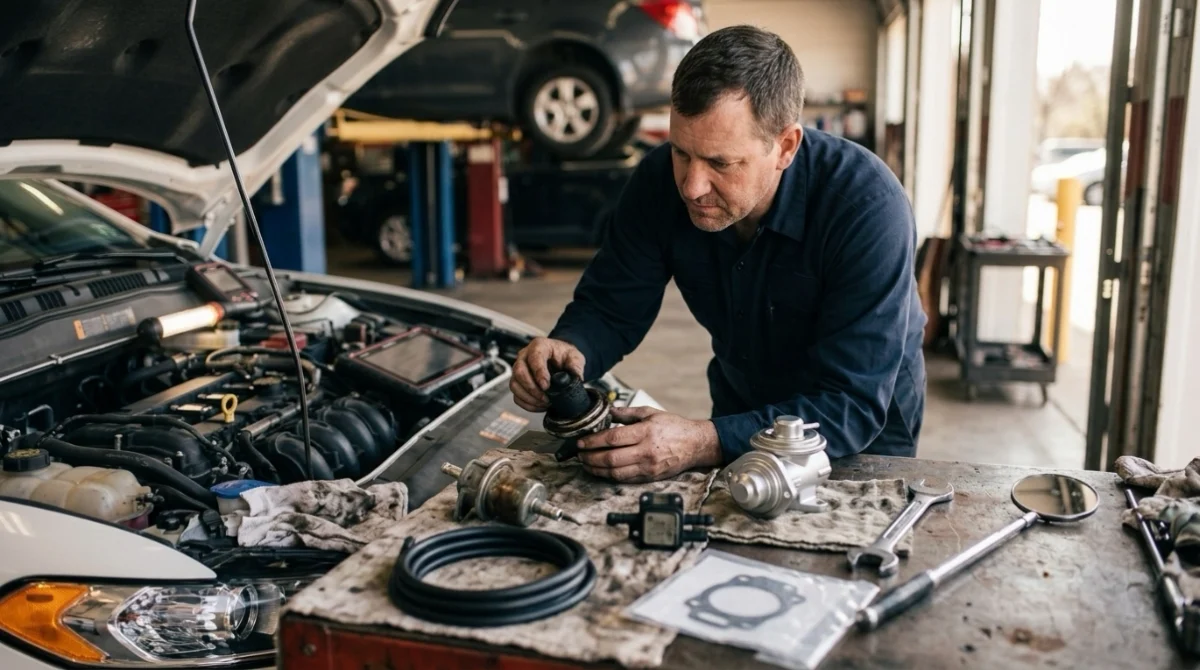
For many vehicles, a P0401 repair lands somewhere from the low hundreds to several hundred dollars. Complex diesel EGR systems or difficult-to-access components can cost considerably more.
The biggest mistake is treating P0401 as a single-part repair. It’s a diagnostic code describing a flow problem, so several different faults can produce the same result.
Typical P0401 repair cost breakdown
| Possible Repair | Typical 2026 Cost Range | When It May Be Needed |
|---|---|---|
| EGR valve/passages cleaning | About $100–$400 | Carbon restricts the valve, tube, or intake passages |
| EGR valve replacement | About $486–$627 national average benchmark | Valve fails mechanically or electrically |
| EGR vacuum control solenoid | About $125–$148 national average benchmark | Vacuum-controlled EGR valve isn’t being commanded properly |
| EGR feedback/position sensor | Often roughly $50–$250+ | Sensor data doesn’t match actual EGR flow |
| Extensive intake/EGR passage work | Several hundred dollars or more | Intake removal or heavy carbon cleaning is required |
| Diesel EGR cooler/assembly repair | Can exceed $1,000 on some vehicles | Integrated or expensive diesel emissions hardware is involved |
RepairPal’s August 2026 national estimate puts average EGR valve replacement at about $486–$627. That figure includes estimated parts and labor but doesn’t account for every vehicle, location, tax, or related repair.
Vehicle differences can be substantial. Access, engine layout, OEM part prices, and whether the EGR cooler is integrated can change the final bill.
Pro tip: ask the shop what test confirmed the failed component before authorizing replacement. A stored P0401 code alone doesn’t prove that an EGR valve is bad.
Why quotes for the same code can differ so much
- Labor rate: Dealership, independent-shop, and regional labor rates vary.
- Component access: Some valves are easy to reach, while others sit behind major intake components.
- Parts choice: OEM and quality aftermarket components can have different prices.
- Carbon severity: A blocked passage may require significant disassembly and cleaning.
- Engine type: Diesel EGR coolers and integrated assemblies can cost far more than simpler gasoline-engine systems.
- Additional codes: Related sensor, airflow, or emissions faults can add diagnostic time.
Section Takeaway: P0401 doesn’t have one fixed repair price. Diagnose the restriction or control fault first, then price the specific repair.
What Does the P0401 Code Mean?
P0401 means the vehicle’s computer detected insufficient exhaust gas recirculation flow. In simple terms, the engine expected more exhaust gas to move through the EGR system than it detected.
Definition: The exhaust gas recirculation system routes a controlled amount of exhaust back toward the engine’s intake. This helps reduce combustion temperature and nitrogen-oxide emissions.
The code begins with “P,” which identifies it as a powertrain diagnostic trouble code. An OBD-II scanner reads the stored code from the vehicle’s engine-control system.
AAA explains that OBD-II codes provide diagnostic clues rather than automatically identifying the part that needs replacement. That’s an important distinction with P0401.
What the computer is looking for
Different vehicles monitor EGR operation in different ways. Some evaluate valve position, manifold pressure, temperature changes, or differential pressure.
The computer commands EGR operation under certain conditions. If the expected response doesn’t occur, it can store P0401 and illuminate the check-engine light.
- A valve may not open enough.
- A passage may restrict exhaust flow.
- A feedback sensor may report the wrong result.
- A vacuum or electrical control problem may prevent valve operation.
This is why scan data matters. Replacing the component named in a code description isn’t a reliable diagnostic method.
Section Takeaway: P0401 describes inadequate EGR flow, not a guaranteed failed EGR valve.
What Usually Causes a P0401 Code?
Carbon restriction is one of the first possibilities worth investigating. Hot exhaust carries soot and deposits through passages that can gradually become restricted.
However, P0401 can also come from mechanical, electrical, vacuum, or sensor faults. The exact system depends on the vehicle.
Carbon-clogged EGR valve or passages
Carbon can collect around the valve pintle, EGR tube, intake ports, and small flow passages. Enough buildup limits the amount of exhaust entering the intake.
This can happen even when the valve itself still operates normally. Cleaning the valve but ignoring a blocked passage can therefore leave P0401 unresolved.
Stuck or failed EGR valve
An EGR valve can stick closed or fail to reach its commanded position. Electronic valves can also develop actuator or position-sensor faults.
Older designs may use engine vacuum to operate the valve. A damaged diaphragm or control problem can stop it from opening.
Faulty EGR feedback sensor
Some systems use a pressure or position sensor to verify EGR flow. If that sensor reports incorrect information, the computer may interpret normal operation as insufficient flow.
That makes sensor testing important before replacing expensive hardware.
Vacuum hose, solenoid, or wiring fault
- Cracked or disconnected vacuum hose
- Faulty vacuum-control solenoid
- Damaged connector
- Corroded terminals
- Open or shorted wiring
A small control fault can prevent an otherwise healthy EGR valve from opening. This is another reason parts swapping gets expensive quickly.
Restricted EGR cooler or intake system
Some diesel and modern emissions systems use an EGR cooler before exhaust returns to the intake. Carbon, soot, or another internal problem can restrict that path.
These systems can require more labor and more expensive components than a simple stand-alone EGR valve.
Section Takeaway: carbon buildup is common, but P0401 can also originate from the valve, sensor, vacuum controls, wiring, cooler, or EGR passages.
How Should P0401 Be Diagnosed Before Buying Parts?
Start by confirming the code and checking for companion trouble codes. Multiple codes can change the diagnostic direction completely.
AAA’s guidance on the check-engine light and OBD2 scanners also stresses diagnosis rather than assuming the stored code names the failed component.
A sensible diagnostic sequence
- Scan all stored codes. Record P0401 and any EGR, MAP, airflow, electrical, or emissions codes.
- Check freeze-frame data. Note engine speed, load, temperature, and other conditions present when the fault set.
- Inspect hoses and wiring. Look for disconnected vacuum lines, damaged connectors, corrosion, or obvious harness problems.
- Inspect for carbon restriction. Check the accessible EGR valve, tube, ports, and passages using the correct service procedure.
- Verify valve operation. Determine whether the valve responds when commanded.
- Review sensor data. Compare EGR feedback, position, pressure, or related readings against the manufacturer’s specifications.
- Repair the confirmed fault. Clean or replace only what testing identifies.
- Clear the code and verify. Run the vehicle through the appropriate drive conditions and confirm that P0401 doesn’t return.
Exact testing procedures vary widely by make, engine, and model year. Manufacturer service information should take priority over a generic online procedure.
Locksmith’s note: I use the same diagnostic principle when troubleshooting electronic key systems—confirm the failed part before replacing anything. With an engine code such as P0401, a qualified automotive technician should handle tests that require component removal, exhaust work, or manufacturer-specific bidirectional controls.
Don’t ignore service information
A known manufacturer issue may change the best repair path. Technical service information can sometimes identify a recurring restriction, revised component, or diagnostic procedure for a specific vehicle.
You can also search your year, make, and model through NHTSA’s recall and manufacturer-communications resources. A normal P0401 repair isn’t automatically a recall, but checking official vehicle information costs nothing.
Section Takeaway: test flow, controls, sensors, and restrictions before ordering an EGR valve. A good diagnosis is usually the cheapest first step.
Can You Fix P0401 Yourself?
Some P0401 problems are reasonable DIY jobs for an experienced home mechanic. Others require scan-tool controls, electrical testing, difficult disassembly, or work around hot exhaust components.
The safest DIY level depends on your vehicle and your experience.
DIY-friendly checks
- Reading and recording trouble codes
- Checking for loose electrical connectors
- Inspecting accessible vacuum hoses
- Reviewing freeze-frame and live data
- Checking manufacturer service information
An advanced DIYer may also clean an accessible EGR valve or passage. Follow the service procedure for your exact engine.
Don’t assume every valve can be cleaned safely with the same chemical. Electronic components, coatings, seals, and integrated assemblies vary.
When a professional repair makes more sense
- The EGR system is difficult to access.
- The intake manifold must be removed.
- The vehicle uses an integrated EGR cooler.
- Electrical testing is required.
- Bidirectional scan-tool commands are needed.
- You can’t confirm whether the valve, sensor, or passages caused the code.
- The code returns after cleaning.
Pro tip: spending money on diagnosis can be cheaper than replacing a $500 component that wasn’t defective.
Should you clean or replace the EGR valve?
Clean it when inspection confirms carbon contamination but the valve remains mechanically and electrically sound. Replacement makes more sense when testing confirms an actuator, sensor, diaphragm, or mechanical failure.
Don’t forget the passages. A new valve can’t restore flow through a heavily clogged intake port.
Section Takeaway: DIY inspection and scanning are often practical, but replace parts only after confirming the failure.
Can You Drive With a P0401 Code?
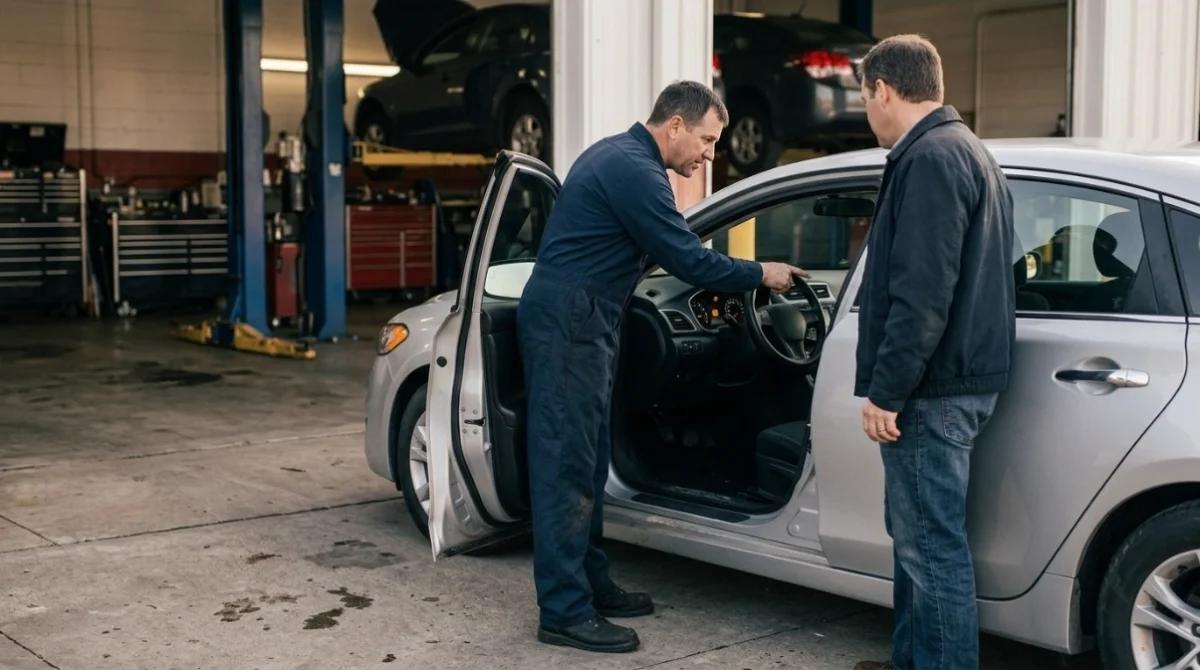
A vehicle with P0401 may still drive normally enough to reach a repair shop. However, you shouldn’t treat an active check-engine light as something to ignore indefinitely.
The EGR system helps control combustion conditions and emissions. Insufficient flow can increase nitrogen-oxide emissions and may contribute to drivability symptoms on some vehicles.
Possible symptoms
- Check-engine light
- Engine pinging or knocking under some conditions
- Rough running on certain vehicles
- Reduced performance
- Emissions-test problems
- No obvious driving symptoms at all
A steady check-engine light and otherwise normal operation is different from a flashing light. AAA recommends taking a flashing check-engine light seriously and stopping at a safe location because it can indicate a problem requiring immediate attention.
If the engine overheats, runs poorly, loses significant power, produces unusual smoke, or shows another serious warning, don’t assume P0401 is the only problem.
Safety note: vehicle behavior matters more than the code number alone. Have unusual or severe symptoms evaluated promptly.
Will P0401 affect an emissions inspection?
An active emissions-related diagnostic code can create inspection problems depending on your state or local testing program. Clearing the code immediately before a test isn’t a reliable workaround.
Clearing codes also resets emissions readiness monitors on many vehicles. Those monitors may need specific driving conditions before they report ready again.
Repair the cause first. Then confirm that the code stays gone and the required monitors complete.
Section Takeaway: P0401 may allow short-term driving when the vehicle otherwise behaves normally, but the fault should still be diagnosed and repaired.
P0401 Repair Cost FAQs
How much does it usually cost to fix P0401?
P0401 repairs can range from roughly $100 for simpler cleaning or control problems to several hundred dollars for component replacement. RepairPal’s August 2026 national estimate for EGR valve replacement is about $486–$627. Complex diesel EGR assemblies can cost substantially more.
Does P0401 mean I need a new EGR valve?
No. P0401 means the computer detected insufficient EGR flow. Carbon-blocked passages, vacuum problems, wiring faults, control solenoids, EGR sensors, or a restricted cooler can produce the same code.
Can cleaning the EGR valve fix P0401?
Yes, when carbon buildup is preventing proper valve movement or restricting an accessible passage. Cleaning won’t repair a failed actuator, damaged sensor, broken vacuum control, wiring problem, or another mechanical fault.
Is P0401 expensive to repair?
Not always. A hose, solenoid, sensor, or manageable carbon restriction can cost much less than a major EGR assembly. The expensive approach is replacing parts without first confirming the cause.
Can an OBD2 scanner tell me exactly what part to replace?
No. An OBD2 scanner can retrieve P0401 and useful diagnostic data, but the trouble code identifies the system condition rather than guaranteeing which component failed. Live data and hands-on testing are often needed.
How long can I drive with P0401?
There isn’t one safe mileage limit for every vehicle. If the engine runs normally and the check-engine light is steady, you may be able to drive to a repair facility. Severe drivability problems, overheating, unusual smoke, or a flashing warning light require faster attention.
Why did P0401 return after replacing the EGR valve?
The original valve may not have been the cause. Clogged intake passages, an EGR tube restriction, faulty feedback sensor, vacuum-control problem, wiring fault, or another flow restriction can remain even after installing a new valve.
Final Takeaway: The smartest way to control your P0401 repair cost is to diagnose before replacing parts. A $500 EGR valve won’t fix a blocked passage or faulty sensor.
Read the complete scan data, inspect the EGR system, and ask what test confirmed the recommended repair. That approach gives you the best chance of fixing P0401 once without paying for parts you didn’t need.
