P0340 Symptoms: Signs of a Camshaft Position Sensor Circuit Fault

Quick Answer
Common P0340 symptoms include a Check Engine Light, long cranking, hard starting, stalling, rough running, hesitation, weak acceleration, and sometimes a complete no-start condition. P0340 points to a problem in the camshaft position sensor circuit, so I recommend checking the sensor, connector, wiring, and manufacturer service information before replacing parts.
Symptoms to Watch For
- Check Engine Light: P0340 is usually stored after the engine computer detects an abnormal camshaft position sensor circuit signal.
- Long Cranking: The engine may take longer than normal to determine camshaft position during startup.
- Hard Starting: The engine may need several attempts before it starts.
- Engine Stalling: A missing or unstable signal can cause the engine to shut off unexpectedly.
- Poor Acceleration: Incorrect timing information can cause hesitation or reduced engine response.
- No-Start Condition: Some vehicles may crank normally but refuse to start.
Best First Check
- Scan for related camshaft, crankshaft, voltage, or timing codes before assuming the camshaft sensor itself has failed.
Seeing P0340 on an OBD2 scanner can be confusing because the car may still run normally at first. In other cases, the engine may stall or refuse to start.
I’ve learned from troubleshooting vehicle electronics that a circuit code should never be treated as an automatic parts-replacement order. This guide explains the symptoms, what they mean, and what you should check next.
In This Guide
What Does P0340 Mean?
P0340 means the engine control module has detected a problem with the camshaft position sensor circuit, normally identified as Sensor A on Bank 1 or the single-sensor side of the engine.
The key word is circuit. The code doesn’t automatically prove that the camshaft position sensor itself is defective.
Definition: A camshaft position sensor monitors camshaft position and sends that information to the engine computer. The computer uses it with crankshaft position data to manage ignition, fuel injection, valve timing, and engine synchronization.
Depending on the vehicle, the sensor may use a Hall-effect or magnetic signal. Its exact operating voltage and test procedure can vary.
A P0340 fault can therefore come from several parts of the circuit:
- Camshaft position sensor with an internal electrical failure.
- Connector terminals that are loose, corroded, bent, or oil-contaminated.
- Wiring harness with an open circuit, short, or damaged insulation.
- Power or ground supply that doesn’t meet the vehicle’s specification.
- Timing-related problem that prevents the expected camshaft and crankshaft signals from matching.
- Engine control module issue, although this is less common than wiring or sensor faults.
That distinction matters. Replacing the sensor without checking the circuit can leave the P0340 code and symptoms unchanged.
What Are the Most Common P0340 Symptoms?
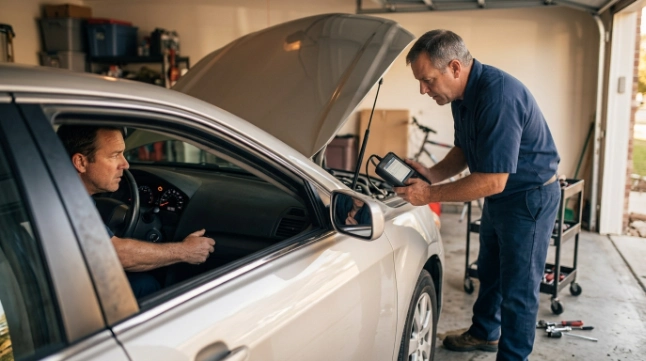
The most common P0340 symptom is a Check Engine Light, but drivability problems can range from almost unnoticeable to severe. The exact behavior depends on how the vehicle handles a missing camshaft signal.
1. Check Engine Light
The Check Engine Light may be the first and only symptom. Some vehicles continue running because the computer can use substitute strategies when the camshaft signal becomes unreliable.
Don’t assume the problem is minor because the engine feels normal. Stored and pending codes can reveal whether the fault is intermittent.
2. Long Cranking Before the Engine Starts
A vehicle with P0340 may crank longer than normal before starting. The computer may need extra crankshaft rotations before it can establish engine position.
This symptom can appear only when the engine is hot or cold. Intermittent wiring faults often make the pattern inconsistent.
3. Hard Starting or No Start
Some engines become difficult to start, while others may crank without starting at all. The starter can sound completely normal during this condition.
That makes battery and starter replacement tempting. An OBD2 scan can quickly show whether a camshaft or crankshaft-related fault needs attention first.
4. Engine Stalling
P0340 can be accompanied by sudden stalling, especially when the sensor signal disappears intermittently. The engine may restart immediately or require several attempts.
Unexpected stalling deserves prompt diagnosis because it can create a safety risk in traffic.
5. Rough Idle or Uneven Running
The engine may idle roughly, shake, or feel less stable than usual. However, rough idle isn’t unique to P0340.
Ignition misfires, vacuum leaks, fuel problems, and mechanical timing faults can produce similar symptoms. Check all stored codes before narrowing the diagnosis.
6. Hesitation and Weak Acceleration
The engine may hesitate when you press the accelerator or feel noticeably weaker under load. Timing control can become less precise when camshaft position information is missing.
7. Reduced Fuel Economy
Fuel economy may drop if the engine computer relies on backup operating strategies. This symptom is less useful diagnostically because many unrelated faults affect fuel consumption.
| Symptom | Typical Pattern | What to Check First |
|---|---|---|
| Check Engine Light only | Vehicle still runs normally | Stored, pending, and related codes |
| Long cranking | Starts after several extra rotations | Cam/crank synchronization and sensor signal |
| Intermittent stalling | Engine cuts out unpredictably | Connector, harness, heat-related sensor failure |
| Crank but no start | Starter works but engine won’t fire | Sensor circuit, crank sensor codes, engine timing |
| Hesitation or weak power | Poor response during acceleration | Live data and related timing faults |
Section Takeaway: P0340 can cause anything from a warning light to a complete no-start. The symptom pattern helps guide testing, but it can’t identify the failed part by itself.
Can P0340 Cause a No-Start or Stalling?
Yes. P0340 can be associated with a crank-no-start condition or intermittent engine stalling when the computer loses the camshaft position information it needs.
The severity varies by engine design. Some engines continue operating in a reduced or backup mode, while others struggle to start.
Why the Engine May Crank but Not Start
The starter motor doesn’t depend on the camshaft sensor to turn the engine. That’s why the engine can crank strongly even when P0340 is present.
Starting the engine requires the control module to coordinate ignition and fuel delivery with engine position. A missing or implausible signal can interfere with that process.
Why the Engine May Stall Randomly
Intermittent electrical faults can appear when vibration, heat, or engine movement affects a weak connection. The signal may disappear for a moment and return later.
I’ve seen electrical problems that looked like failed components until moving the harness changed the fault immediately. Connector and harness inspection should come before expensive parts.
- Look for wiring touching hot exhaust components.
- Check for rubbed-through insulation near brackets.
- Inspect connector locks for damage.
- Look for oil or water inside the connector.
- Check terminals for corrosion or poor tension.
If the vehicle repeatedly stalls in traffic, avoid treating the code as a minor warning-light issue.
What Causes P0340 Symptoms?
P0340 symptoms appear when the engine computer can’t reliably use the camshaft position sensor circuit. A failed sensor is one possibility, not the only one.
Common Causes of P0340
- Failed camshaft position sensor: Internal electronics can fail completely or become intermittent when hot.
- Broken or damaged wiring: An open signal, power, or ground wire can trigger the circuit fault.
- Shorted wiring: Damaged insulation can allow a wire to contact ground, power, or another circuit.
- Corroded connector terminals: Moisture can create resistance and interrupt a clean sensor signal.
- Loose connector: A connector that isn’t fully seated may lose contact during vibration.
- Oil contamination: Engine oil entering a connector can interfere with terminal contact.
- Mechanical timing problem: A stretched chain, jumped belt, damaged reluctor, or timing fault can affect cam/crank correlation.
- Control module problem: Module faults are possible but should be considered only after basic circuit tests.
Related codes provide valuable clues. P0341, P0342, P0343, crankshaft sensor codes, timing codes, or voltage faults can change the diagnostic direction.
As of 2026, vehicles also vary widely in sensor design and variable valve timing systems. Always check information for the exact year, engine, and model.
Owners can start with official manufacturer resources such as Toyota or Honda when looking for vehicle-specific service and support information.
How Do You Diagnose P0340 Correctly?

Diagnosing P0340 correctly means proving where the circuit or synchronization problem exists before replacing the camshaft position sensor. Start with the scanner, then move to physical and electrical checks.
Step 1: Confirm the Code
- Connect an OBD2 scanner.
- Record P0340 and every related code.
- Check whether P0340 is stored, pending, or permanent.
- Review freeze-frame data when available.
- Note engine temperature, RPM, voltage, and operating conditions when the fault appeared.
Don’t erase the code immediately. Freeze-frame information may show whether the fault appeared during startup, idle, cruising, or acceleration.
Step 2: Inspect the Sensor and Harness
Locate the camshaft position sensor using reliable service information. Avoid assuming its location because engine layouts differ.
- Check the connector is fully locked.
- Inspect wires for cuts, rubbing, and melted insulation.
- Look for moisture, dirt, or oil inside the connector.
- Examine terminal pins for bending or corrosion.
- Inspect nearby harness clips and engine grounds.
Step 3: Check Power, Ground, and Signal
The correct test depends on sensor design. Some sensors use a reference voltage, ground, and signal wire, while others operate differently.
Use the manufacturer’s wiring diagram and specifications. Never assume wire colors or voltage values are the same between vehicles.
Technician’s note: if you’re not comfortable back-probing connectors or interpreting an oscilloscope signal, have a qualified technician perform the circuit test. Avoid piercing insulation unnecessarily because that can create future corrosion.
Step 4: Compare Camshaft and Crankshaft Data
A capable scan tool may show camshaft synchronization, cam position data, or related parameters. An oscilloscope can provide a more direct view of signal patterns.
If the electrical circuit checks correctly but synchronization remains wrong, mechanical timing deserves closer inspection.
Step 5: Verify the Repair
- Repair the confirmed fault.
- Reconnect everything securely.
- Clear the diagnostic codes.
- Start the engine and watch live data.
- Perform an appropriate road test.
- Rescan for pending or returning codes.
A code that disappears after clearing isn’t proof of repair. An intermittent problem may need several operating cycles before it returns.
Section Takeaway: Test the circuit before replacing the sensor. Wiring, connectors, synchronization, and mechanical timing can all produce the same P0340 code.
Can You Drive With a P0340 Code?
You may be able to drive with P0340 if the engine starts and runs normally, but continuing to drive isn’t a good long-term plan. The fault can progress into stalling, hard starting, or a no-start condition.
Stop driving and arrange diagnosis sooner if the engine begins stalling or losing power unexpectedly.
Signs You Should Avoid Driving
- The engine stalls while moving.
- The vehicle repeatedly fails to start.
- Acceleration becomes unpredictable.
- Several timing or crankshaft sensor codes appear together.
- The engine develops unusual mechanical noises.
- The Check Engine Light flashes because another serious fault is also present.
If you’re concerned that a known vehicle defect may be involved, you can also check official safety information through the National Highway Traffic Safety Administration.
Don’t replace the sensor simply to make the warning light disappear. Diagnose the cause so you know the engine is receiving a reliable camshaft position signal.
P0340 Symptoms FAQ
What is the first symptom of P0340?
A Check Engine Light is often the first noticeable symptom of P0340. Some vehicles may continue running normally until the camshaft position sensor signal becomes weaker or disappears completely.
Can P0340 cause hard starting?
Yes. A missing or unreliable camshaft position signal can make engine synchronization during startup more difficult, causing longer cranking or repeated starting attempts.
Can P0340 cause the engine to stall?
Yes. An intermittent sensor, loose connector, or damaged wire can interrupt the signal while the engine is running. Depending on the vehicle, that interruption may cause stalling or temporary loss of power.
Does P0340 always mean the camshaft sensor is bad?
No. P0340 identifies a camshaft position sensor circuit problem. Wiring damage, poor connections, power or ground faults, mechanical timing issues, and other electrical problems can produce the same code.
Can a bad crankshaft sensor cause a P0340 code?
A crankshaft signal problem can affect camshaft-to-crankshaft synchronization and may appear with related diagnostic codes. Scan for crankshaft sensor and timing codes before replacing the camshaft sensor.
Can low battery voltage trigger P0340?
Low system voltage can interfere with electronic sensors and control modules, especially during starting. If battery voltage is weak or several voltage-related codes are present, test the charging and starting system as part of the diagnosis.
Will clearing P0340 fix the problem?
No. Clearing the code only removes stored diagnostic information. If the sensor circuit problem remains, the code will usually return after the computer detects the fault again.
Final takeaway: P0340 symptoms can range from a simple Check Engine Light to long cranking, stalling, hesitation, and a complete no-start condition. Treat the code as a circuit diagnosis, not automatic proof that the camshaft position sensor needs replacement.
Start with a full OBD2 scan, inspect the connector and wiring, and test the circuit using specifications for your exact vehicle. That approach gives you the best chance of fixing the real problem the first time.
