
P0325 Causes: Why the Knock Sensor Circuit Code Appears

Quick Answer
The most common P0325 causes are a failed knock sensor, damaged sensor wiring, a loose or corroded connector, an open or short circuit, and less commonly an ECM or software problem. Actual engine knock can also affect knock-sensor readings, so the sensor should not be replaced until the circuit and engine condition are checked. If electrical testing is beyond your experience, an qualified automotive repair facility can test the circuit before parts are replaced.
Common P0325 causes
- Failed knock sensor: The sensor may stop producing a usable signal because of age, heat, corrosion, or internal damage.
- Damaged wiring: Chafed, broken, melted, or rodent-damaged wires can interrupt the signal between the sensor and engine computer.
- Connector problems: Loose terminals, moisture, corrosion, or bent pins can create an intermittent or incorrect signal.
- Circuit fault: An open circuit or short to power or ground can trigger P0325 even when the sensor itself is good.
- Engine knock: Detonation, overheating, incorrect fuel, or another engine problem may create abnormal vibration that complicates diagnosis.
- ECM or software issue: Computer or calibration problems are possible, but they should be considered only after basic circuit checks.
Best first check
- Read the freeze-frame data, check for related codes, and inspect the knock-sensor harness before buying a replacement sensor.
P0325 can look simple on an OBD2 scanner, but the code doesn’t automatically mean the knock sensor is bad. It tells you the engine computer detected a problem with the knock sensor 1 circuit.
When I approach a code like this, I treat the scan result as a starting point rather than a parts list. This guide explains the major P0325 causes, what separates them, and what you should check first.
In This Guide
What Does P0325 Mean?
P0325 means the powertrain control module detected a problem with the knock sensor 1 circuit. It normally refers to Bank 1 or the single knock sensor on engines that use only one.
Definition: A knock sensor is a vibration-sensitive sensor that helps the engine computer recognize abnormal combustion, often called knock, pinging, or detonation.
The computer can react to knock by adjusting ignition timing. This helps the engine operate safely while still producing useful power.
P0325 is important because it describes a circuit malfunction. It does not prove that damaging combustion knock is occurring.
- P0325: Knock sensor 1 circuit malfunction.
- P0326: Knock sensor 1 circuit range or performance problem.
- P0327: Knock sensor 1 circuit low input.
- P0328: Knock sensor 1 circuit high input.
- P0329: Knock sensor 1 circuit intermittent.
Manufacturers may describe these codes slightly differently, and sensor locations vary between engines. Always confirm Bank 1, sensor numbering, connector locations, and test specifications using vehicle-specific service information.
A scanner can tell you when P0325 was stored and may provide freeze-frame information. It cannot tell you automatically whether the sensor, wiring, connector, engine, or ECM caused the fault.
What Are the Most Common P0325 Causes?
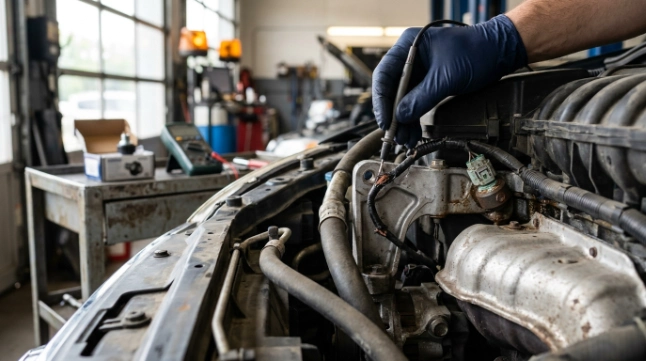
The most common P0325 causes involve the sensor or its electrical circuit. Start with those possibilities before assuming the engine computer has failed.
1. A Failed Knock Sensor
The knock sensor itself can fail internally. Heat, age, contamination, corrosion, or physical damage may prevent it from creating the signal the computer expects.
A failed sensor may produce no useful signal or an abnormal one. However, replacing the sensor without testing the wiring can lead to the same code returning.
2. Damaged Knock Sensor Wiring
Wiring faults are a major reason a good sensor cannot communicate correctly with the ECM. Engine heat, vibration, previous repairs, rodents, or harness rubbing can damage insulation and conductors.
- Broken conductor: Interrupts the circuit completely.
- Chafed insulation: May allow the wire to short against metal.
- Melted harness: Can occur near hot engine or exhaust components.
- Stretched wiring: Can damage conductors near connectors.
- Previous repair damage: Poor splices or incorrect routing can create resistance or intermittent faults.
This is not just a theoretical possibility. Manufacturer service information has documented P0325 cases caused by harness routing and chafing.
3. Loose, Corroded, or Contaminated Connectors
The connector between the knock sensor and engine harness has to maintain reliable electrical contact. Moisture, dirt, corrosion, bent terminals, or a loose locking tab can interfere with the signal.
Connector problems are especially worth checking when the code appears intermittently. Moving the harness may change the fault if a terminal has poor contact.
4. An Open or Short in the Circuit
P0325 may appear because the sensor circuit is electrically open or shorted. An open circuit prevents the expected signal from reaching the ECM.
A short to ground or voltage can also push the circuit outside its expected operating range. Exact test values depend on the vehicle and should come from manufacturer service specifications.
Technician’s note: Don’t apply generic resistance or voltage specifications to every knock sensor. Sensor design and diagnostic strategy vary by engine.
5. Incorrect Sensor Installation or Mounting
A knock sensor depends on vibration traveling through the engine structure. Incorrect installation can affect how that vibration reaches the sensor.
Problems may occur if the wrong sensor is installed, the mounting surface is contaminated, or the sensor wasn’t installed according to the manufacturer’s procedure. Never guess the tightening specification.
6. Actual Engine Combustion Problems
Real engine knock, excessive vibration, or another combustion fault can complicate the knock-sensor signal. These problems become more likely when P0325 appears with other engine codes or noticeable symptoms.
- Incorrect fuel octane for the vehicle
- Excessive combustion-chamber deposits
- Overheating
- Lean air-fuel operation
- Ignition or timing problems
- Misfires or abnormal mechanical vibration
These conditions don’t make every P0325 an engine-damage problem. They simply mean diagnosis should include the engine when evidence points beyond the electrical circuit.
7. ECM Calibration, Software, or Module Problems
An ECM problem is possible, but it should be low on the initial suspect list. Wiring, terminals, sensor condition, and vehicle-specific service information should be checked first.
Some manufacturer bulletins have connected P0325 to calibration or software conditions on specific vehicles. That is why checking technical service information matters after normal circuit testing fails.
| Possible Cause | Clue You May Notice | Best Next Check |
|---|---|---|
| Failed knock sensor | Circuit wiring looks intact but sensor response remains incorrect | Test using factory specifications |
| Damaged harness | Visible rubbing, cuts, melted insulation, or intermittent fault | Inspect wiring from sensor toward ECM |
| Connector fault | Moisture, corrosion, loose pins, or damaged lock | Inspect terminals and connector fit |
| Open or short circuit | Signal remains outside specification | Perform vehicle-specific electrical tests |
| Engine combustion issue | Pinging, overheating, misfire, or related codes | Diagnose the underlying engine condition |
| ECM or software issue | Circuit tests correctly but code keeps returning | Check service bulletins and factory diagnostics |
Section Takeaway: Most P0325 diagnoses should begin with the knock sensor circuit, especially the harness and connector. Don’t condemn the ECM or replace several parts before basic electrical checks are complete.
Can Engine Knock or Fuel Problems Cause P0325?
Yes, abnormal combustion or engine vibration can influence knock-sensor activity. However, P0325 remains primarily a circuit-related code, so actual knock should not distract you from testing the circuit.
Engine knock occurs when combustion becomes uncontrolled enough to create pressure waves inside the cylinder. Drivers may hear this as pinging or rattling, especially under acceleration or heavy load.
The knock sensor is designed to detect vibration associated with this event. The ECM can then change ignition timing to reduce knock.
Fuel octane matters because octane describes gasoline’s resistance to abnormal combustion. Use the fuel grade recommended by the vehicle manufacturer rather than assuming premium fuel will automatically repair P0325.
- Audible pinging: Investigate the combustion problem instead of treating P0325 as an isolated electrical fault.
- Engine overheating: Correct the cooling problem before judging knock-sensor behavior.
- Misfire codes: Diagnose the misfire because unusual vibration may affect sensor information.
- No engine symptoms: Give the wiring, connector, and sensor circuit higher priority.
If you suspect an engine-related cause, check oil and coolant conditions and review other stored trouble codes. A single P0325 with no mechanical symptoms often sends diagnosis back toward the electrical side.
How Do You Find the Real Cause of P0325?
The best P0325 diagnosis follows evidence from the scanner and circuit instead of replacing the sensor immediately. Start with information that can separate an intermittent wiring problem from an active engine problem.
Step 1: Confirm the Code and Read Related Data
Connect an OBD2 scanner and confirm whether P0325 is current, pending, stored, or accompanied by other codes. Record the freeze-frame data before clearing anything.
- Engine speed when the fault appeared
- Engine load
- Coolant temperature
- Vehicle speed
- Related misfire or sensor codes
Freeze-frame data can reveal whether the fault happened during a cold start, highway cruise, acceleration, or another operating condition. That context may shorten the diagnostic path.
Step 2: Look for Evidence of Real Engine Knock
Listen for abnormal pinging or knocking and check for overheating, low oil level, rough operation, or significant power loss. Do not continue loading the engine heavily when a serious mechanical noise is present.
Engine noise needs separate diagnosis because a knock sensor code and mechanical knock are not the same problem. A circuit repair won’t correct worn internal parts or uncontrolled combustion.
Step 3: Inspect the Sensor Harness and Connector
Visually follow as much of the knock-sensor wiring as you can safely access. Look carefully where the harness passes near brackets, engine covers, hot surfaces, or sharp edges.
- Broken insulation
- Harness chafing
- Oil or coolant contamination
- Corroded terminals
- Loose connector locks
- Bent or pushed-back pins
- Evidence of previous wiring repairs
A visual inspection can find faults that a quick sensor replacement misses. Manufacturer bulletins have documented P0325 cases caused by harness chafing.
Step 4: Test the Circuit Using Factory Specifications
If the wiring looks normal, electrical testing comes next. The exact procedure can involve checking continuity, shorts, sensor output, or other circuit values specified for that engine.
Do not assume every knock sensor uses the same test method. Some sensor designs and ECM strategies differ significantly.
Technician’s note: Back-probing connectors or testing an ECM circuit incorrectly can damage terminals or electronics. Use the factory wiring diagram and test procedure for the exact year, engine, and model.
Step 5: Verify Vehicle-Specific Information
P0325 is generic, but repair details are not. Sensor location, access method, wiring colors, connector pins, specifications, and software updates can all vary.
Owners should also check whether manufacturer communications exist for their vehicle. The NHTSA vehicle safety resources provide access to recalls and related vehicle information.
If you’re diagnosing a Honda, for example, the official Honda service and maintenance portal provides manufacturer owner resources. Other brands should be checked through their equivalent official support systems.
Step 6: Clear the Code Only After the Repair
Once the actual problem is corrected, clear the stored code when appropriate and operate the vehicle under normal conditions. Then rescan it to see whether P0325 returns.
Clearing the code before recording diagnostic information can erase useful evidence. It also does not repair the underlying problem.
Section Takeaway: Diagnose P0325 in order—scan data, engine condition, wiring, connector, circuit testing, then vehicle-specific service information. Replacing the knock sensor should be a confirmed repair, not an automatic first move.
Can You Drive With a P0325 Code?
A vehicle with P0325 may still drive normally, especially when the only symptom is a Check Engine Light. That does not mean the code should be ignored.
The knock-sensor system helps the engine computer respond to abnormal combustion. A circuit problem may reduce the computer’s ability to react as designed.
A short, gentle trip for diagnosis may be reasonable when the engine runs normally and no serious warning signs are present. Avoid heavy acceleration, towing, or high engine loads until you understand the fault.
Stop driving and investigate promptly if you notice:
- Loud or persistent engine knocking
- Severe hesitation or power loss
- Overheating
- Low oil-pressure warning
- A flashing Check Engine Light
- Strong shaking or severe misfiring
Audible engine knock deserves particular attention because prolonged abnormal combustion or mechanical knocking can lead to expensive damage. Don’t assume P0325 itself explains every noise coming from the engine.
How Can You Keep P0325 From Coming Back?
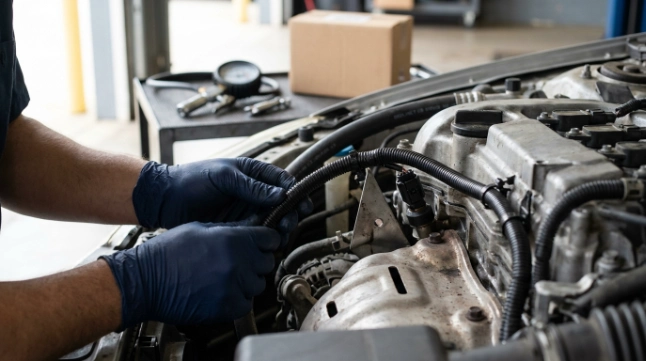
Preventing another P0325 starts with fixing the root cause instead of simply clearing the code. A replacement sensor won’t solve damaged wiring, connector corrosion, overheating, or a vehicle-specific software issue.
- Protect the harness: Keep wiring secured away from sharp edges and hot components.
- Repair contamination: Address coolant or oil leaks that reach electrical connectors.
- Use the correct fuel: Follow the octane recommendation in the owner’s manual.
- Fix overheating: Cooling-system problems can contribute to abnormal combustion.
- Use correct parts: Verify replacement sensor compatibility for the exact vehicle and engine.
- Follow installation specifications: Sensor mounting and tightening procedures may affect operation.
- Check service information: Look for manufacturer bulletins when a correctly repaired circuit still produces P0325.
As of 2026, this last step remains important because manufacturer communications continue to document cases where wiring layout or module software contributes to diagnostic trouble codes. Vehicle-specific information can prevent unnecessary parts replacement.
P0325 Causes FAQ
What is the most common cause of P0325?
A faulty knock sensor or a problem in its wiring and connector are among the most common causes. Because P0325 identifies a circuit malfunction, inspect the harness and terminals before assuming the sensor itself has failed.
Does P0325 always mean the knock sensor is bad?
No. P0325 can be caused by damaged wiring, a loose connector, corrosion, an open or short circuit, abnormal engine conditions, or occasionally an ECM or software issue. Testing should confirm the failed part before replacement.
Can bad gasoline cause a P0325 code?
Fuel with insufficient octane can contribute to engine knock, but P0325 specifically indicates a knock-sensor circuit problem. Use the manufacturer’s recommended fuel and investigate audible knock, but don’t skip electrical diagnosis because the fuel was recently changed.
Can a wiring problem cause P0325 intermittently?
Yes. Chafed wiring, loose terminals, corrosion, or a partially broken conductor can create an intermittent connection. The code may appear only under certain temperatures, vibration levels, or engine movement, which makes a careful harness inspection important.
Can I clear P0325 with an OBD2 scanner?
Most OBD2 scanners can clear a stored engine code, but clearing it doesn’t fix the cause. Save freeze-frame information first, repair the problem, and then rescan the vehicle after normal operation to confirm the code stays away.
Can P0325 be caused by the ECM?
Yes, but an ECM fault should not be the first assumption. Sensor condition, wiring, terminals, circuit integrity, and applicable service information should be checked first because computer replacement or programming requires vehicle-specific diagnosis.
Should I replace the knock sensor as soon as P0325 appears?
No. Confirm the code, review freeze-frame data, inspect the harness and connector, and test the circuit according to manufacturer specifications. Replace the sensor only when the evidence shows it is the source of the fault.
Bottom line: P0325 is a diagnostic clue, not proof of a failed knock sensor. Start with the sensor circuit, pay attention to real engine symptoms, and use vehicle-specific specifications before replacing parts.
If P0325 keeps returning after basic checks, have the circuit tested professionally. A correct diagnosis can prevent unnecessary sensor replacement and reveal wiring, engine, or software problems that a basic code reader cannot identify on its own.
