How to Fix P0401: EGR Insufficient Flow Diagnosis and Repair

Quick Answer
To fix P0401, first confirm the code and freeze-frame data with an OBD2 scanner, then inspect the EGR valve, passages, vacuum lines, electrical connections, and flow-related sensors. P0401 means the computer detected insufficient exhaust gas recirculation flow, so replacing the EGR valve without testing can waste money; an OBD diagnostic code lookup can help you understand why the code is only the starting point.
Quick P0401 Fixing Process
- Scan first: Confirm P0401 and save freeze-frame data before clearing anything.
- Inspect visually: Check EGR hoses, wiring, connectors, and nearby intake or exhaust plumbing.
- Test EGR operation: Verify that the valve responds when commanded or when vacuum is applied, depending on the system.
- Check passages: Look for carbon buildup restricting exhaust flow through the EGR circuit.
- Verify sensors: Test the relevant pressure, airflow, or position sensors instead of assuming the valve failed.
- Confirm the repair: Clear the code only after repairs, drive the vehicle, and verify that P0401 does not return.
Important
- Let the engine and exhaust system cool before touching EGR components because they can become extremely hot.
P0401 can look simple on a scan tool, but the code does not tell you which part failed. I treat it as a flow problem that needs testing, not as an automatic instruction to buy an EGR valve.
I often see this same mistake when scanning a vehicle that came in for unrelated electrical or key-system work. Someone has already cleared the code or replaced a component, which removes useful clues and makes diagnosis harder.
In This Guide
What Does P0401 Mean?
P0401 means “Exhaust Gas Recirculation Flow Insufficient Detected.” It is a generic OBD-II powertrain diagnostic trouble code related to the vehicle’s exhaust gas recirculation system.
The exhaust gas recirculation system, usually called the EGR system, routes a controlled amount of exhaust gas back into the engine’s intake under certain operating conditions.
- P: The fault involves the powertrain.
- 0: It is a generic OBD-II code.
- 4: The fault falls within an auxiliary emissions-control category.
- 01: The system detected insufficient EGR flow.
The engine control module, or ECM, expects measurable changes when it commands EGR operation. Those changes may be monitored through pressure, airflow, manifold pressure, valve-position, or other sensor inputs.
If the expected change does not occur, the ECM can store P0401 and illuminate the check engine light.
Does P0401 Mean the EGR Valve Is Bad?
No. A failed EGR valve is one possible cause, but P0401 only tells you that the computer did not see the expected EGR flow.
The actual restriction or fault can be elsewhere in the system.
- Carbon-blocked EGR passages
- A valve that does not open properly
- Broken or leaking vacuum hoses
- Electrical circuit problems
- Faulty EGR flow or pressure sensing
- Intake passage restrictions
- Exhaust-side restrictions or leaks affecting measurement
This distinction matters because carbon buildup can sometimes create the same code as an electrically failed valve.
Section Takeaway: P0401 identifies insufficient EGR flow, not a specific failed component. Diagnose the flow problem before replacing parts.
What Causes a P0401 Code?
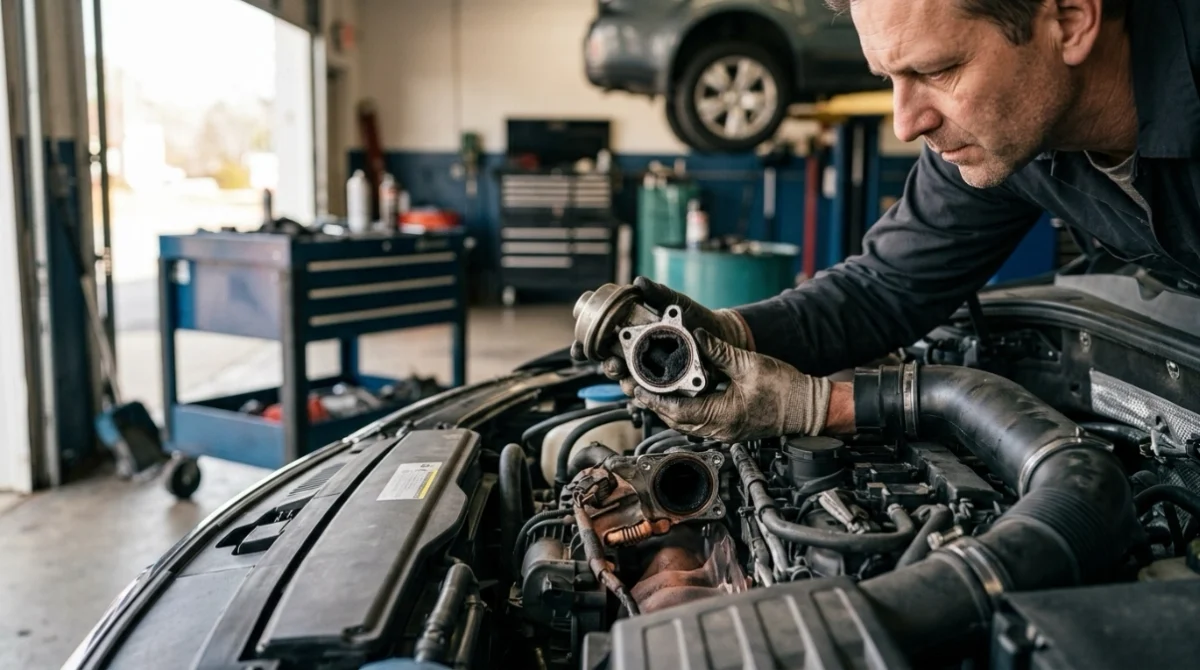
The most common P0401 causes involve a restriction in the EGR path or a problem controlling or measuring EGR flow.
Which cause is most likely depends heavily on the vehicle’s year, engine, and EGR design.
1. Carbon Buildup in the EGR Passages
Carbon deposits are one of the first things I consider when an older EGR-equipped vehicle stores P0401 but otherwise runs reasonably well.
Soot and oily intake deposits can gradually narrow the passages until commanded EGR flow becomes too low.
Some engines have several small EGR ports rather than one large passage. A single blocked area can sometimes create uneven flow without making the entire system look obviously clogged.
2. Stuck or Failed EGR Valve
An EGR valve can stick closed, move only partway, or fail electrically. Vacuum-operated versions can also fail to open when they do not receive adequate vacuum.
Don’t condemn the valve based only on P0401.
- Check whether the valve receives the proper command.
- Confirm that the valve actually moves.
- Look for carbon preventing full movement.
- Test electrical or vacuum control as appropriate.
3. Damaged Vacuum Lines or Vacuum Control Components
Many older EGR systems use engine vacuum to operate the valve. A cracked hose, disconnected line, restricted hose, or faulty control solenoid can prevent proper operation.
A quick visual inspection can sometimes find this problem before any parts are removed.
4. EGR Flow, Pressure, MAP, or Airflow Sensor Problems
Vehicles do not all measure EGR flow the same way. Some systems infer flow using differential pressure, manifold pressure, mass airflow, temperature, or valve-position information.
A biased sensor can therefore make the computer believe EGR flow is too low even when the valve itself still works.
5. Wiring or Connector Damage
Heat is a major concern around EGR components because much of the system sits near hot intake or exhaust parts.
- Look for brittle wiring insulation.
- Check for loose or backed-out connector terminals.
- Inspect for corrosion or water intrusion.
- Look for harness sections rubbing against metal.
*Diagnostic note: electrical test values and pin assignments vary by vehicle, so use the manufacturer service information instead of applying a generic voltage specification.*
6. Intake or Exhaust Problems Affecting EGR Flow
An intake restriction, unusual exhaust restriction, or leak in a monitored portion of the system can sometimes interfere with the pressure or airflow change the ECM expects.
This is less straightforward than a clogged passage, which is why scan data matters.
| Possible Cause | Common Clue | Best Next Check |
|---|---|---|
| Carbon-blocked passage | Valve responds but measured flow remains low | Inspect EGR ports and passages |
| Stuck EGR valve | Little or no engine-data response when commanded | Confirm command and valve movement |
| Vacuum problem | Vacuum-operated valve does not open | Inspect hoses, supply, and control solenoid |
| Sensor fault | Data does not match expected engine response | Compare relevant live-data PIDs and service specifications |
| Wiring fault | Intermittent operation or additional circuit codes | Inspect connector and test circuit integrity |
Section Takeaway: Carbon restrictions and valve-control problems are common possibilities, but sensor and wiring faults can create the same P0401 result.
How Do You Diagnose P0401 Correctly?
The best P0401 diagnosis starts with scan data before anything is cleaned, disconnected, or replaced.
That preserves the evidence the ECM recorded when the fault occurred.
Step 1: Scan All Stored and Pending Codes
Connect an OBD2 scanner and record every stored, pending, and permanent code available.
Don’t focus on P0401 alone if other airflow, pressure, electrical, misfire, or emissions codes are present.
Related codes can change the diagnostic direction.
Step 2: Save the Freeze-Frame Data
Freeze-frame data is a snapshot of operating conditions when the ECM detected the fault.
- Engine speed
- Vehicle speed
- Engine load
- Coolant temperature
- Fuel-trim information
- Airflow or manifold-pressure data
The available parameters vary by vehicle and scanner.
If P0401 repeatedly sets under similar conditions, that pattern can help narrow the problem.
Step 3: Perform a Visual Inspection
Let the engine cool before working around EGR or exhaust components.
Then inspect everything you can reach without unnecessary disassembly.
- EGR electrical connector
- Harness routing
- Vacuum hoses, when fitted
- Vacuum control solenoids
- Metal EGR pipes
- Intake connections
- Signs of soot leakage
- Loose or damaged plumbing
A damaged hose or disconnected connector is much cheaper to correct than an unnecessary EGR valve replacement.
Step 4: Use Live Data
A capable scanner can show whether the ECM requests EGR operation and whether related sensor readings respond.
Some scanners also support bidirectional controls that can command certain components during testing.
Watch the appropriate airflow, manifold-pressure, EGR-position, or pressure-related data for your vehicle.
The exact expected response varies, so compare results with manufacturer service information.
Step 5: Verify the Valve Can Operate
On an electronically controlled EGR valve, determine whether the valve receives a command and responds correctly.
On a vacuum-operated design, verify that the valve has an adequate vacuum supply and that the control system can apply it.
*Pro tip: don’t apply vacuum or electrical power to an unfamiliar EGR component until you know the correct testing method for that vehicle.*
Step 6: Inspect for Carbon Restrictions
If the valve operates but flow remains insufficient, inspect the passages between the exhaust, EGR valve, and intake.
Heavy carbon can make a good valve look bad.
- Look inside accessible EGR ports.
- Check small intake passages carefully.
- Inspect removed components for hard carbon deposits.
- Clean only with methods and chemicals safe for those components.
Step 7: Test the Sensors and Circuits
If airflow paths and valve operation appear normal, move to the sensors and electrical circuits used to monitor the system.
Use wiring diagrams and service specifications for the specific VIN, engine, model year, and emissions package.
A generic scanner cannot tell you every manufacturer-specific test value.
Section Takeaway: Preserve the scan data, prove the valve can operate, prove the passages can flow, and only then blame a sensor or component.
How Do You Fix P0401?
The correct P0401 fix depends on what failed during diagnosis. There is no single repair that works for every vehicle.
Clean Restricted EGR Passages
If testing confirms carbon blockage, cleaning the restricted passages may restore proper EGR flow.
The job can range from cleaning an accessible port to removing intake components for a deeper cleaning.
- Allow exhaust components to cool completely.
- Prevent loose carbon from entering sensitive areas.
- Avoid damaging machined sealing surfaces.
- Replace disturbed gaskets when required by service information.
- Make sure every passage is open before reassembly.
Do not force tools through a passage unless the service procedure allows it.
Replace a Failed EGR Valve
Replace the valve when testing confirms that it is mechanically stuck, electrically failed, or unable to respond correctly.
Match the replacement to the vehicle’s VIN and emissions configuration rather than buying by appearance alone.
*Repair note: parts can differ within the same model year, so confirm the correct component through reliable vehicle-specific parts information before ordering.*
Repair Vacuum Hoses or Control Problems
A vacuum-operated EGR system cannot work correctly without proper vacuum supply and control.
Replace cracked hoses and repair failed control components only after testing identifies the fault.
Repair Wiring or Connector Problems
Repair damaged wires, terminals, connector locks, or corrosion that prevents proper valve or sensor operation.
Route repaired wiring away from excessive heat and moving components.
Replace a Faulty EGR-Related Sensor
A pressure, position, airflow, or manifold-pressure sensor should be replaced only when its test results show that it is inaccurate or electrically faulty.
Simply seeing an unusual live-data value does not prove the sensor itself is bad.
Clear the Code and Verify the Repair
Once the confirmed fault has been repaired, clear P0401 and perform an appropriate road test.
Recheck stored and pending codes afterward.
- Confirm P0401 does not immediately return.
- Review the same live-data parameters used during diagnosis.
- Check that all connectors and hoses remain secure.
- Allow required OBD monitors to run over normal driving.
Do not clear codes repeatedly just to keep the check engine light off.
AAA also recommends treating diagnostic trouble codes as clues used to identify the underlying problem rather than assuming the code names the failed part.
Section Takeaway: Fix the confirmed restriction, control fault, sensor problem, or electrical defect, then prove the repair with scan data and a road test.
Can You Drive With a P0401 Code?
A vehicle with only P0401 and a steady check engine light may still appear to drive normally, but you should diagnose the fault rather than ignore it.
The EGR system is part of the vehicle’s emissions-control strategy, and unresolved faults can cause failed emissions testing where OBD readiness is checked.
When Should You Stop Driving?
Driving risk depends on what else the vehicle is doing, not only the P0401 code.
- Stop if the check engine light begins flashing.
- Stop if the engine is severely shaking or misfiring.
- Stop if you notice major power loss.
- Stop for overheating or other critical warning lights.
- Stop if there is smoke, a strong burning smell, or another obvious mechanical problem.
AAA’s check engine light guidance distinguishes a steady warning from a flashing light, which can indicate a problem needing more immediate attention.
Check for Vehicle-Specific Campaigns
P0401 can appear on many makes and models, and the correct repair varies between them.
Before paying for a major repair, check your VIN for applicable recalls and manufacturer information.
The NHTSA recall lookup lets U.S. owners search their vehicle by VIN or other vehicle information.
*Safety note: a diagnostic code by itself cannot determine whether a vehicle is safe to drive. If performance changes significantly, have the vehicle inspected promptly.*
How Much Does It Cost to Fix P0401?

P0401 repair cost varies widely because the code can be caused by anything from a damaged hose to a clogged intake passage or failed EGR component.
Vehicle design, labor rates, parts quality, engine access, and regional pricing all affect the final bill.
| Repair Type | Illustrative U.S. Range | Why Cost Varies |
|---|---|---|
| Diagnostic testing | About $100–$200+ | Shop rate and diagnostic time |
| EGR passage cleaning | About $100–$500+ | Accessibility and required disassembly |
| Vacuum hose or minor control repair | About $50–$250+ | Parts needed and access |
| EGR-related sensor replacement | About $150–$450+ | Sensor type and location |
| EGR valve replacement | About $200–$800+ | Valve price, engine layout, and labor |
These are broad examples, not quotes for a particular vehicle.
Some engines require substantial intake or exhaust disassembly, which can push the total outside these ranges.
*Cost note: get a vehicle-specific diagnosis before approving an EGR valve or intake-manifold replacement. The cheapest repair is the one that fixes the verified fault once.*
P0401 FAQ
Can a Dirty EGR Valve Cause P0401?
Yes. Carbon can prevent an EGR valve from opening fully or restrict the passages that carry exhaust gas. However, P0401 can also result from vacuum, wiring, sensor, or control problems, so inspect and test the complete system before replacing the valve.
Can I Clean the EGR Valve Instead of Replacing It?
Sometimes. Cleaning can help when carbon buildup is the confirmed problem and the valve itself remains mechanically and electrically sound. If the actuator, position sensor, diaphragm, or internal mechanism has failed, cleaning will not repair that failure.
Will P0401 Clear Itself?
The check engine light may eventually turn off if the computer stops detecting the fault for enough drive cycles, but the stored history may remain. If the underlying flow problem still exists, P0401 is likely to return.
Can a Vacuum Leak Cause P0401?
It can on systems where vacuum is needed to operate or control the EGR valve. A damaged vacuum hose or faulty solenoid may prevent the valve from opening when commanded, resulting in insufficient detected flow.
Can a Bad MAP or Airflow Sensor Cause P0401?
Potentially, depending on how the vehicle monitors EGR operation. If the ECM uses manifold-pressure or airflow changes to confirm EGR flow, inaccurate sensor data may contribute to a P0401 diagnosis.
Does P0401 Mean I Need a New EGR Valve?
No. P0401 means insufficient EGR flow was detected. A new valve should be installed only after testing shows the existing valve has failed or cannot operate correctly.
What Should I Check First for P0401?
Start by scanning all codes and saving freeze-frame data. Then inspect EGR wiring, connectors, hoses, and plumbing before testing valve operation and checking the passages for carbon restrictions.
Final takeaway: P0401 is easiest to fix when you diagnose the entire EGR flow path instead of guessing at parts. Confirm the code, preserve the scan data, prove what is restricting or misreporting flow, make the repair, and verify the result with another scan.
If your scanner supports live data, use it. A few minutes comparing commanded operation with the engine’s actual response can save you from replacing a perfectly good EGR valve.
