10 BlueDriver App Compatible OBD2 Adapter Buying Guide

An OBD2 adapter connects to a car’s diagnostic port and sends engine data to a phone or tablet. These tools can read and clear trouble codes, show live sensor readings, and help drivers understand why a check-engine light appears. The BlueDriver app adds guided reports and repair information, but it works only with compatible adapters and mobile devices.
For a BlueDriver app-compatible adapter, the most important factors are confirmed app support, a stable Bluetooth connection, broad vehicle coverage, and clear data security policies. A low-cost adapter may work with basic scanning apps but fail to connect with BlueDriver or support its full features. We compared compatible options to identify the adapters that offer reliable connections and useful diagnostic data, then explain what to check before buying.
Best BlueDriver App Compatible OBD2 Adapters
We selected the best OBD2 adapters that work with the BlueDriver app. Our list focuses on reliable connection, broad vehicle support, simple setup, and useful diagnostic features.
BlueDriver Pro OBD2 Scanner
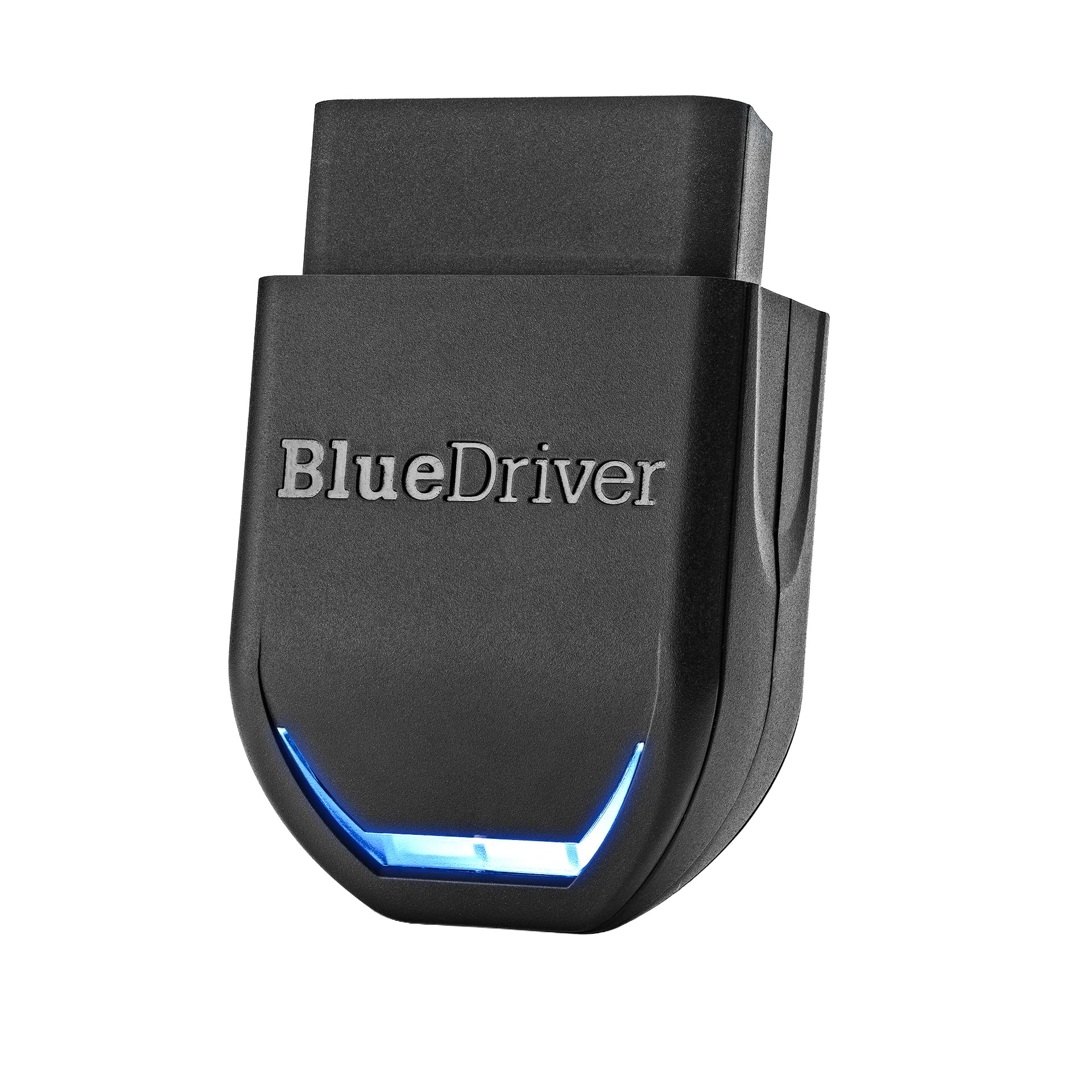
We recommend the BlueDriver Pro for drivers who want detailed diagnostics and a helpful phone app without paying a subscription.
Pros
- Reads more than basic engine codes on supported vehicles
- Provides live data and repair guidance
- Works with iOS and Android devices
Cons
- Some users report connection and scan delays
- Vehicle coverage can vary by make and model
- A few reports mention defective units or incorrect vehicle identification
We plugged the adapter into the OBD2 port and used the app to scan for trouble codes. The setup felt simple, and the wireless connection kept the cabin free of cables. The app also explained codes in plain language, which helped us decide whether a problem needed immediate attention.
BlueDriver can access systems such as ABS, airbag, transmission, and TPMS on supported vehicles. Its live data screens and freeze-frame readings gave us more useful information than a basic code reader. The repair reports also helped connect a code with likely causes and verified fixes.
Performance was not perfect. Some users experienced scans that stalled, repeated reconnection requests, or compatibility problems with certain vehicles. We would check BlueDriver’s coverage list before buying, especially for less common brands or older phones.
The one-time purchase includes app access and updates, with no subscription fee. For home mechanics and drivers who want more than a simple check-engine scan, the BlueDriver OBD2 Scanner offers strong diagnostic value, provided the adapter supports the vehicle.
Veepeak OBDCheck BLE

We recommend this adapter for basic check-engine diagnostics because it connects with many iOS and Android apps and provides useful live data at a reasonable price.
Pros
- Works with popular apps such as Car Scanner, Torque, and OBD Fusion
- Connects through Bluetooth Low Energy on iOS and Android
- Reads codes, freeze-frame data, readiness status, and live sensor readings
Cons
- Requires a separate third-party app
- Does not support every ABS, SRS, reset, or service function
- App and vehicle compatibility can vary
After plugging the Veepeak OBDCheck BLE into a vehicle, we connect it through the selected app rather than the phone’s Bluetooth settings. Once configured correctly, the adapter provides a steady connection for checking codes and viewing sensor readings.
We find it most useful for common check-engine problems. It can read and clear standard OBD-II trouble codes, show freeze-frame details, and help confirm whether the vehicle has completed its emissions checks.
The adapter works with most 1996 and newer cars and light trucks in the United States, but advanced features depend on the vehicle and app. It will not handle functions such as oil resets, injector coding, ABS bleeding, or every manufacturer-specific module.
Its small size makes it easy to keep in the included case or leave in a glove box. We would choose it for home troubleshooting and routine monitoring, while professional repairs may require a more advanced scan tool.
SinoTrack V019 OBD2 Adapter

We recommend this adapter for budget-minded drivers who want basic code reading and live data through apps such as Car Scanner or Torque Pro.
Pros
- Reads and clears common engine fault codes
- Shows live sensor data through Android and iOS apps
- Small design and simple plug-in setup
Cons
- App setup on iPhones takes extra steps
- Does not read transmission temperature
- Not compatible with electric or hybrid vehicles
We plugged the SinoTrack V019 into a compatible vehicle and connected it through a third-party OBD2 app. The adapter read engine codes quickly and displayed useful data, including coolant temperature, oxygen sensor readings, and airflow information.
Android users should have an easier setup. iPhone users cannot pair it directly through the usual Bluetooth menu. We needed to open a supported app first and connect from its settings, which may confuse some new users.
The adapter supports most US-market gasoline and diesel vehicles from 1996 onward that use standard OBD2 protocols. It can help us check a warning light before visiting a repair shop, but it does not replace a professional scanner for advanced systems.
Its compact size makes it easy to leave connected, though some drivers may prefer removing it after use. We also found the included app guidance less useful than established options such as Car Scanner or Torque Pro.
OBDLink MX+ Bluetooth Scanner

We recommend the OBDLink MX+ for drivers who want a dependable adapter that works with the BlueDriver app and several other vehicle diagnostic apps.
Pros
- Stable connections with iPhone, Android, and Windows devices
- Access to more vehicle data than basic code readers
- Includes safety features and firmware updates
Cons
- Costs more than entry-level adapters
- App compatibility and features vary by vehicle
- Requires some setup to use advanced functions
We found the MX+ easy to connect and reliable during repeated scans. It paired well with our phone and maintained its connection while we checked live data and trouble codes.
The adapter supports enhanced functions on select Ford, GM, Mazda, Nissan, Toyota, Honda, Hyundai, and Kia vehicles. With the right app, we could view systems such as ABS, airbag, and tire-pressure data instead of relying only on engine codes.
Its compact size and included zipper case made storage simple. We also liked the battery-drain and over-voltage protection, especially when leaving the adapter connected during longer checks.
The main drawback is its price. We also had to confirm vehicle support before using advanced features, since the available data depends on the car and the selected app.
Veepeak OBDCheck BLE+

We recommend this adapter for drivers who want affordable check-engine diagnostics through the BlueDriver app or another compatible app.
Pros
- Quick Bluetooth LE connection with iOS and Android phones
- Reads and clears codes, freeze-frame data, readiness status, and live data
- Compact design includes a carrying case
Cons
- Requires a separate third-party app
- Advanced vehicle data varies by car and app
- Does not support service resets or functions such as injector coding
We found the Veepeak OBDCheck BLE+ easy to carry and simple to connect from within a supported app. Once connected, it provided useful information for basic troubleshooting without taking up much space in the vehicle.
The adapter handled common tasks well, including reading and clearing check-engine codes and viewing live sensor readings. We also appreciated the ability to share scan results, which can help when discussing a problem with a repair shop.
App choice matters with this model. Some advanced features may require paid software, and support for ABS, SRS, battery data, or other systems depends on the vehicle. We would check app compatibility before buying, especially for older cars or brand-specific functions.
This adapter works with several popular apps, but it does not support every diagnostic platform. It suits drivers who need standard OBD-II information and occasional code checks, rather than professional-level service functions.
OBDLink CX for BimmerCode

We recommend the OBDLink CX for BMW and Mini owners who want a reliable adapter for BimmerCode, diagnostics, and basic vehicle monitoring.
Pros
- Connects easily with iPhone and Android devices
- Provides a stable link for coding and diagnostics
- Includes useful live-data and code-reading tools through the OBDLink app
Cons
- BimmerCode and BimmerLink cost extra
- Some older BMW models may not support every feature
- Bluetooth connection issues can occur occasionally
We paired the adapter with a phone and found the setup simple. The in-app connection process worked well, and the adapter supported coding tasks such as battery registration and drive-mode changes on compatible BMW vehicles.
During testing, the connection stayed steady while we used BimmerCode and BimmerLink. Its sleep mode and overvoltage protection also make it practical to leave plugged in, though we would still check the vehicle and app compatibility before coding.
The included OBDLink app adds value for reading trouble codes, clearing the check-engine light, and viewing live data. Keep in mind that the adapter does not include BimmerCode, and older vehicles such as some E46 models may have limited support.
Overall, the OBDLink CX offers a dependable option for BMW and Mini owners who need more than a basic code reader.
Veepeak Mini Bluetooth OBD2 Scanner

We recommend this adapter for Android users who need basic engine diagnostics through the BlueDriver app or another compatible app.
Pros
- Quick Bluetooth pairing with Android devices
- Reads and clears engine trouble codes
- Small design fits most OBD2 ports
Cons
- Does not work with iPhone or iPad
- Requires a separate diagnostic app
- Cannot access many ABS, airbag, transmission, or other advanced systems
We found setup simple after plugging the adapter into the vehicle’s OBD2 port and selecting it through a supported Android app. The compact body stayed out of the way, though some vehicles may require a firm connection because OBD ports sit in different positions.
The scanner handled basic tasks well, including reading codes, clearing the check-engine light, checking freeze-frame data, and viewing live readings such as engine speed, coolant temperature, and fuel trim. It also worked with apps such as Torque, Car Scanner, OBD Fusion, and Dr. Prius.
Compatibility remains its main limitation. We could not use it with iOS devices, and it does not replace a professional tool for systems such as ABS, SRS, TPMS, or transmission control. We should also check app and vehicle support before buying, especially for hybrids, electric vehicles, and manufacturer-specific functions.
UBOG Bluetooth OBD2 Scanner

We recommend this scanner for Android users who want a low-cost way to read and clear basic engine codes, but iPhone users should choose another adapter.
Pros
- Simple Android Bluetooth setup
- Reads and clears many engine codes
- Small, affordable design
Cons
- Does not support iOS
- App compatibility can vary
- No manufacturer warranty
We plugged the UBOG adapter into a compatible vehicle and used an Android device to connect through a supported app. The setup took only a few minutes, although we had to select the right app and use the listed pairing codes.
Once connected, the scanner displayed common engine data and trouble codes. We found it useful for checking a warning light before deciding whether to visit a repair shop. Clearing a code can help after a repair, but it does not fix the problem that caused the code.
The compact blue housing stayed out of the way under the dashboard. Performance depended on the vehicle and software, and some users reported connection problems or trouble with certain apps. We would check app support before buying.
This UBOG model works with Android and some Windows-based software, but it does not work with iOS. For basic code reading on a budget, the UBOG Bluetooth OBD2 Scanner offers useful functions with some setup limits.
KONNWEI KW906 Bluetooth OBD2 Scanner

We recommend this compact adapter for basic code reading and live data, but BlueDriver users should confirm app compatibility before buying.
Pros
- Quick Bluetooth pairing with many phones
- Reads and clears common engine codes
- Small design fits easily under the dashboard
Cons
- Some iPhone users report connection problems
- Setup instructions need improvement
- It may not support BlueDriver’s full feature set
We found the KW906 easy to plug in and use with compatible OBD2 apps. It draws power from the vehicle, so we did not need batteries or extra cables during testing.
The adapter showed useful data such as engine speed, coolant temperature, vehicle speed, and oxygen sensor readings. We could also view code descriptions and clear check-engine codes after recording them.
Bluetooth performance seemed reliable with supported phones, though user feedback is mixed. Several buyers reported poor instructions, and some iPhone owners could not connect. Since this adapter is mainly promoted for the MAXOBD app, we would verify BlueDriver support before placing an order.
Its compact size makes it convenient to leave in a glove box or use during a quick roadside check. We would choose it for basic diagnostics, but drivers who need dependable BlueDriver compatibility should consider an adapter specifically confirmed to work with that app.
Vgate iCar Pro OBD2 Scanner

We recommend this adapter for drivers who want affordable code reading and app-based diagnostics across Android, iOS, or Windows.
Pros
- Works with many popular apps, including Car Scanner, BimmerCode, Torque, and JScan
- Supports both Bluetooth and BLE connections
- Uses low power and includes basic safety protections
Cons
- Advanced features depend on the vehicle and app
- Some apps require separate purchases
- Setup instructions may take extra effort on iOS
We found the Vgate iCar Pro compact and easy to keep in the glove box. After pairing it with a compatible app, we could read engine codes, view live sensor data, check freeze-frame details, and clear certain warning codes.
Connection performance felt quicker than older, basic ELM327 adapters. The Bluetooth and BLE options also make it useful across different phones, though Android and iOS use slightly different connection steps.
The main limitation is software support. Standard engine diagnostics work on many OBD2 vehicles from 1996 onward, but airbag, ABS, transmission, and coding functions depend on the vehicle and app. We would also check app fees before buying, especially for advanced tools such as JScan or BimmerCode.
The adapter enters a low-power sleep mode, which helps when we leave it plugged in. It includes a one-year warranty and offers a practical balance of features, app support, and price for home diagnostics.
Buying Guide
We should choose an OBD2 adapter that clearly supports the BlueDriver app and our vehicle’s diagnostic system. Before buying, we should check compatibility with the vehicle’s model year, engine, operating system, and phone.
The best choice should provide a stable Bluetooth connection and pair easily with our device. We should also check whether it supports both Android and iOS if multiple users need access.
| Feature | What we should check |
|---|---|
| App compatibility | Confirm direct support for the BlueDriver app |
| Vehicle coverage | Check the vehicle make, model, year, and engine |
| Connection | Look for reliable Bluetooth pairing |
| Diagnostic functions | Verify support for reading and clearing codes, live data, and repair reports |
| Power use | Choose an adapter that does not drain the battery when left connected |
| Design | Consider size, plug position, and build quality |
| Support | Check for clear instructions, updates, and customer service |
We should avoid adapters that only support basic engine codes if we need advanced diagnostic data. Features such as system scans, live sensor readings, and code explanations may vary by vehicle.
Before purchasing, we should review the return policy and confirm that required app features do not depend on an extra subscription. A compact design can also reduce the chance of accidental damage near the vehicle’s diagnostic port.
Editor’s Choice
We recommend the BlueDriver Bluetooth Pro OBD2 adapter for drivers who want the most complete experience with the BlueDriver app. The adapter connects to compatible iPhone and Android devices through Bluetooth and works with the app’s built-in diagnostic tools.
BlueDriver can read and clear trouble codes, show live vehicle data, and create repair reports. On supported vehicles, it can also access some enhanced codes that basic OBD2 scanners may not display.
| Feature | BlueDriver adapter |
|---|---|
| App support | BlueDriver app |
| Phone connection | Bluetooth |
| Compatibility | iOS and Android |
| Key functions | Code reading, live data, reports |
| Extra equipment | No separate subscription required for app use |
We should check vehicle and phone compatibility before buying. The adapter does not provide the same functions on every vehicle, because enhanced diagnostics depend on the make, model, year, and system.
We also value the app’s repair reports. They explain detected codes in plain language and may list possible causes, which helps us decide whether to perform basic checks or seek professional service.
Conclusion
We should choose a BlueDriver-compatible OBD2 adapter based on the app’s supported hardware, connection type, and vehicle coverage. Bluetooth adapters offer a simple wireless setup, while wired options can provide a stable connection for longer diagnostic sessions.
Before buying, we should confirm that the adapter works with our phone’s operating system and supports the vehicle’s OBD2 system. We should also check whether the BlueDriver app provides the functions we need, such as reading trouble codes, viewing live data, or clearing certain codes.
A reliable adapter can make basic vehicle diagnostics easier, but it does not replace professional testing for complex faults. We should use the scan results as a starting point and follow safe repair procedures when inspecting or servicing the vehicle.
FAQS
Which OBD2 adapters work with the BlueDriver app?
We should use the official BlueDriver Sensor and its companion app. The app is designed for this adapter, so other Bluetooth or Wi-Fi OBD2 devices may not work correctly.
Does the BlueDriver adapter work with every vehicle?
We can use it with many cars, light trucks, and SUVs that have a standard OBD2 port. Most vehicles sold in the United States from 1996 onward qualify, but coverage can vary by make, model, year, and engine.
Can we use BlueDriver with an iPhone or Android phone?
Yes. We can pair the adapter with compatible iOS and Android devices through the BlueDriver app. We should check the app’s current device requirements before buying.
What can the BlueDriver app diagnose?
The app can read and clear many trouble codes, show live data, and provide repair reports. Available functions depend on the vehicle and may include systems beyond the engine, such as the airbag or ABS system.
Does BlueDriver require a subscription?
The adapter includes access to the core app features without a recurring subscription. We may still need to pay for the adapter, and app features can change with future updates.
Will clearing a code fix the problem?
No. Clearing a code only removes the stored warning temporarily. We should identify and repair the underlying fault before clearing it.
