10 Best OBD2 App Like Dash Command for Advanced Vehicle Diagnostics

OBD2 apps turn a phone and a small vehicle adapter into a basic car diagnostic tool. They can read trouble codes, show live engine data, track fuel use, and help drivers understand warning lights without visiting a repair shop for every issue. DashCommand is a popular example, but several apps offer similar features with different layouts, prices, and levels of vehicle support.
The best OBD2 app like DashCommand should connect reliably, display useful data clearly, and work with both your phone and OBD2 adapter. We also look for accurate readings, helpful code explanations, stable performance, and fair pricing. Compatibility matters because some apps work only with certain adapters, operating systems, or vehicle models.
We compared leading OBD2 apps to find the options that make vehicle checks simple, useful, and affordable.
Best OBD2 Apps Like DashCommand
We reviewed OBD2 apps that offer live vehicle data, diagnostic scans, trip tracking, and other useful tools. Our list highlights the best options for drivers who want features similar to DashCommand.
Veepeak OBDCheck BLE

We recommend this compact scanner for drivers who want affordable check-engine diagnostics through a phone app.
Pros
- Works with iOS and Android through Bluetooth LE
- Reads codes, live data, freeze-frame data, and readiness status
- Supports several popular third-party apps
Cons
- Requires a separate app, and some features cost extra
- Does not handle many ABS, SRS, reset, or relearn functions
- Setup requires choosing the correct app connection type
We found the Veepeak OBDCheck BLE easy to use with apps such as Car Scanner, Torque, and OBD Fusion. Instead of pairing it through the phone’s Bluetooth menu, we connected it from inside the selected app. Once configured, it provided quick access to check-engine codes and live sensor readings.
Its small size makes it easy to leave in a glove box or carry in the included case. We used it for basic vehicle checks and found the data useful when checking whether a fault had returned or whether a vehicle had completed its emissions readiness tests.
The main limitation comes from app and vehicle support. This adapter focuses on standard OBD-II functions, so we would not choose it for regular ABS, airbag, oil-service resets, or advanced manufacturer diagnostics. Before buying, we would confirm that the chosen app supports our vehicle and the features we need.
Veepeak OBDCheck BLE+

We recommend this compact scanner for drivers who want reliable check-engine diagnostics through a third-party app.
Pros
- Quick Bluetooth LE connection with iOS and Android phones
- Reads and clears standard trouble codes
- Works with several popular diagnostic apps
Cons
- Requires a separate app, and some features cost extra
- Advanced vehicle data varies by car
- Does not support service resets or special functions
We found the OBDCheck BLE+ easy to use once we selected the correct Bluetooth connection type in the app. It worked well for reading codes, checking live sensor data, and viewing emissions readiness information.
Its small size made it convenient to leave in a glove box or carry in the included case. We also liked that it worked across different vehicles when paired with apps such as Car Scanner, OBD Fusion, Torque, and some vehicle-specific tools.
This scanner focuses on standard OBD-II functions. We should not expect it to perform tasks such as ABS bleeding, injector coding, oil resets, or electronic parking brake resets. Advanced features depend on the vehicle and the selected app, so we recommend checking compatibility before buying.
The Veepeak is a practical choice when we already use, or plan to purchase, a compatible diagnostic app.
VQQEFF OBD2 Scanner
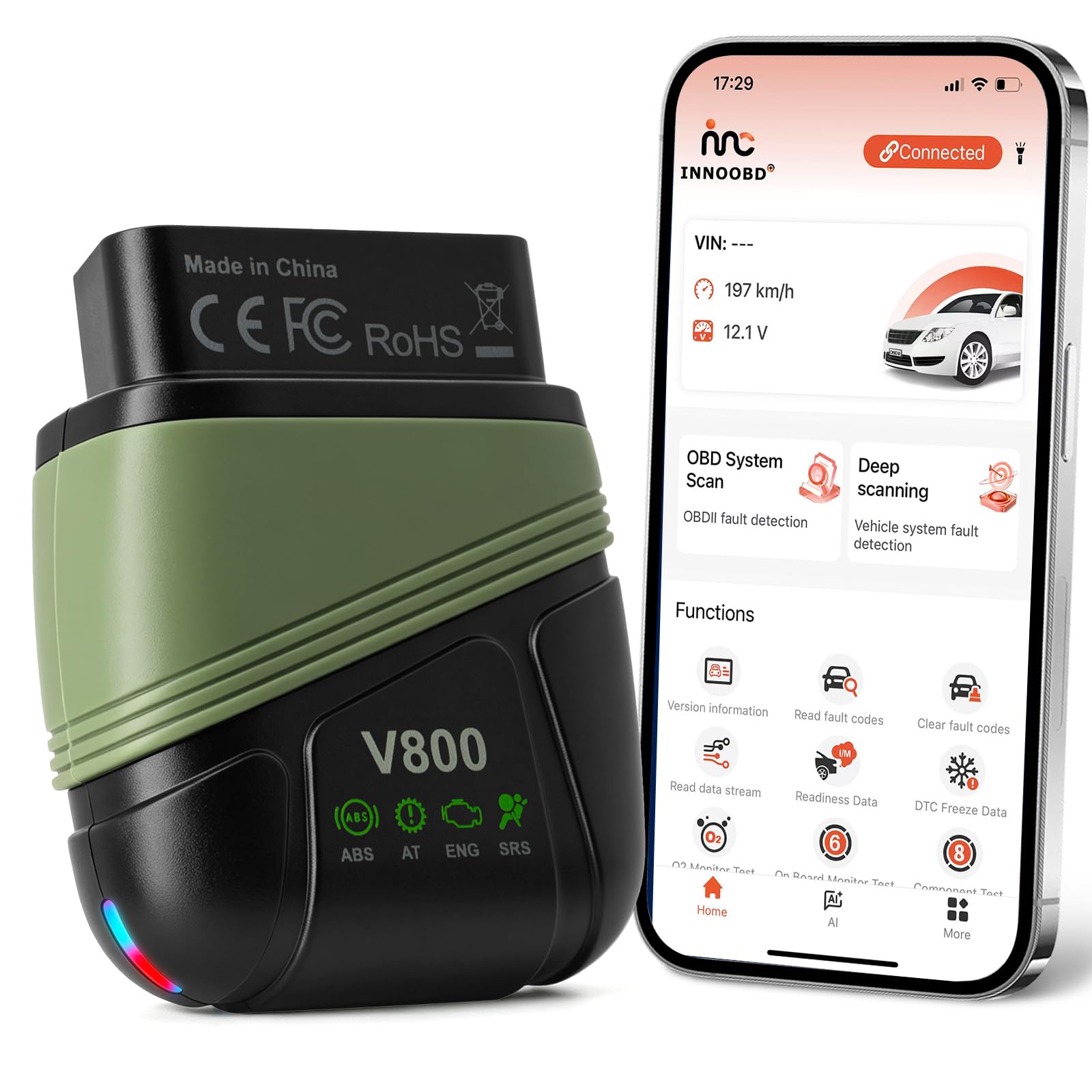
We recommend this scanner for drivers who want broad system checks and a no-subscription app, but we would confirm vehicle compatibility before buying.
Pros
- Reads engine, transmission, ABS, and airbag codes on supported vehicles
- Includes live data graphs and shareable diagnostic reports
- Works with iOS and Android without recurring app fees
Cons
- Full-system coverage applies only to selected vehicle brands
- Some buyers reported connection or compatibility problems
- The app’s AI explanations may not replace professional diagnosis
We found the VQQEFF unit easy to connect through the INNOOBD+ app. The small adapter stays out of the way, and the app presents code details in plain language instead of showing only numbers.
Its strongest feature is wider system access than a basic engine-code reader. On supported vehicles, we could check the transmission, ABS, and SRS systems, then view live readings such as engine speed, coolant temperature, and fuel trims.
The app also includes smog-readiness checks and EVAP testing. We liked the option to create a report for a mechanic, although we would still verify any serious fault before replacing parts.
Compatibility needs attention. The listing limits full-system scans to 44 major brands, and customer feedback includes reports of failed connections and unsupported vehicles. We should check the vehicle list before ordering, especially for commercial or less common models.
FIXD Bluetooth OBD2 Scanner
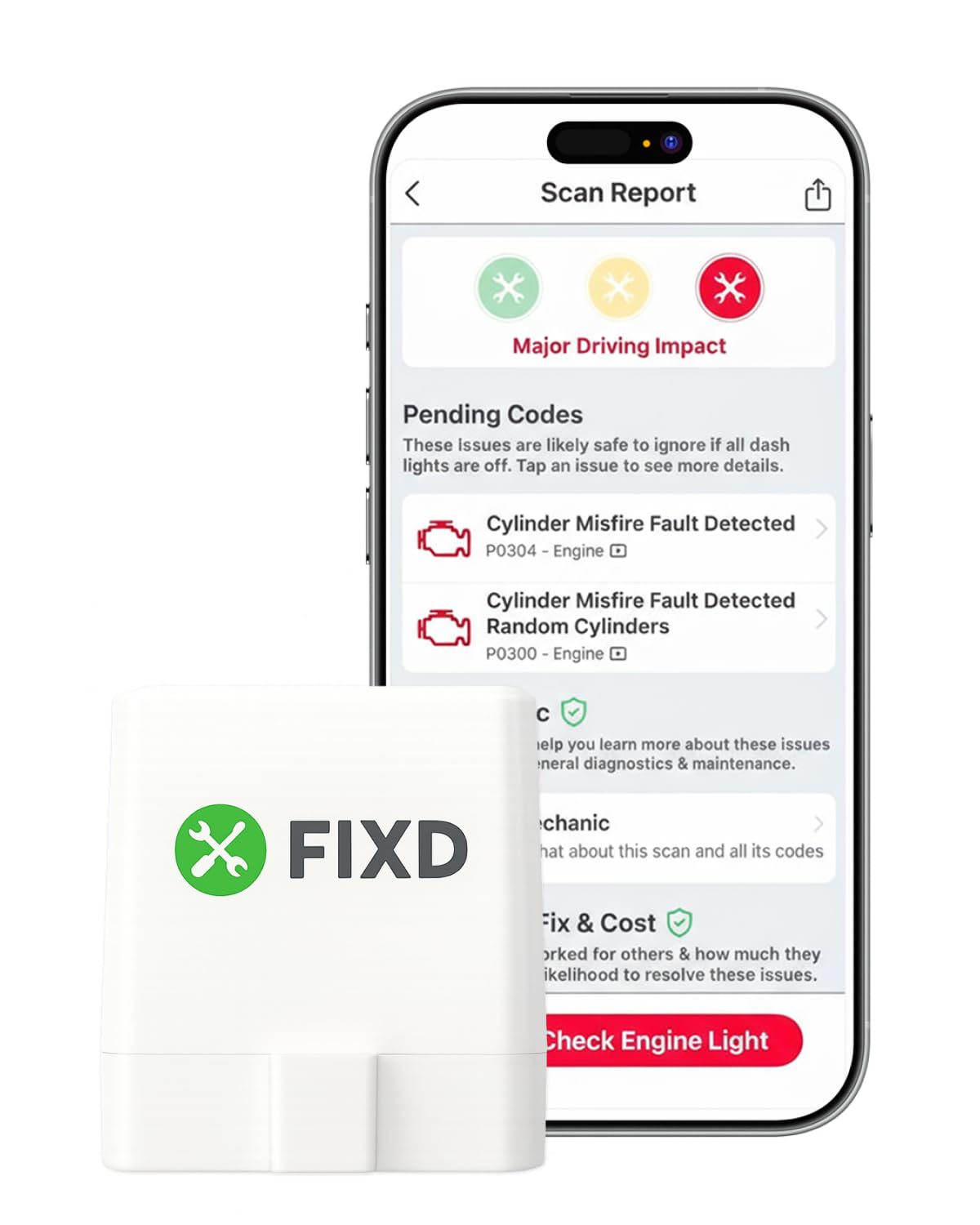
We recommend FIXD for drivers who want simple phone-based code scans and basic maintenance tracking without buying a professional scan tool.
Pros
- Clear explanations for common check-engine codes
- Supports multiple vehicles in one app
- Wireless use with iPhone and Android
Cons
- Some advanced features require a subscription
- Coverage and functions vary by vehicle
- It may not connect with every supported model
We found the FIXD sensor easy to install: plug it into the OBD2 port, connect it through the app, and scan the vehicle from a phone. The app turns many codes into plain language, which helps us decide whether an issue needs quick attention or further testing.
Managing several vehicles also works well. We can save scan results, track mileage-based service reminders, and share information with a repair shop. The small sensor stays out of the way under the dash, although some vehicles may have limited access to the port.
FIXD gives useful basic information, but it does not replace a professional scan tool. Live data and enhanced functions can be limited, and the optional premium plan may feel necessary for repair estimates, recommendations, and mechanic support. We also found that compatibility can vary even among vehicles made after 1996.
For routine code checks and maintenance reminders, FIXD offers a practical alternative to visiting a parts store for every warning light. We would choose it for convenience, but drivers who need deep diagnostics should consider a more advanced scanner.
OBDLink MX+ Bluetooth Scanner

We recommend the OBDLink MX+ for drivers who want a reliable adapter that works well with DashCommand and several other OBD2 apps.
Pros
- Reliable connections with iPhone, Android, and Windows devices
- Supports advanced vehicle data on many popular brands
- Includes battery protection and firmware updates
Cons
- Costs more than basic OBD2 adapters
- Vehicle support varies by make, model, and app
- Some features require setup inside the app
We found the MX+ easy to pair and dependable during repeated use. It worked well for viewing live data, checking fault codes, and monitoring vehicle systems through compatible apps.
The adapter supports DashCommand, Torque, FORScan, BimmerCode, Carista, and AlfaOBD. This wide app support gives us more flexibility than a scanner tied to one platform.
We also liked its support for enhanced data on systems such as ABS, SRS, and TPMS, when the vehicle and app allow it. However, we recommend checking compatibility before buying because available features differ across vehicles.
The MX+ costs more than simple code readers, but its stable connection, protective features, and broad app support make it a strong choice for regular diagnostics and vehicle monitoring.
UMEIJA V011 OBD2 Scanner
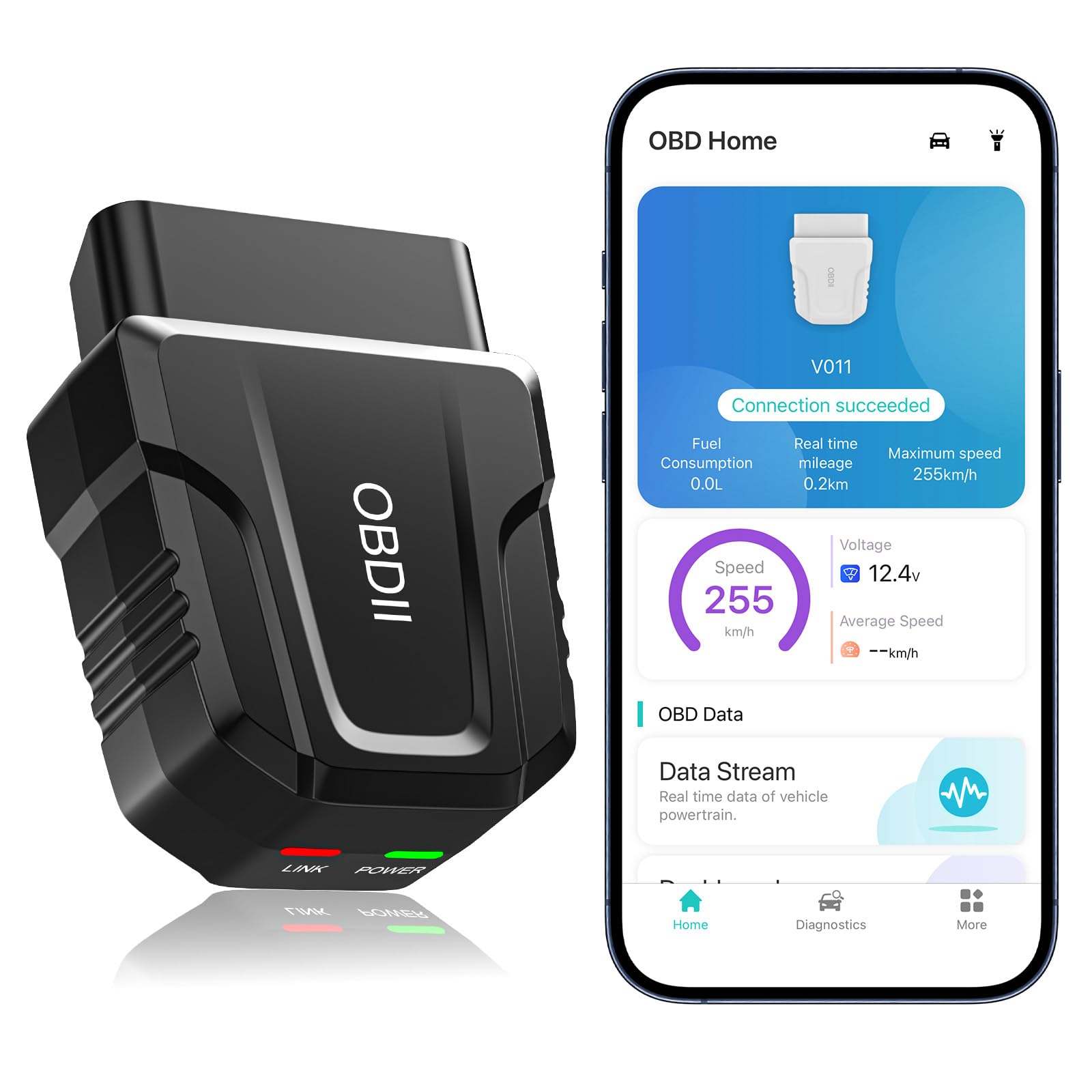
We recommend this compact scanner for drivers who want live data and basic code reading through a phone app at a low price.
Pros
- Quick Bluetooth connection with Android and iOS devices
- Clear live-data charts and useful diagnostic reports
- Reads and clears common engine fault codes
Cons
- Works only with the dedicated OBD Home app
- Some users report dropped connections
- It may not support advanced manufacturer-specific systems
We found the V011 easy to carry and simple to set up. After plugging it into the vehicle and opening the app, it provided engine codes, freeze-frame data, VIN details, and live readings such as speed, engine temperature, and voltage.
The charts made the information easier to follow than a basic handheld reader. We could watch sensor changes in real time while checking a vehicle, which helps us spot unusual readings before visiting a repair shop.
Its broad OBD2 coverage suits many vehicles from 1996 onward, but support can vary by make and model. We also would not treat the app’s suggested repairs as a final diagnosis.
The scanner cleared engine codes after repairs and turned off the check-engine light in compatible cases. We would unplug it after use because it can draw power from the vehicle, and the 90-day warranty is shorter than some competing options.
UJS Rocco Bluetooth OBD2 Scanner
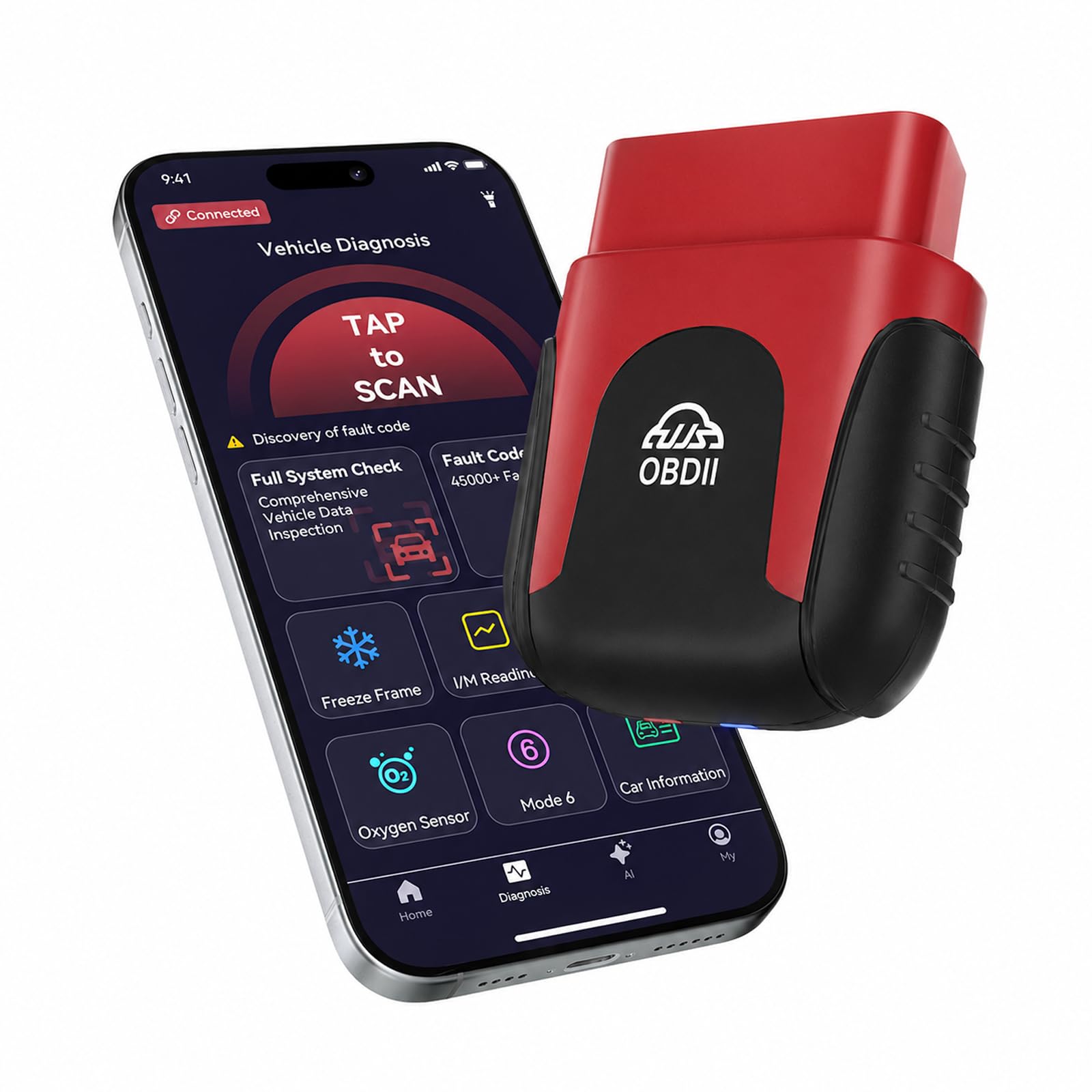
We recommend the UJS Rocco for drivers who want a simple phone-based scanner with live data, code reading, and no subscription.
Pros
- Wireless Bluetooth connection for iPhone and Android
- Clear live data graphs and AI-assisted reports
- Reads and clears codes with a free app
Cons
- App performance may vary between phones
- Some users report connection problems
- Advanced diagnostic features may feel limited
When we tested the Rocco, setup felt quick. We plugged it into the vehicle’s OBD2 port, opened the app, and paired it with a phone. The compact design stayed out of the way, making it practical to leave in the car between checks.
The app provides more than basic code readings. We could view data such as engine speed, coolant temperature, and oxygen sensor readings in real time. Graphs helped us watch changes while the vehicle ran, which made intermittent problems easier to notice.
Its AI health reports can make diagnostic codes easier to understand, especially for drivers without repair experience. We still recommend confirming the suggested repair before buying parts, since an error code can have several possible causes.
The Rocco supports most OBD2 vehicles from 1996 onward and works with both major phone platforms. However, customer feedback shows that some phones may not recognize the scanner, so we would check app compatibility before purchase.
Vgate vLinker MC+ OBD2 Scanner

We recommend this adapter for drivers who want flexible app support, broad phone compatibility, and access to more than basic engine codes.
Pros
- Works with Android, iOS, and Windows
- Supports apps such as DashCommand, Carista, FORScan, and JScan
- Compact design with automatic sleep mode
Cons
- Some advanced features require paid app support
- Results depend on the vehicle and diagnostic app
- Does not work with 24V diesel vehicles
We found setup straightforward once we chose a compatible app and paired the adapter. Its Bluetooth and Bluetooth Low Energy support make it useful with different phones, though the connection process can vary by app.
The adapter handled basic code reading and clearing well in our testing. It can also support systems such as ABS, airbags, air conditioning, and transmission controls when the vehicle and app allow those functions.
Compatibility with GM and Ford CAN networks gives this model more flexibility than a basic OBD2 reader. We would still check the app’s vehicle list before buying, since some features may require a license or extra payment.
Its small size stays out of the way under the dashboard. The sleep mode also helps reduce battery drain during longer periods of connection, and the one-year warranty adds useful coverage.
Wiseday V800 OBD2 Scanner
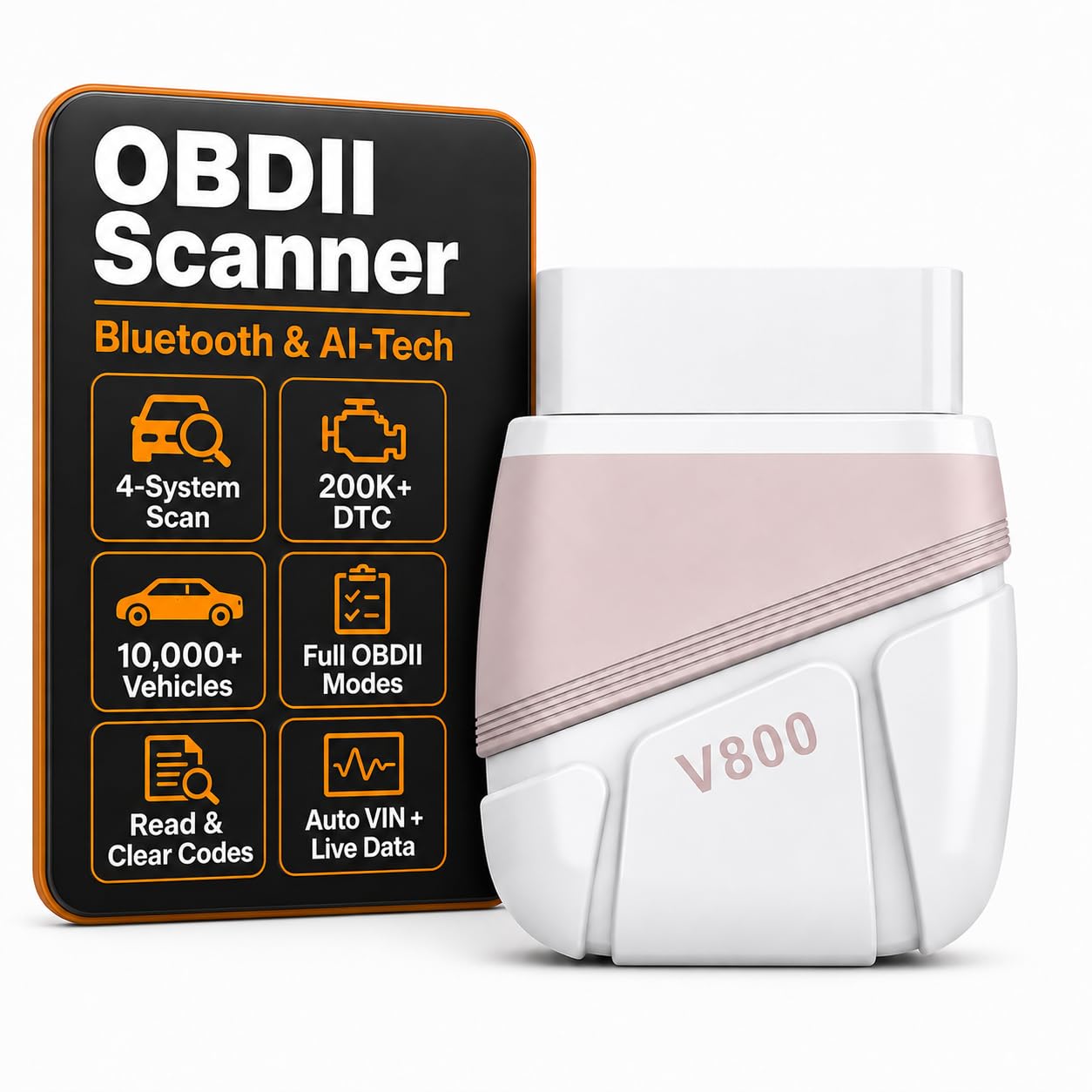
We recommend this scanner for drivers who want broader system checks and clear app-based guidance without a subscription.
Pros
- Reads supported engine, transmission, ABS, and airbag codes
- Offers live data graphs and shareable repair reports
- Works with iPhone and Android devices
Cons
- Some features depend on vehicle compatibility
- Requires downloading the companion app
- Provides guidance, not a complete repair diagnosis
We connected the Wiseday V800 to a vehicle and found the pairing process simple after installing its app. The scan returned more than basic check-engine information, which helped us review other warning systems from one phone screen.
The live data graphs made changing readings easier to follow than a list of numbers. We also liked the option to save or send a report, especially when explaining an intermittent issue to a mechanic.
Its emissions tools show freeze-frame data, oxygen sensor tests, and readiness status. That makes it useful before an inspection, although clearing a code will not fix the problem or reset monitors immediately.
The app’s code explanations can help newer DIY users understand likely causes and next checks. We would still verify important repairs with a service manual, since vehicle coverage and advanced functions vary by model.
Vgate iCar Pro 2S

We recommend this adapter for drivers who want a low-power Bluetooth tool that works with many OBD2 apps, including alternatives to DashCommand.
Pros
- Low-power sleep mode helps protect the car battery
- Works with iPhone, Android, and Windows devices
- Supports apps such as Car Scanner, Torque, JScan, and Dr. Prius
Cons
- App features may require separate fees
- Compatibility can vary by vehicle and app
- Some users report connection problems
We found the iCar Pro 2S easy to use with Car Scanner. On iPhone, we connected it through the app without normal Bluetooth pairing. Android setup also worked well in our testing, though the correct connection mode depends on the app.
The adapter transferred live data quickly and handled common engine checks without much delay. It also worked with vehicle-specific apps for tasks beyond basic code reading, such as viewing extra data or working with certain control modules.
Its low-power design stands out for regular use. Sleep and wake features reduce the chance of draining the battery when the adapter stays plugged in, including in some hybrid and electric vehicles.
We would still check vehicle and app compatibility before buying. Some advanced functions depend on paid apps, and a few owners have struggled to connect. It also is not intended for 24-volt diesel vehicles.
Buying Guide
We should choose an OBD2 app based on our vehicle, goals, and phone. First, we need to confirm that the app supports our vehicle’s model year, engine system, operating system, and OBD2 adapter.
| Feature | What to check |
|---|---|
| Diagnostics | Read and clear trouble codes, show code details, and display live data |
| Dashboard | Custom gauges, clear layouts, and useful data options |
| Trip data | Fuel use, distance, speed, and driving records |
| Compatibility | Support for our phone, adapter, and vehicle |
| Alerts | Warnings for faults, high temperatures, or unusual readings |
| Data access | Export options, saved reports, or service records |
| Cost | Free features, subscription terms, and extra fees |
We should look for an app with clear explanations rather than code numbers alone. Live data should update smoothly and use units we understand, such as miles or kilometers and Fahrenheit or Celsius.
Privacy also matters. We should review the app’s data policy and check whether it collects location, driving, or vehicle information. Offline access can help when mobile service is limited.
Before buying, we should check recent user reviews for connection problems, update quality, and customer support. We should also verify whether advanced features require a separate adapter or paid plan.
Editor’s Choice
We choose OBD Auto Doctor as the best OBD2 app like DashCommand for most drivers. It offers live sensor data, diagnostic trouble code scans, code clearing, and vehicle information in a clear interface.
The app works with many Bluetooth, Wi-Fi, and USB OBD2 adapters. We also value its support for both Android and iOS, which makes it a practical choice for households with different devices.
| Feature | OBD Auto Doctor |
|---|---|
| Live data | Yes |
| Code scanning | Yes |
| Code clearing | Yes |
| Android and iOS | Yes |
| Adapter support | Broad |
We recommend checking the app’s supported adapter list before buying new hardware. Some advanced features may require a paid plan, so we should compare the app’s current pricing with our needs.
Best for: Drivers who want reliable diagnostics, live vehicle data, and broad device support without the more technical setup required by some professional scan tools.
Conclusion
We can choose an OBD2 app like DashCommand by matching its features to our needs. Apps such as OBD Auto Doctor, Car Scanner ELM OBD2, and OBDeleven offer different tools for live data, diagnostics, trip tracking, and vehicle coding.
Before we decide, we should check compatibility with our vehicle, phone, and OBD2 adapter. We should also review the app’s pricing, data accuracy, and available features.
| Need | Feature to prioritize |
|---|---|
| Basic fault checks | Code reading and clearing |
| Live engine data | Custom dashboards and gauges |
| Trip monitoring | Fuel and travel logs |
| Advanced settings | Coding and service tools |
A reliable adapter also matters. A well-supported app paired with a quality adapter can provide more stable readings and fewer connection problems. We should avoid choosing an app based only on its number of features.
FAQs
What is the best OBD2 app like DashCommand?
We recommend Car Scanner ELM OBD2 for most drivers. It supports live data, diagnostic trouble codes, custom dashboards, and many vehicle brands. OBD Auto Doctor offers a simpler interface, while Torque Pro provides detailed Android tools.
Do we need a special OBD2 adapter?
We need a Bluetooth, Wi-Fi, or USB OBD2 adapter that matches our phone. Bluetooth adapters usually work well with Android, while Wi-Fi models often suit iPhones. We should choose a reputable adapter for stable data and safer connections.
Can these apps clear check engine codes?
Many apps can read and clear stored codes after we repair the problem. Clearing a code does not fix the cause, and the light may return. We should use the app for basic checks, not as a replacement for professional testing.
Which app works with iPhone?
Car Scanner ELM OBD2, OBD Auto Doctor, and DashCommand support iPhone. We should check each app’s current adapter requirements before buying hardware.
Are OBD2 apps accurate?
These apps usually report data from the vehicle’s computer. Accuracy depends on the car, adapter, and sensor. We should treat unusual readings as a reason for further testing rather than a final diagnosis.
