
10 Best OBD2 Scanner With SAS Calibration in 2026

A steering angle sensor (SAS) that isn’t recalibrated after an alignment, suspension repair, or steering rack replacement can trigger dashboard warnings, throw off electronic stability control, and in some cases leave ABS or lane-keep systems working from bad data. SAS calibration used to require a trip to the dealer or a specialty alignment shop. A growing number of OBD2 scan tools now build this function in alongside engine, ABS, SRS, and transmission diagnostics.
Not every scanner that lists “SAS reset” in its marketing actually performs a full calibration on every vehicle. Coverage depends on the tool’s software, the car’s make and model year, and sometimes a specific procedure that varies by manufacturer. A basic code reader might clear a fault temporarily without recalibrating the sensor at all, which leaves the underlying problem unresolved.
Buyers should weigh a handful of practical factors before choosing a tool: how deep the vehicle-system coverage goes (engine-only versus full-system), whether bidirectional control is included for active component testing, support for newer CAN-FD and FCA SGW-gated vehicles, and whether software updates are free for the tool’s lifetime or gated behind subscriptions. The single most reliable way to judge a scanner’s SAS calibration ability is to confirm it against your specific vehicle’s year, make, and model before buying, since no tool covers every car equally. That comparison work is where this guide focuses.
Best for bidirectional diagnostics on newer vehicles: TOPDON AD800BT 2
Best for balanced 4-system coverage with SAS reset: TOPDON AD600S
Best for shops needing add-on modules: Launch CRP123X V3.0 Elite
Best for multilingual diagnostic workflows: Launch CRP123I V3.0 Elite
Best for DIYers on a tighter budget: TOPDON AD500
Best for mobile bidirectional testing via smartphone: XTOOL A30M V2.0
Best for U.S.-based customer support: BLCKTEC 460T
Best for active-test depth on a tablet-style scanner: ANCEL DS500BT
Best for enhanced code reading without SAS calibration needs: BlueDriver
Best for basic check-engine diagnostics on a budget: ANCEL AD310
TOPDON AD800BT 2
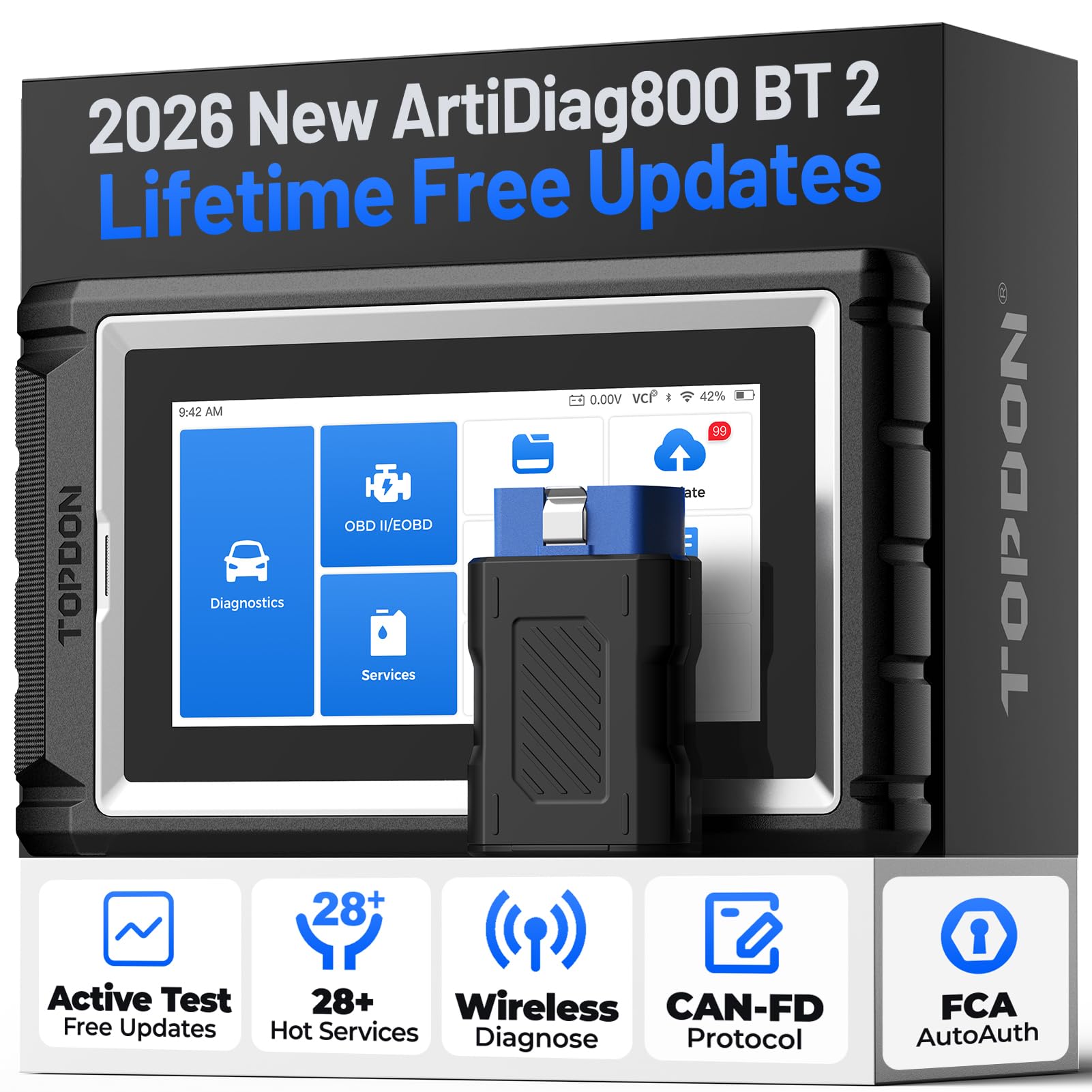
Buy this if bidirectional control and SAS calibration on a wide range of vehicles matter more than a rock-bottom price.
Pros
- Bidirectional control for active component tests, not just code reading
- SAS calibration included among 28 reset functions
- Free lifetime software updates with no recurring fees
Cons
- Bidirectional functions vary by vehicle system coverage
- AutoVIN doesn’t identify every car automatically
- Larger and pricier than basic code readers
The AD800BT 2 sends commands directly to the ECU, so it can move actuators like windows, mirrors, and wipers to confirm a repair actually worked. That bidirectional layer sets it apart from simple reset tools. SAS calibration sits inside its 28 reset services alongside ABS bleeding and DPF regeneration.
The Bluetooth VCI dongle gives a 33-foot working range, useful when testing components from the driver’s seat while standing at the engine bay. FCA AutoAuth support extends coverage to gateway-protected Chrysler, Jeep, and Ram models, though that access still requires the vehicle to fall within TOPDON’s supported list.
TOPDON AD600S

Buy this for a true 4-system scanner (engine, ABS, transmission, SRS) with SAS reset built into its free service tier.
Pros
- SAS reset included permanently, not behind a paywall
- Covers engine, ABS, transmission, and SRS diagnostics
- CAN-FD and FCA AutoAuth support newer vehicle gateways
Cons
- Corded design limits mobility during active tests
- Heavier and larger than pocket-style scanners
- Special-function trial reverts to 9 core services after 30 days
SAS reset is one of nine service functions the AD600S keeps free for life, separate from the 30-day trial of extended special services. That distinction matters: buyers shouldn’t assume every advertised function stays free indefinitely.
Its 5-inch touchscreen and 4-in-1 live data graphing make it easier to verify a calibration than a basic reader. The 90+ brand coverage and CAN-FD support extend usefulness to newer trucks and SUVs, though corded operation means less freedom to move around the vehicle during active testing compared to Bluetooth-based tools.
Launch CRP123X V3.0 Elite
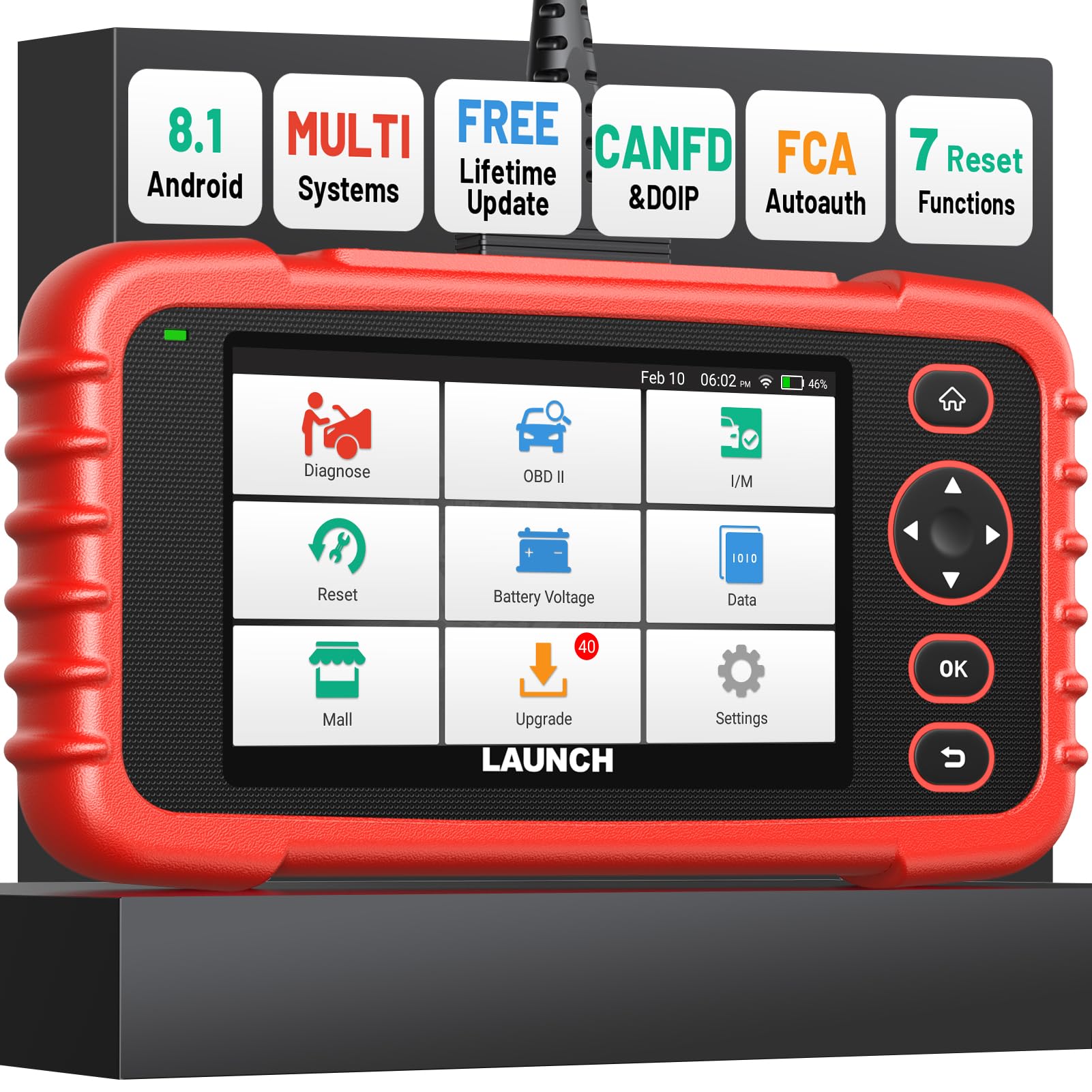
Buy this if expandability with battery testers and TPMS tools matters as much as core SAS and ABS functions.
Pros
- SAS calibration included in the 7 free reset services
- CAN-FD and DoIP readiness for newer vehicle protocols
- Add-on modules extend functionality for battery and TPMS work
Cons
- Some advanced features route through a paid MALL marketplace
- Bulkier housing than pocket scanners
- AutoVIN doesn’t cover every model
The CRP123X bundles SAS calibration with brake, throttle, and DPF resets at no added cost. Dual-band Wi-Fi keeps updates current, and the 5-inch touchscreen runs on Android 8.1, dated compared to newer Android 11 tools but functional for daily diagnostic work.
Where it stands apart is expandability. Pairing it with Launch’s separate battery tester or TPMS tool extends its usefulness beyond stock functions, though those accessories cost extra and aren’t included in the base package.
Launch CRP123I V3.0 Elite
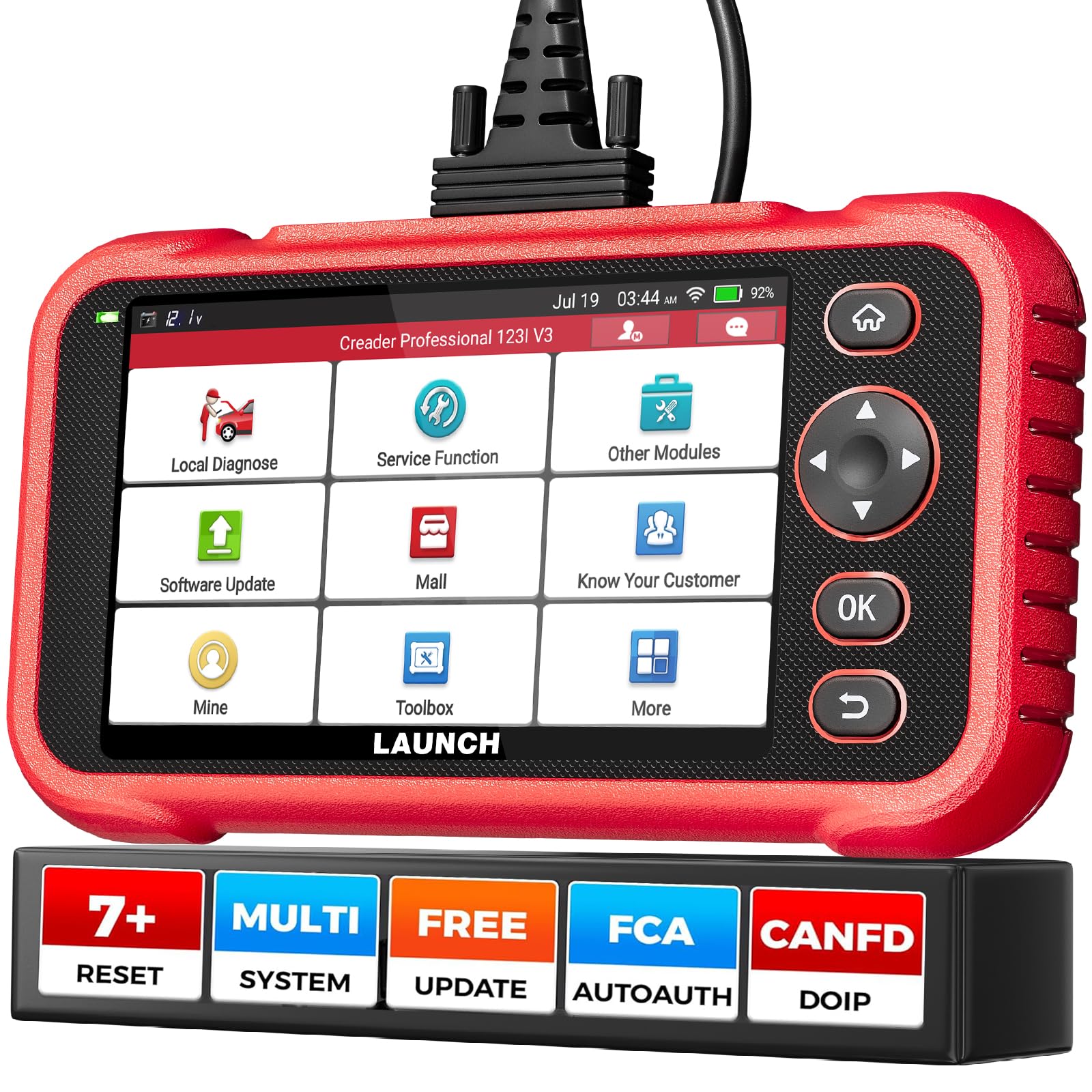
Buy this for SAS calibration paired with real-time battery voltage graphing and support for five built-in languages.
Pros
- SAS reset included with throttle, oil, and brake services
- Battery voltage graphing shown in real time
- Multi-language interface supports English, French, German, Italian, and Spanish
Cons
- FCA SGW access on Ram and Jeep models needs a separate paid AutoAuth account
- Some owners report reduced functionality without regular Wi-Fi updates
- Older Android 8.1 platform feels slower than newer competitors
The CRP123I performs SAS reset alongside ABS bleeding and BMS reset, all covered under its lifetime free update policy. Its live battery voltage graph gives a clearer read on alternator and battery health than a simple pass/fail indicator.
FCA SGW-protected vehicles need a separate AutoAuth subscription purchased directly through Stellantis, a cost some buyers don’t anticipate. Reviewers note the tool performs reliably once updated, but functionality can lag until that update is complete.
TOPDON AD500
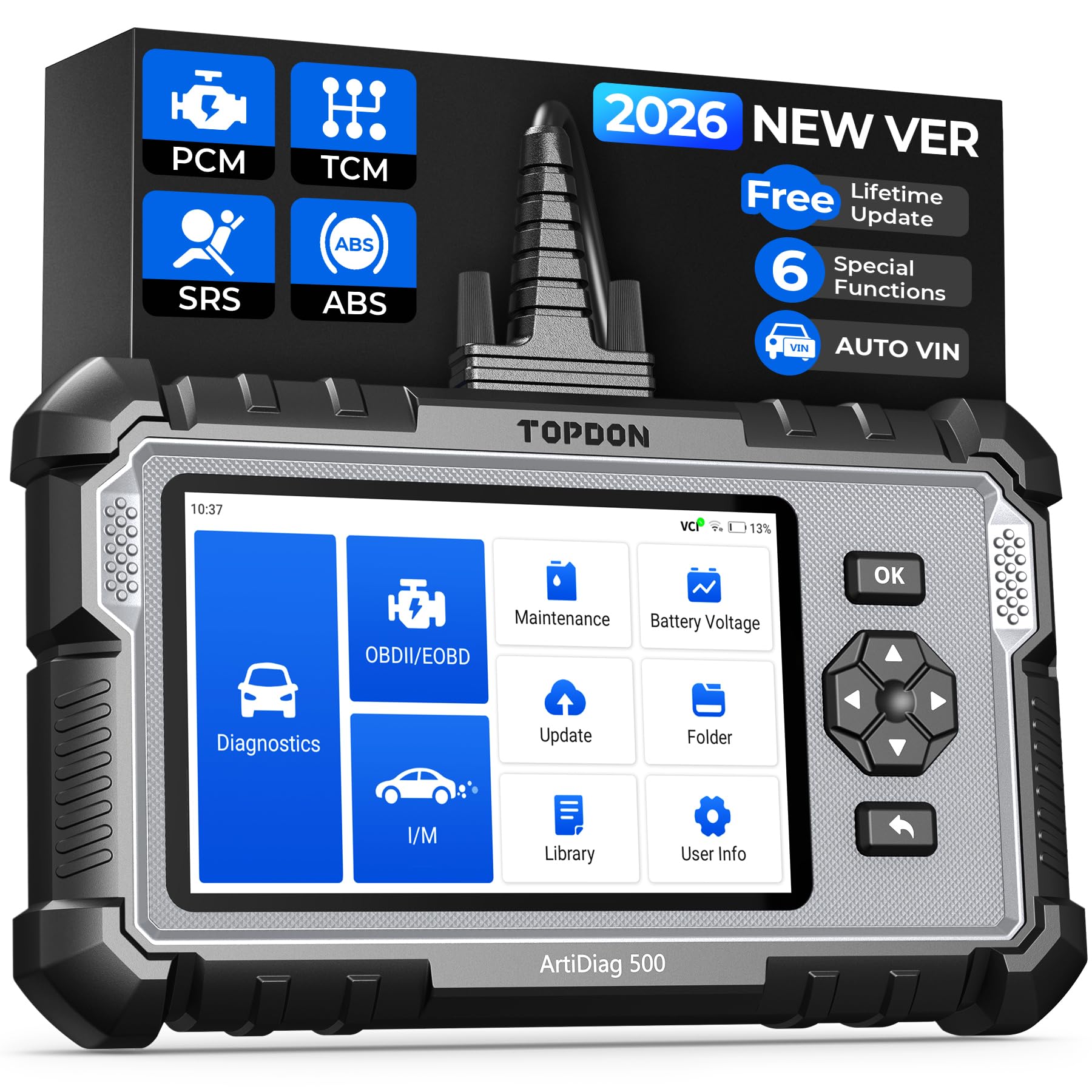
Buy this for a lower-cost 4-system scanner that still includes SAS reset among its six service functions.
Pros
- SAS reset included with oil, TPMS, BMS, and EPB services
- Covers engine, transmission, ABS, and SRS diagnostics
- Real-time battery voltage monitoring included
Cons
- Requires Wi-Fi and account setup before first use
- Fewer reset functions than higher-tier TOPDON models
- Some users report slow initial vehicle recognition
The AD500 trims the reset list to six functions but keeps SAS reset in that shorter lineup, alongside throttle adaptation and EPB reset. That makes it a reasonable entry point for DIYers who mainly need steering and brake-related calibrations without paying for a broader feature set they won’t use.
Initial setup requires internet access and account creation, a step some reviewers found slower than expected. Vehicle coverage spans 67+ brands with CAN-FD support for 2020+ GM and Chrysler models.
XTOOL A30M V2.0

Buy this for full bidirectional control run through a smartphone or tablet instead of a dedicated screen.
Pros
- Full bidirectional control for active component tests
- SAS reset included among 26 service functions
- Works with both Android and iOS via Bluetooth
Cons
- Requires a paired smartphone or tablet, adding a dependency
- FCA AutoAuth account purchased separately
- No standalone display for quick under-hood checks
The A30M runs its interface through a connected phone or iPad rather than a built-in screen, which keeps the hardware compact but ties functionality to whatever device is paired. Bidirectional control extends to fuel pumps, injectors, and A/C clutches, useful for confirming a repair beyond just clearing a code.
SAS reset sits among 26 service functions, and CAN-FD support covers 2020+ GM models. Reviewers with shop experience describe the interface as comparable to pricier standalone tools, a strong result for a phone-based scanner.
BLCKTEC 460T

Buy this for U.S.-based support and a compatibility checker before committing to a purchase.
Pros
- SAS recalibration included among 12+ reset services
- Free companion app (RepairSolutions2) with repair database
- Compatibility checker tool available before purchase
Cons
- Only supported in the U.S. and Canada
- Smaller 4.3-inch screen than some competitors
- EPB service mode doesn’t work on every make and model
The 460T pairs SAS recalibration with AutoScan and AutoReLink, which pull fault codes automatically once plugged in, skipping several menu steps compared to manual scan initiation. The RepairSolutions2 app adds a verified-fix database and cloud-stored reports at no extra cost.
BLCKTEC’s support team, based in Southern California, offers phone assistance in English and Spanish, a point of reassurance for buyers wary of import-only customer service. The company explicitly recommends checking vehicle compatibility before buying rather than assuming universal coverage.
ANCEL DS500BT
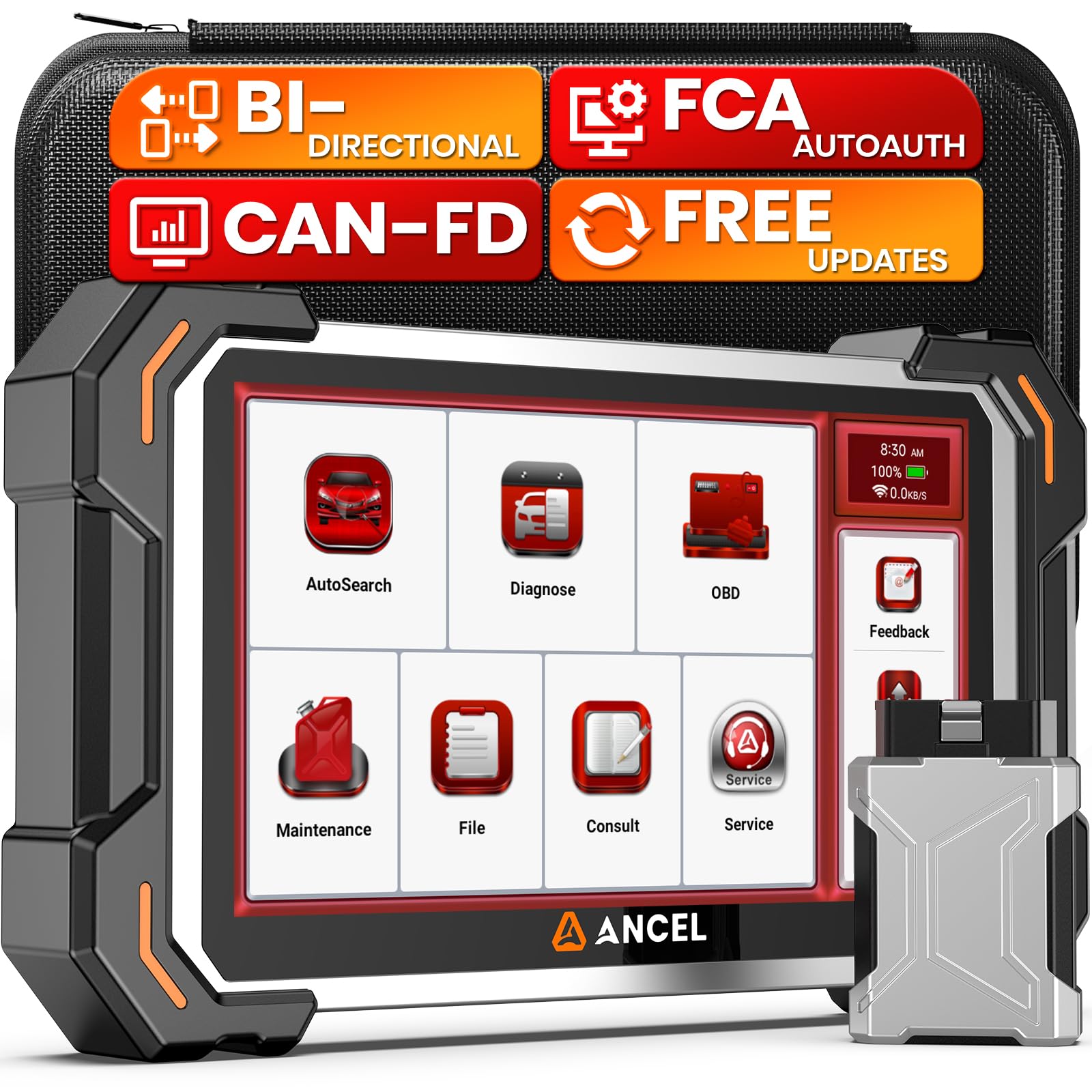
Buy this for the deepest active-test library in this lineup, useful for confirming component function after a repair.
Pros
- Over 3,000 active tests across supported systems
- SAS calibration included among 28+ service functions
- 7-inch screen with wireless Bluetooth 5.0 VCI
Cons
- Larger tablet-style form factor than pocket scanners
- Time zone settings limited mostly to non-U.S. regions per some reviewers
- Newer release means a shorter track record than established competitors
The DS500BT’s active-test count stands out. Sending commands to fuel pumps, EVAP valves, and cooling fans lets a technician confirm a part responds correctly before ruling it good or bad, cutting down on guesswork.
Its 7-inch touchscreen and full-system coverage (engine, transmission, ABS, SRS, BCM, TPMS, and more) support a shop-level workflow. One noted quirk: a reviewer found U.S. time zones absent from the setup menu, a minor but odd oversight worth checking after purchase.
BlueDriver
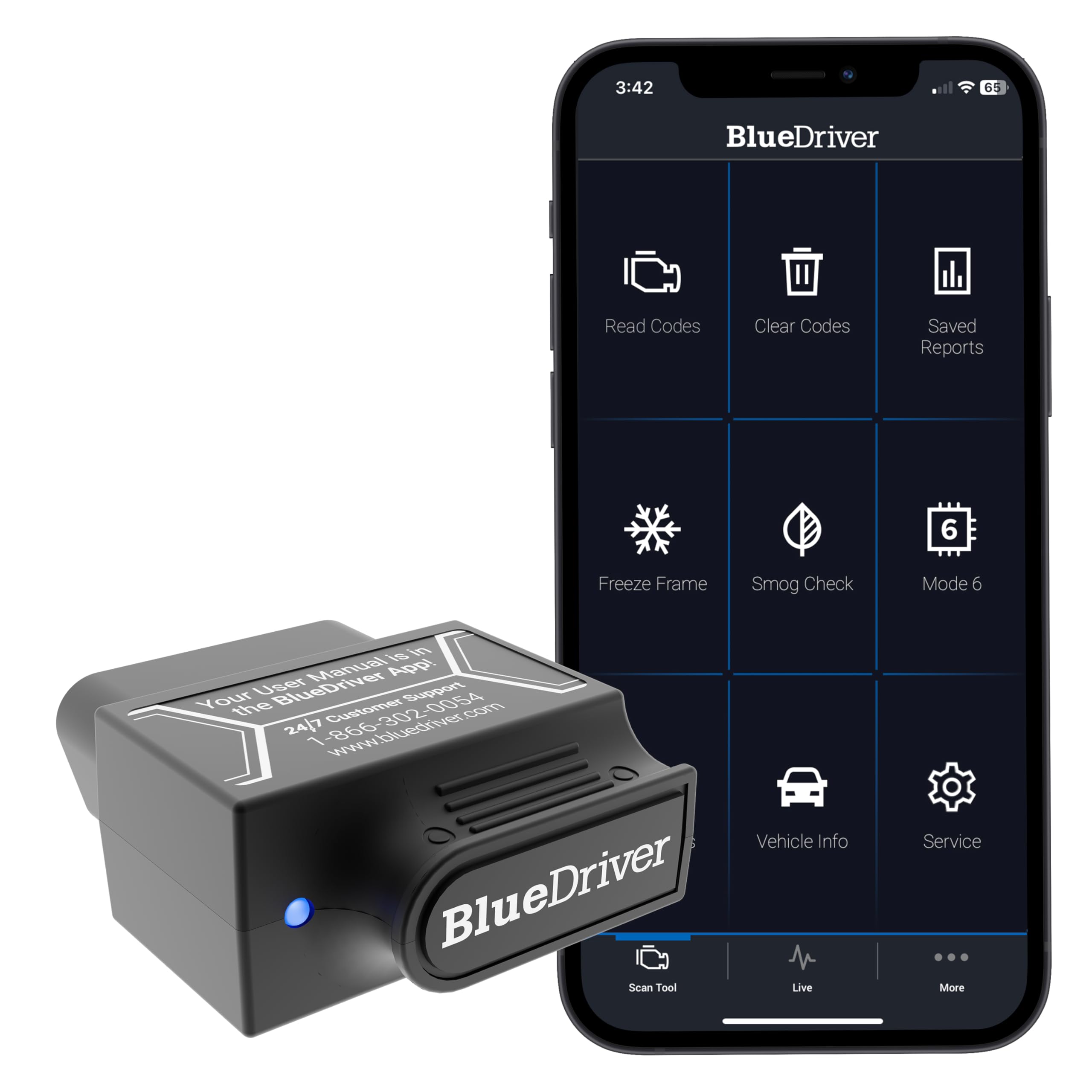
Buy this for enhanced code reading across engine, ABS, SRS, and TPMS systems, not for SAS calibration.
Pros
- Broad enhanced-diagnostic coverage for major systems
- No subscription fees, ever
- Large user base with strong customer support reputation
Cons
- No SAS calibration or steering-angle reset function
- No bidirectional active tests
- No dedicated reset services like oil or EPB resets
BlueDriver reads and clears codes across more systems than a basic scanner, and its repair reports match confirmed fixes to a vehicle’s VIN. That makes it genuinely useful for diagnosing why a warning light is on.
It stops short of the service and calibration functions this guide is built around. There’s no SAS calibration, no bidirectional control, and no reset menu for oil, brakes, or batteries. Buyers who need SAS calibration should look elsewhere; those who mainly want accurate code reading and verified repair guidance will find it dependable.
ANCEL AD310

Buy this for a basic, no-frills check-engine code reader, not for SAS calibration or system-wide diagnostics.
Pros
- Low cost and simple, corded operation
- No battery or charging required
- Reads and clears emissions-related codes reliably
Cons
- No SAS calibration or any reset functions
- Limited to emissions-system codes only
- No live data graphing or bidirectional testing
The AD310 does one job: read and clear check-engine codes tied to the emissions system. It draws power directly from the OBD2 port, so there’s no battery to charge or app to install.
It has no reset menu, no SAS calibration, and no ABS or SRS code access. Buyers researching SAS calibration should treat this as a baseline comparison rather than a candidate, useful only for confirming whether a check-engine light is serious before deciding on further diagnostics.
Buying Guide
Confirm SAS Calibration Coverage for Your Specific Vehicle
Reset-count marketing (12 resets, 28 resets) says nothing about which vehicles those resets actually work on. SAS calibration procedures differ by manufacturer, and some cars need a static calibration (stationary, using the scanner alone) while others need a dynamic calibration (a test drive at a specific speed). Confirm the tool’s supported vehicle list against your make, model, and year before buying.
Distinguish Full-System Scanners From Code Readers
A full-system scanner reads and communicates with the engine, ABS, SRS, and transmission control modules. A code reader typically only accesses the engine or emissions system. Only full-system tools can perform SAS calibration, since that function lives in the ABS or steering control module, not the engine computer.
| Tool Type | Systems Accessed | SAS Calibration Possible |
|---|---|---|
| Basic code reader | Engine/emissions only | No |
| Enhanced code reader | Engine, ABS, SRS, transmission (read/clear only) | Rarely |
| Full-system scanner with resets | Engine, ABS, SRS, transmission, plus service functions | Yes, on supported vehicles |
Weigh Bidirectional Control Against Price
Bidirectional control lets a scanner send commands to the vehicle, not just read data. This matters for confirming a SAS calibration actually took, or for testing whether a replaced actuator responds correctly. Tools without bidirectional support can still reset the SAS fault code but can’t actively verify component response.
Check CAN-FD, DoIP, and FCA SGW Requirements for Newer Vehicles
Vehicles built after roughly 2020 increasingly use CAN-FD or DoIP communication protocols, and Stellantis brands (Chrysler, Jeep, Ram, Fiat) since 2018 require Secure Gateway (SGW) access. A scanner without these protocols may fail to connect to newer vehicles entirely, regardless of its SAS calibration claims. FCA SGW access often requires a separate paid subscription through the manufacturer, not included in the scanner’s price.
Compare Update Policies Before Committing
Some tools offer genuinely free lifetime updates; others revert to a limited free tier after a trial period for premium functions. Read the specific terms for each tool’s reset and calibration functions rather than assuming “lifetime free” covers everything advertised.
Match the Platform to Your Workflow
| Platform Type | Pros | Cons |
|---|---|---|
| Dedicated tablet/handheld | Standalone, no phone dependency | Bulkier, higher cost |
| Phone/tablet-app based | Compact hardware, familiar touchscreen | Requires a paired device, battery drain |
Editor’s Choice
The TOPDON AD600S earns the top recommendation for most home mechanics and independent shops seeking SAS calibration alongside real system-level diagnostics. Its four-system coverage (engine, ABS, transmission, SRS) keeps SAS reset permanently free, avoiding the trial-period trap some competitors use for premium functions.
For buyers who need to confirm active component response after a repair, not just clear a fault code, the TOPDON AD800BT 2 stands out for its bidirectional control paired with SAS calibration and CAN-FD support for newer vehicles. Shops running a mixed fleet with newer Stellantis or GM models benefit most from that combination.
Buyers focused purely on diagnosing a warning light without performing calibrations get solid value from BlueDriver, provided they understand it won’t touch SAS, ABS bleeding, or any reset function.
Conclusion
SAS calibration capability separates full-system diagnostic scanners from basic code readers, and that distinction should drive the purchase decision more than a headline reset count. The TOPDON AD600S and AD800BT 2 both deliver confirmed SAS reset functions with broader system access, while the Launch CRP123X and CRP123I add battery diagnostics and multilingual support at a comparable tier. Budget-focused buyers can step down to the TOPDON AD500 or BLCKTEC 460T without losing SAS functionality entirely.
Tools like BlueDriver and the ANCEL AD310 serve a different purpose. They read and clear codes reliably but don’t perform SAS calibration, reset services, or bidirectional tests, and treating them as budget alternatives for calibration work will lead to disappointment. Confirming vehicle-specific compatibility before purchase remains the most reliable step in this category, since even the most capable scanners vary in coverage from one make and model year to the next.
FAQS
Does every OBD2 scanner with a “SAS reset” listed actually calibrate the sensor? No. Some tools only clear the fault code temporarily without performing the manufacturer-specified calibration procedure. Confirm the tool documents a genuine calibration process for your specific vehicle before relying on it.
Can a phone-based scanner like the XTOOL A30M perform SAS calibration as reliably as a dedicated handheld? It can perform the same calibration function on supported vehicles, since the diagnostic capability lives in the software, not the screen. The trade-off is dependency on a paired smartphone or tablet rather than a standalone display.
Do I need FCA AutoAuth or SGW access for SAS calibration on a Jeep or Ram? Vehicles from Stellantis brands built in 2018 or later with a Secure Gateway module require a paid AutoAuth account purchased separately through the manufacturer, regardless of which scanner is used. Without it, the scanner may connect but fail to access protected modules.
Is a static or dynamic SAS calibration required for my vehicle? It depends on the manufacturer’s specified procedure for that model. Static calibration happens with the vehicle stationary using the scanner alone; dynamic calibration requires a test drive at a set speed. Check the scanner’s on-screen instructions once connected, since they typically indicate which method applies.
Why does BlueDriver not appear as a top pick for SAS calibration despite strong ratings? BlueDriver focuses on enhanced code reading and repair reports across engine, ABS, SRS, and TPMS systems. It doesn’t include reset functions, bidirectional control, or SAS calibration, making it a strong diagnostic tool but not a fit for calibration work.
