P0411 Causes: Why Secondary Air Injection Flow Is Incorrect

Quick Answer
P0411 means your vehicle’s computer detected incorrect airflow through the secondary air injection system, usually during a cold start. Common causes include a failed air pump, stuck check valve, leaking hose, faulty relay or solenoid, blocked air passages, or an electrical problem; a check engine light should be diagnosed rather than ignored.
Most Common P0411 Causes
- Failed air pump: The secondary air pump does not move enough fresh air into the exhaust.
- Stuck check valve: A blocked or damaged valve prevents proper airflow or allows exhaust to flow backward.
- Leaking hoses: Cracked, loose, or collapsed air hoses let pressure escape before reaching the exhaust.
- Blocked passages: Carbon can restrict the passages where secondary air enters the exhaust stream.
- Electrical fault: A blown fuse, bad relay, damaged connector, or wiring problem may keep the pump from operating.
- Control fault: A switching solenoid, vacuum circuit, or feedback sensor may prevent the system from operating as commanded.
Best First Check
- Read all stored and pending codes, inspect the hoses, then verify whether the secondary air pump actually operates during a true cold start.
If your OBD2 scanner shows P0411, don’t order an air pump immediately. The code tells you that airflow was wrong, not which individual component failed.
I approach this code by following the air path from the pump to the exhaust. That method usually exposes the fault faster than replacing parts based only on the code description.
In This Guide
What Does P0411 Mean?
P0411 means “Secondary Air Injection System Incorrect Flow Detected.” It is a generic powertrain diagnostic trouble code related to the vehicle’s emissions-control system.
Definition: The secondary air injection system is an emissions system that sends fresh outside air into the exhaust during certain operating conditions, especially after a cold start.
The extra oxygen helps the exhaust system handle cold-start emissions before everything reaches normal operating temperature. Designs vary, but many systems use an electric pump, valves, hoses, relays, solenoids, and exhaust passages.
The engine control module, often called the ECM or PCM, expects a measurable response when it commands secondary air flow. If that response is outside the expected range, it can store P0411.
Why P0411 does not automatically mean the pump is bad
This distinction matters. P0411 describes an incorrect flow result, not a confirmed failed component.
A perfectly healthy pump can run while a cracked hose dumps the air into the engine bay. The computer still sees inadequate airflow at the exhaust and can set the same code.
A stuck valve or carbon blockage creates a similar situation. Air is produced, but it cannot reach its intended destination.
- Pump not running: Flow may be absent.
- Pump running with a leak: Flow reaching the exhaust may be too low.
- Valve stuck closed: Air cannot enter the exhaust.
- Restricted passages: The system operates but cannot move the expected volume.
- Feedback problem: Airflow may exist, but the computer does not detect the expected response.
That is why reading P0411 is only the beginning of the diagnosis. A scanner points you toward a system, not necessarily toward the part you should replace.
What Are the Most Common P0411 Causes?
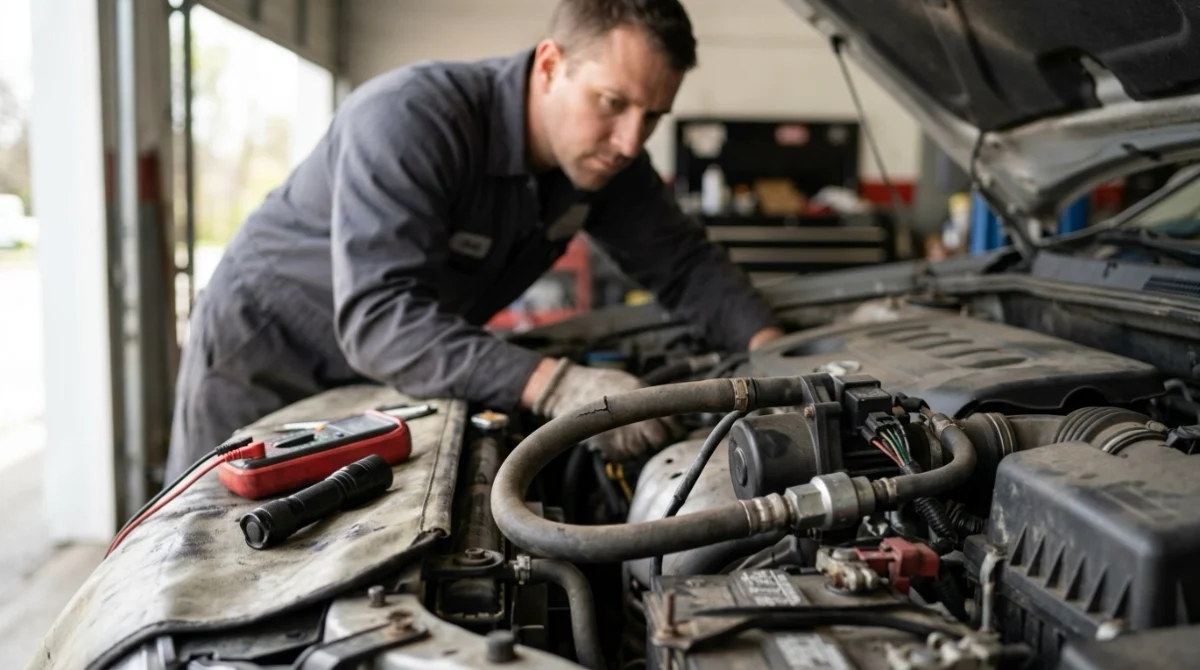
The most common P0411 causes involve the pump, valves, hoses, air passages, or electrical controls. The exact failure pattern varies considerably between makes, engines, and model years.
1. Failed secondary air injection pump
The pump is responsible for moving fresh air into the system. An electric motor failure, corrosion, water intrusion, or internal wear can prevent it from producing enough airflow.
A dead pump may be completely silent during the cold-start period. A failing unit can also make unusual whirring, grinding, or rough bearing noises.
2. Stuck or damaged check valve
The check valve keeps hot exhaust gas from flowing backward toward the air pump. It may also be called a combination valve, diverter valve, switching valve, or air control valve.
If it sticks closed, secondary air cannot reach the exhaust. If it leaks backward, hot exhaust gases and condensation can damage upstream components.
3. Cracked, disconnected, or restricted hoses
Secondary air plumbing often sits close to heat, moisture, and vibration. Rubber or plastic hoses can split, collapse, loosen, or become restricted over time.
Always inspect the connections before condemning an expensive pump. A loose hose can create the same flow problem as a failed major component.
4. Blocked secondary air passages
Carbon deposits can restrict the ports that carry fresh air into the exhaust. This problem becomes especially important when the pump and control valves test correctly but P0411 keeps returning.
Cleaning these passages can require more labor than replacing an external hose. Access depends heavily on engine design.
5. Fuse, relay, wiring, or connector problems
An electric pump needs proper voltage and ground. A blown fuse, failed relay, corroded connector, damaged wire, or poor ground can prevent normal operation.
Check the vehicle-specific wiring diagram before jumping power or probing terminals. Fuse locations and control strategies are not universal.
6. Faulty control solenoid or vacuum circuit
Some systems use vacuum-operated valves controlled by an electrical solenoid. A leaking vacuum hose or failed solenoid may stop the valve from opening at the correct time.
Other designs use electrically operated valves without the same vacuum arrangement. Vehicle-specific service information matters here.
| Possible Cause | Typical Clue | Best First Check |
|---|---|---|
| Air pump | No pump sound or abnormal noise | Verify commanded operation, power, and ground |
| Check/control valve | Pump runs but airflow does not reach exhaust | Check valve movement and one-way sealing |
| Air hose or pipe | Pump runs with weak or leaking airflow | Inspect connections, cracks, and restrictions |
| Blocked passages | Pump and valves test correctly | Check exhaust-side air passages for carbon |
| Relay/wiring | Pump receives no electrical command | Test fuse, relay, voltage, ground, and connectors |
| Solenoid/vacuum control | Valve does not open when commanded | Test vacuum supply or electrical actuation |
Section Takeaway: P0411 does not identify one failed part. Check whether air is being produced, controlled, transported, and delivered before replacing anything.
What Symptoms Does P0411 Cause?
Many vehicles with P0411 drive normally. The check engine light may be the only symptom because secondary air injection usually affects emissions control more than everyday engine performance.
Possible symptoms include:
- Check engine light: This is the most common sign.
- No unusual driving symptoms: Acceleration and cruising may remain completely normal.
- Cold-start noise: A damaged pump may become unusually loud.
- Missing pump sound: A normally audible pump may not operate after a cold start.
- Rough cold operation: Some vehicles may idle less smoothly for a short period.
- Other stored codes: Related electrical, air-injection, or oxygen-sensor codes can provide diagnostic clues.
- Emissions inspection problem: An illuminated malfunction indicator or incomplete readiness monitors can interfere with an OBD-based emissions inspection.
Does P0411 cause poor acceleration?
P0411 by itself does not normally point to a primary acceleration problem. If the vehicle has major hesitation, misfires, severe power loss, or stalling, look for additional codes and symptoms.
Don’t assume every problem started because P0411 appeared. Multiple faults can exist at the same time.
Why cold-start symptoms matter
Secondary air systems commonly perform their most important monitoring during cold-start conditions. That means a warm-engine inspection can miss the exact behavior that caused the code.
Freeze-frame data can help. Look at coolant temperature and other stored conditions from when the code was recorded.
How Do You Diagnose P0411 Correctly?
The safest diagnostic strategy is to confirm the code, inspect the system, and test each stage of airflow. Avoid replacing the pump solely because its name appears in the code description.
Step 1: Scan every stored code
- Connect an OBD2 scanner and confirm P0411.
- Record pending, stored, and permanent codes.
- Save freeze-frame information before clearing anything.
- Look for related circuit or oxygen-sensor codes that may change your diagnostic direction.
A basic code reader can handle the first step. A more capable scan tool may show live data and bidirectional controls.
Step 2: Inspect hoses and connections
With the engine cold and switched off, trace the secondary air plumbing. Look for broken fittings, loose clamps, disconnected hoses, heat damage, cracks, and collapsed sections.
Don’t overlook small vacuum lines if your system uses them. One damaged control hose can keep a larger valve from opening.
Step 3: Verify pump operation during a cold start
Listen for the pump when starting a genuinely cold engine. Some systems operate only briefly, so a warm restart may tell you nothing.
If the pump does not run when the computer should command it, check the electrical supply before replacing it. Verify the fuse, relay, connector, power, and ground using vehicle-specific information.
Pro tip: If your scanner cannot command the pump or switching valves, a repair shop with bidirectional diagnostic equipment can test the system without relying on guesswork.
Step 4: Confirm that air reaches the exhaust
A running pump does not prove the whole system works. You still need to determine whether air passes through the hoses and control valve.
Inspect the one-way valve carefully if exhaust moisture or contamination appears near the pump. Reverse exhaust flow can contribute to repeated component failure.
Step 5: Check for restricted air passages
If the pump runs and the valves operate, investigate carbon restrictions. A blocked passage can prevent enough fresh air from reaching the exhaust even when every external component appears functional.
This stage can require component removal on some engines. Follow manufacturer service information rather than forcing tools into an unknown passage.
Step 6: Evaluate the feedback and control side
The PCM needs evidence that commanded airflow occurred. Depending on vehicle design, the diagnostic strategy can involve oxygen-sensor response, pressure information, electrical feedback, or another calculated value.
Inspect feedback sensors only after confirming the physical air system. Replacing an oxygen sensor will not fix a cracked pump hose.
Common P0411 diagnostic mistakes
- Replacing the secondary air pump before checking its fuse and relay.
- Testing only with a warm engine when the system normally runs cold.
- Ignoring cracked hoses because the pump can still be heard.
- Replacing a valve without checking for carbon restrictions.
- Clearing the code before saving freeze-frame data.
- Assuming an oxygen sensor is faulty because the PCM did not see the expected exhaust response.
Section Takeaway: Diagnose P0411 as an airflow chain. Verify the command, pump, plumbing, valves, passages, and feedback in that order whenever the vehicle’s design allows it.
Can You Drive With P0411, and What Can Repairs Cost?
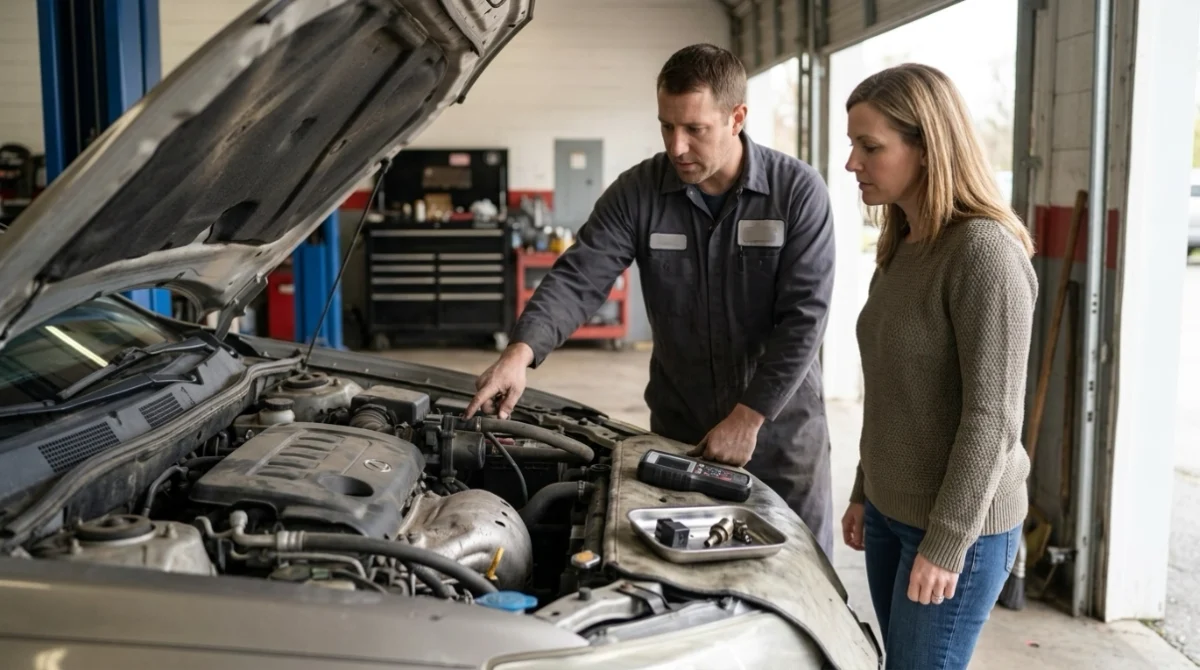
A vehicle with only P0411 and no serious drivability symptoms is often still movable, but the fault should be diagnosed promptly. The code concerns emissions operation, and the check engine light can also hide a new problem if you continue ignoring it.
If the check engine light starts flashing, the engine shakes badly, power drops sharply, or you smell something abnormal, treat that as a separate warning. Stop driving when it is unsafe to continue and have the vehicle inspected.
How much does P0411 repair cost?
There is no single P0411 repair price because the code can come from anything from a damaged hose to a difficult carbon-cleaning job. Labor rates and parts prices also vary by make, model, year, engine, and region.
As a broad U.S. budgeting guide for 2026, possible totals may fall into these ranges:
- Diagnostic testing: roughly $100–$200 in many markets.
- Fuse, relay, connector, or simple hose repair: often around $50–$300 depending on access and parts.
- Air control or check valve repair: commonly a few hundred dollars, depending heavily on vehicle design.
- Secondary air pump replacement: often several hundred dollars and can be higher on vehicles with difficult access.
- Carbon passage cleaning: highly variable because labor can increase sharply when manifolds or other components must be removed.
Pro tip: Treat these figures as planning ranges, not quotes. Ask for a diagnosis showing which component failed before approving a costly secondary air pump or passage-cleaning repair.
Check for recalls before paying for a major repair
For any significant repair, you can also enter your VIN in the NHTSA recall lookup. Recall coverage is vehicle-specific, so don’t assume P0411 itself is covered.
P0411 is primarily an emissions diagnostic code, not a crash-safety rating. For unrelated vehicle safety research, the IIHS vehicle ratings database provides separate crashworthiness and crash-avoidance information.
Frequently Asked Questions About P0411
What is the most common cause of a P0411 code?
A failed pump, damaged air hose, stuck control or check valve, relay problem, or restricted air passage can all cause P0411. The most likely failure varies by vehicle, so test airflow before choosing a replacement part.
Can a bad secondary air pump cause P0411?
Yes. A pump that does not run or cannot produce the required airflow can trigger P0411, but you should verify its electrical supply and the rest of the air path before replacing it.
Can a vacuum leak cause P0411?
Yes, on systems that use vacuum to operate a secondary air valve. A split vacuum hose or loss of vacuum can keep the control valve closed even when the electric air pump works normally.
Can carbon buildup cause P0411?
Yes. Carbon can restrict the secondary air passages leading into the exhaust, reducing airflow enough to trigger the code even when the pump, relay, hoses, and valves are functioning.
Will P0411 clear itself?
The warning light may eventually turn off if the PCM completes enough successful self-tests, but the stored history can remain. If the underlying problem still exists, P0411 will usually return during another qualifying monitor cycle.
Can I clear P0411 with an OBD2 scanner?
You can clear the code with many OBD2 scanners, but clearing it does not repair the fault. It also resets certain diagnostic information and may reset readiness monitors needed for emissions testing.
Should I replace the oxygen sensor for P0411?
Not without testing. The PCM may use oxygen-sensor response to judge secondary airflow, but a missing response can also come from a failed pump, blocked passage, leaking hose, or stuck valve.
Bottom line: P0411 is best treated as an airflow problem, not an automatic air-pump replacement. Start with scan data and a visual inspection, then prove where airflow stops before buying parts.
If the system design or test procedure is unclear, use the manufacturer service information for your exact year and engine. A targeted diagnosis costs less than replacing several good components.
